Maintaining a home fitness routine brings clear health benefits and its own risks.
Regular workouts at home can reduce long-term health costs but also create potential for acute injuries.
Choosing medical insurance that reflects those activities helps manage both care access and out-of-pocket expenses.
This article outlines practical coverage considerations for people who prioritize exercising at home.
Understanding policy basics
Before comparing plans, focus on core elements: premiums, deductibles, copayments, and network restrictions.
A lower premium may mean higher out-of-pocket costs when care is needed, which matters if you expect frequent treatments after an injury.
Check whether preferred clinics, urgent care centers, and physical therapists fall inside the plan network to avoid surprise bills.
Familiarity with claims procedures and referral requirements also speeds recovery when treatment is needed.
Knowing these basics lets you weigh cost versus access in a realistic way.
It also helps you prioritize which plan features are most relevant to an active household.
Coverage for home fitness injuries and devices
Home workouts can lead to strains, sprains, or more serious injuries that require prompt care and rehabilitation.
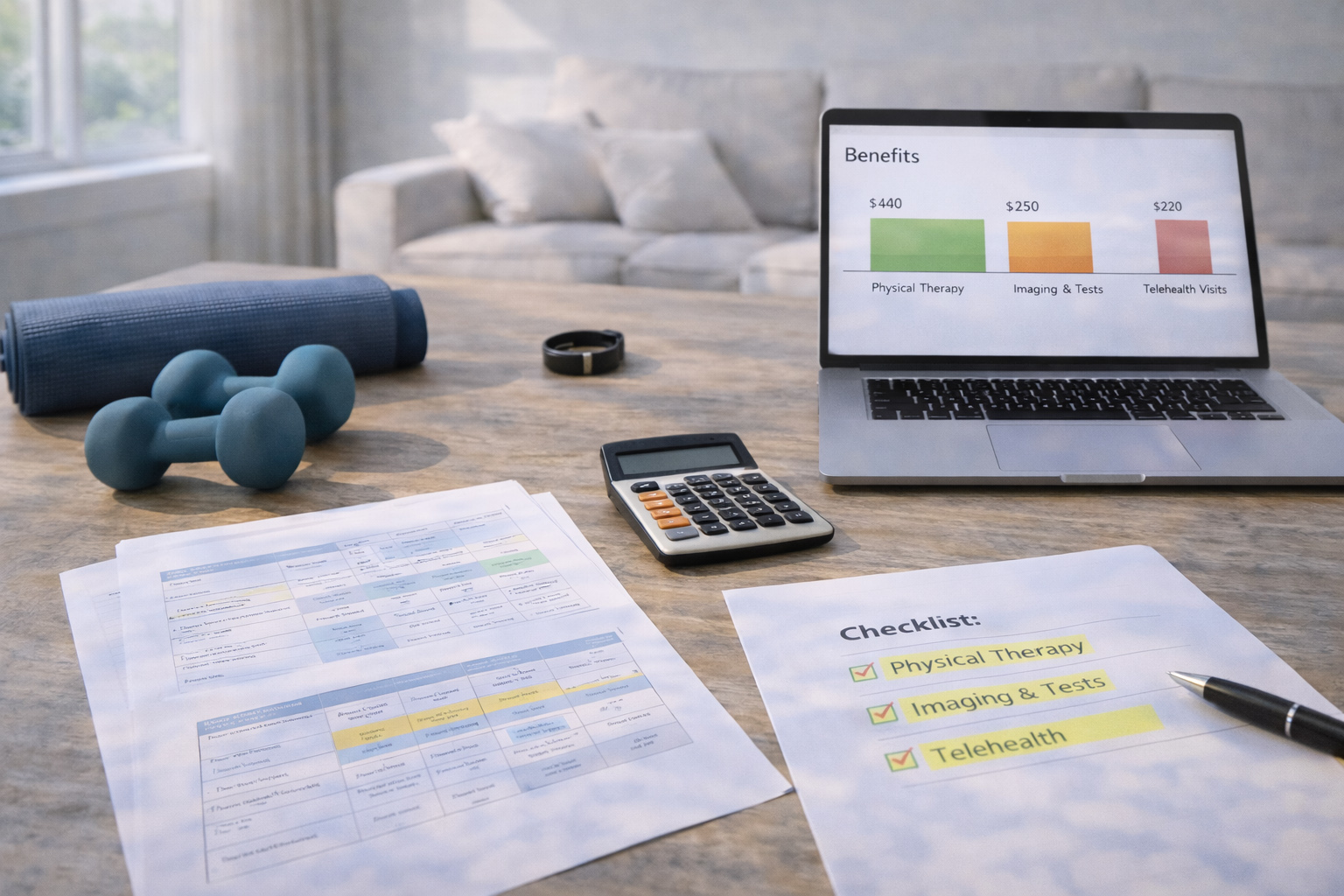
Look for plans that cover a range of services: urgent care, outpatient imaging, and physical therapy sessions.
If you use assistive devices or recovery equipment, confirm whether durable medical equipment is reimbursable under the policy.
Preventive care benefits, like wellness visits and counseling, can also support safer long-term exercise habits.
Understanding how each service is covered reduces surprise expenses and speeds access to appropriate care.
This is especially important when rehabilitation timelines affect daily routines and return to exercise.
Choosing plan features and managing costs
Evaluate additional features that make sense for active people: health savings accounts (HSAs), telemedicine access, and generous physical therapy limits.
Telehealth can be valuable for quick consultations about strains or guidance on safe progression after injury.
An HSA-compatible plan may lower taxable costs if you expect medical spending for therapy or equipment.
Also compare out-of-pocket maximums and prescription drug coverage that may apply to pain management or recovery aids.
- Telemedicine availability for initial assessments
- Physical therapy visit limits and copay amounts
- Durable medical equipment reimbursement
Matching these features to your typical care needs keeps both fitness and finances sustainable.
Budgeting for likely scenarios reduces stress if treatment is required.
Conclusion
Choose insurance by balancing access, cost, and the services most relevant to home fitness.
Prioritize plans that cover timely care, rehabilitation, and necessary equipment to support recovery.
A well-matched policy protects both health and household finances as you stay active.