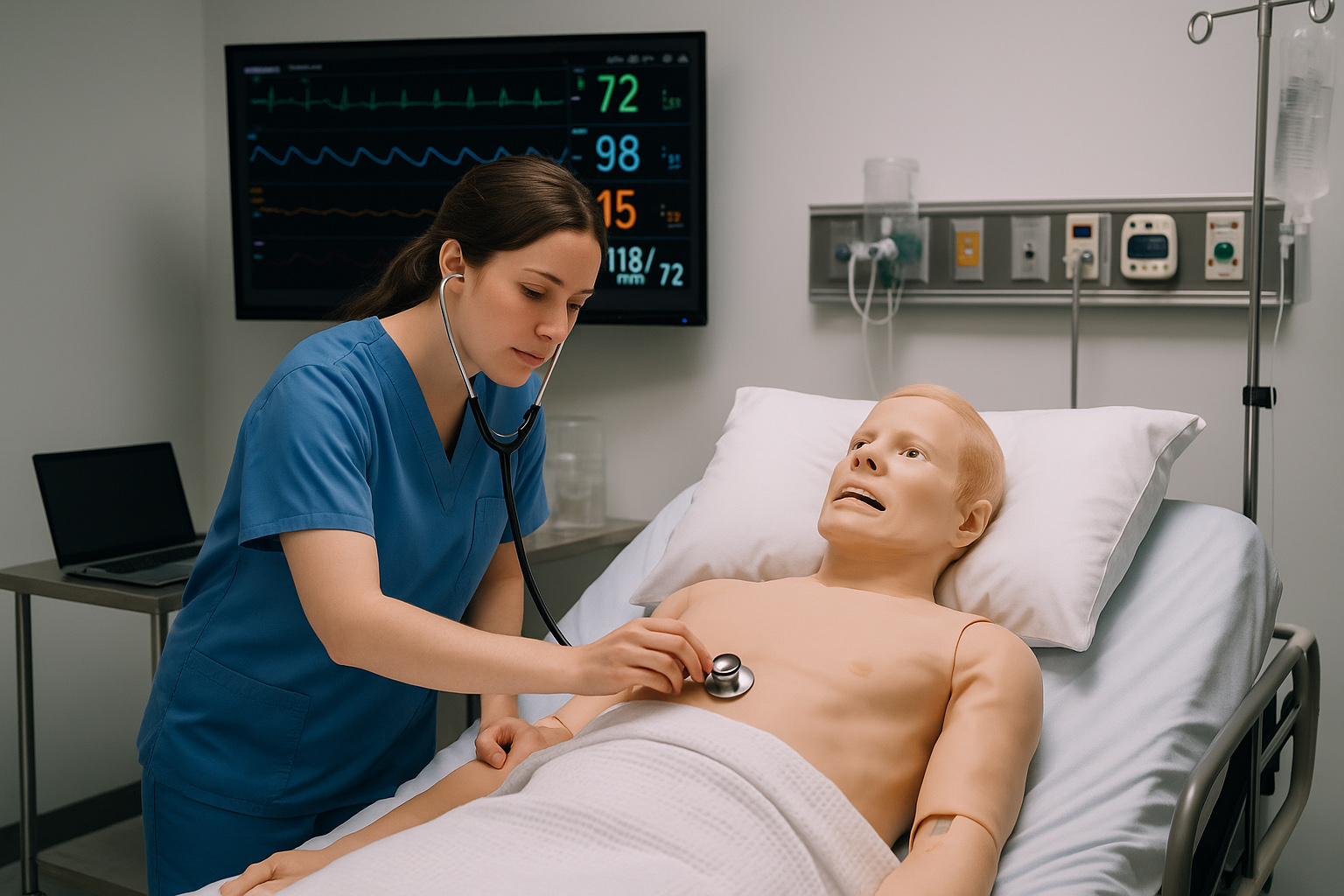
Medical education has evolved rapidly, and one of its most innovative tools is simulation-based learning. Instead of learning solely through textbooks or real patients, future doctors now gain experience through realistic simulations that mimic real-world medical scenarios. This method allows students to practice critical decision-making, refine skills, and build confidence—without putting patients at risk.
The Rise of Medical Simulation
Simulation-based training uses high-fidelity mannequins, virtual reality, and digital patient simulations to create lifelike clinical situations. These systems can replicate emergencies such as cardiac arrests, surgeries, or childbirth complications. Students can make real-time decisions, administer treatments, and see the results instantly. By practicing repeatedly in a controlled environment, they develop precision and calmness under pressure—skills essential in real-world healthcare.
Benefits for Students and Patients
The biggest advantage of simulation training is safety. Medical students can make mistakes, learn from them, and correct their approach without causing harm. This builds confidence and reduces anxiety when transitioning to real patient care. Additionally, teamwork exercises in simulated hospital settings help students improve communication and collaboration—two key factors in preventing medical errors. For patients, it means better-trained doctors who have already faced complex situations in practice settings.
Technology Behind Training
Modern simulation labs are equipped with advanced technology that tracks and analyzes student performance. Virtual reality systems immerse trainees in 3D environments, while augmented reality overlays guide them through procedures. Artificial intelligence even personalizes feedback, identifying areas for improvement. These innovations make medical training more engaging, efficient, and data-driven than ever before.
Conclusion
Simulation-based learning represents the future of medical education—safe, immersive, and deeply effective. By combining technology with practical experience, it prepares medical students to handle real-life challenges confidently. In the U.S. and beyond, this approach ensures that tomorrow’s doctors enter hospitals ready to deliver safer, smarter, and more compassionate care.