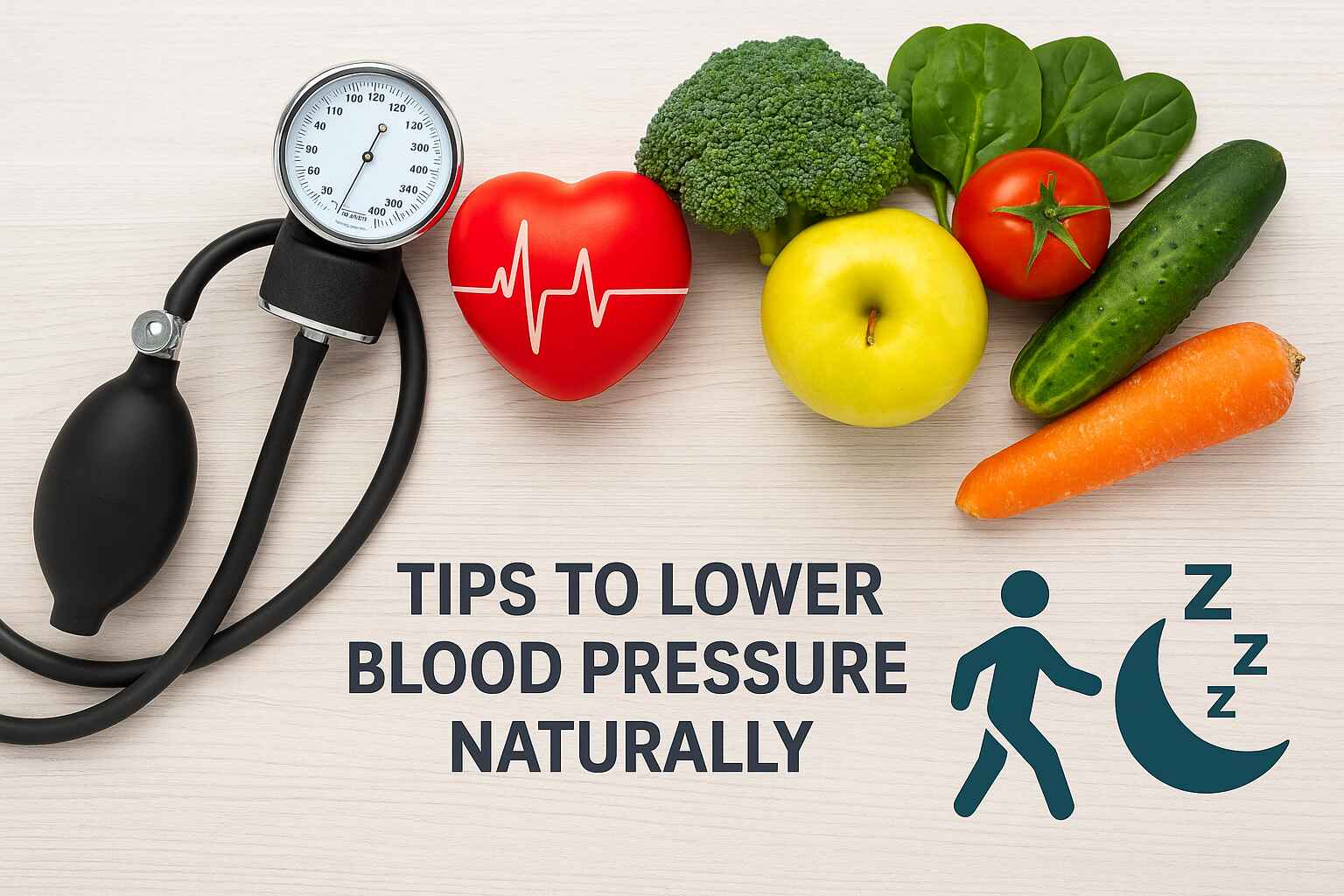
High blood pressure, or hypertension, is often called the “silent killer” because it usually has no symptoms but can lead to serious health problems like heart disease and stroke. While medications may be necessary in some cases, many people can lower their blood pressure naturally through lifestyle changes. Here are some proven tips to get started.
1. Adopt a Heart-Healthy Diet
What you eat has a direct impact on your blood pressure.
-
Reduce salt intake: Excess sodium raises blood pressure. Aim for less than 1,500 mg per day.
-
Eat more potassium-rich foods: Bananas, spinach, sweet potatoes, and beans help balance sodium levels.
-
Choose whole foods: Vegetables, fruits, lean proteins, whole grains, and nuts are essential for heart health.
-
Limit processed foods: Packaged snacks, canned soups, and fast foods often hide high sodium.
2. Stay Active
Regular physical activity strengthens the heart, helping it pump blood more efficiently.
-
Aim for 30 minutes of moderate activity like brisk walking, cycling, or swimming at least 5 days a week.
-
Include strength training 2–3 times a week to improve overall cardiovascular health.
3. Maintain a Healthy Weight
Even a small amount of weight loss can make a big difference.
-
Losing 5–10% of your body weight can significantly reduce blood pressure.
-
Focus on gradual, sustainable lifestyle changes instead of quick diets.
4. Manage Stress Effectively
Chronic stress can contribute to high blood pressure.
-
Try mindfulness practices such as meditation, deep breathing, or yoga.
-
Take regular breaks, spend time in nature, or pursue hobbies that help you relax.
-
Avoid coping mechanisms like overeating, alcohol, or smoking.
5. Limit Alcohol and Quit Smoking
-
Excessive alcohol raises blood pressure and reduces the effectiveness of medications. Stick to no more than 1 drink a day for women and 2 for men.
-
Smoking damages blood vessels and worsens hypertension. Quitting is one of the best things you can do for your heart.
6. Improve Your Sleep Habits
Poor sleep, especially sleep apnea, is linked to high blood pressure.
-
Aim for 7–8 hours of quality sleep each night.
-
Keep a consistent sleep schedule and create a calming bedtime routine.
7. Monitor Your Blood Pressure at Home
Keeping track of your numbers helps you notice improvements and identify triggers. Home blood pressure monitors are affordable and easy to use. Share your readings with your doctor during checkups.
Final Thoughts
Lowering blood pressure naturally is possible with consistent, healthy lifestyle choices. By focusing on diet, exercise, stress management, and sleep, you can take control of your heart health and reduce long-term risks.