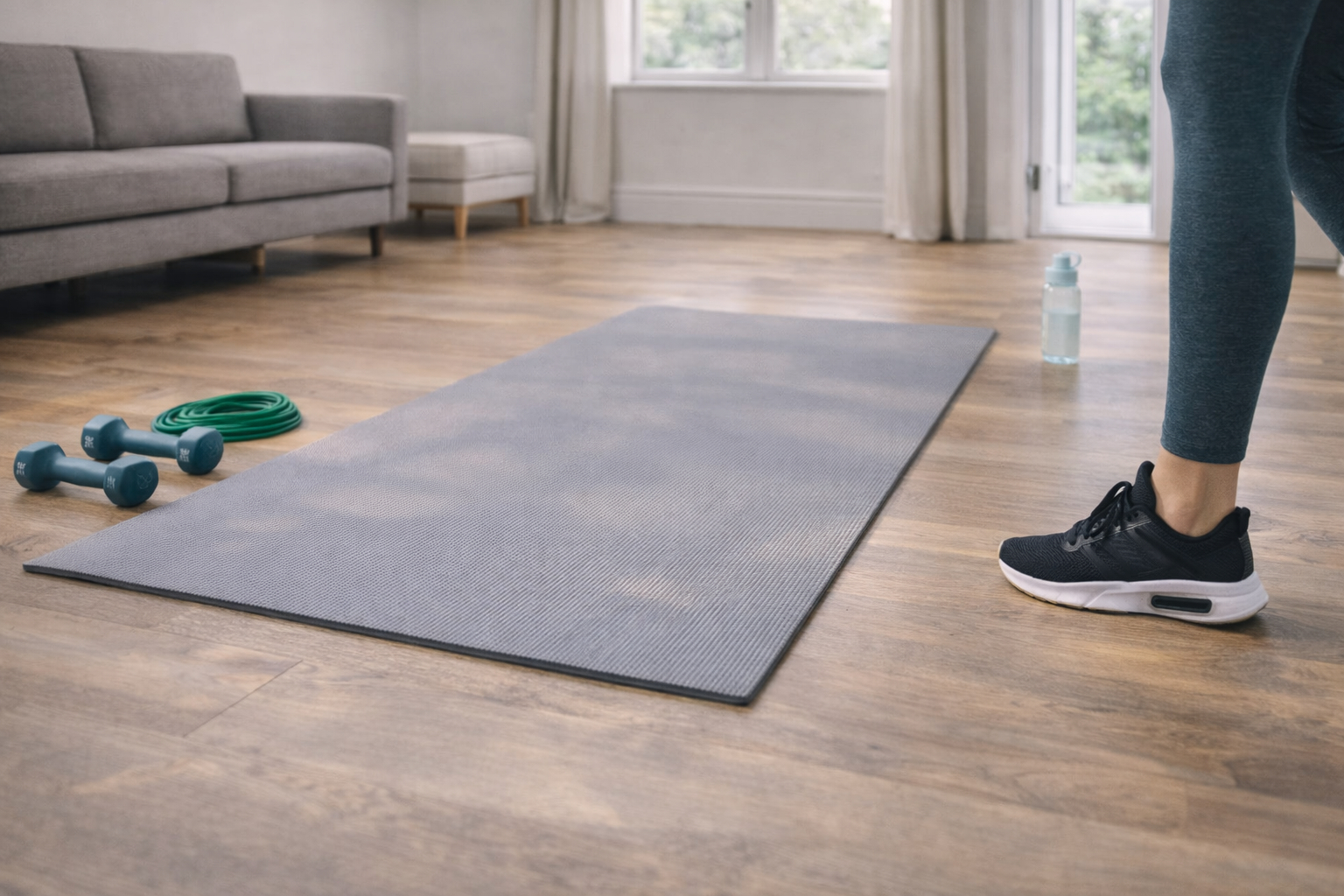
Home workouts are convenient, but they also introduce unique risks when space, equipment and routines are not considered. Small oversights — a slippery floor, poor lighting, or an inappropriate exercise choice — can lead to strains or more serious injuries. By taking simple, deliberate steps to assess your environment and habits, you lower the chance of harm and improve workout consistency. This article outlines practical, evidence-informed measures to keep your training both effective and safe.
Assessing Your Space
Begin by surveying the area where you plan to exercise and make immediate changes to hazards. Remove loose rugs, secure cords, and ensure there is enough clearance for movements that involve extending your arms or legs. Check lighting so you can see foot placement clearly, and verify that the surface you use is level and non-slip. Consider ventilation and temperature because comfort affects performance and the risk of dizziness or overheating.
Simple fixes often have the largest impact on safety: rearrange furniture, mark boundaries, or move to a more suitable room when needed. Making these adjustments takes little time and prevents many common accidents.
Choosing Exercises and Equipment
Match exercises to your current fitness and mobility levels rather than jumping into advanced routines. Start with bodyweight movements to master form, then add resistance gradually using small weights or bands. Inspect equipment regularly for wear, and buy only what is appropriate for home use so stability is not compromised. Routine maintenance extends equipment life and keeps sessions predictable and safe.
- Stable mat or non-slip flooring for impact and grip
- Sufficient clearance around the workout zone for dynamic moves
- Well-maintained weights, bands, or sturdy furniture used for support
Keeping a simple checklist helps maintain consistency and prevents poor equipment choices from disrupting progress. Frequent reassessment makes it easier to upgrade gear or adjust exercises as fitness improves.
Warm-up, Technique, and Recovery
A structured warm-up increases joint mobility and prepares muscles for effort, reducing injury likelihood. Focus on controlled technique above intensity; quality repetitions build strength without stressing connective tissues. Use progressions and regressions to adapt exercises on days when fatigue, pain, or limited space affect performance. Finally, prioritize recovery with gentle mobility work and sufficient rest between intense sessions to lower cumulative injury risk.
Recording sessions or working with a coach for occasional form checks can accelerate safe progress and correct habits early. Consistent attention to technique and recovery sustains long-term training health.
Conclusion
Small, planned changes to your space, equipment, and habits dramatically reduce injury risk during home workouts. Start with a brief assessment, choose appropriate exercises, and emphasize warm-up and recovery in every session. Consistent safety practices will keep you training longer and more effectively.