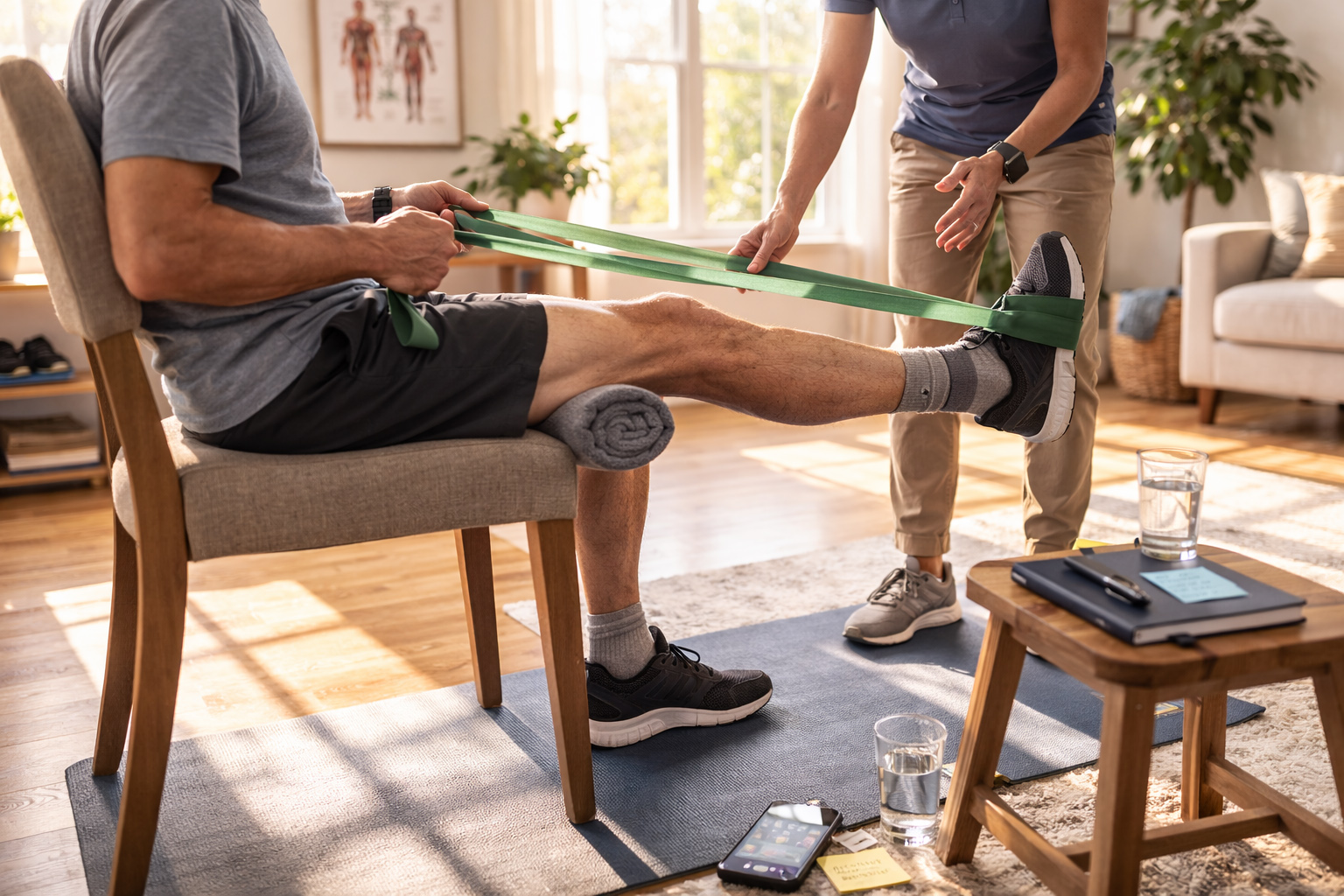
Starting or maintaining an exercise routine at home when you have a medical limitation requires careful planning and respect for your body.
A thoughtful approach reduces risk and helps preserve gains in mobility, strength, and mood.
This article outlines practical steps to structure workouts that are both effective and safe.
Follow clear principles to make activity sustainable and supportive of your health.
Set clear goals and realistic expectations
Begin by defining what you want from your home exercise routine, whether it is improved stamina, reduced stiffness, or better balance. Assess current abilities honestly and set short-term, measurable milestones that emphasize consistency over intensity. Keeping goals realistic helps avoid setbacks and preserves motivation through steady, achievable progress.
Revisit goals regularly and adjust them as you gain capacity or encounter limitations. Small, consistent improvements are often more valuable than sporadic intense sessions.
Prioritize movement quality and gradual progression
Focus on form, controlled range of motion, and steady breathing rather than speed or heavy resistance. Start with low-impact activities and increase volume or intensity in 10 percent increments to minimize flare-ups. Incorporate mobility, strength, and balance elements into short sessions that can be repeated throughout the week.
Use subjective response—how your body feels during and after activity—to guide progression. When in doubt, opt for a gentler session and maintain consistency.
Adapt your space and choose supportive equipment
Create a safe environment by clearing trip hazards and ensuring adequate lighting and ventilation. Select equipment that matches your needs, like stable chairs, resistance bands, or lightweight dumbbells that permit controlled progression. If balance is a concern, prioritize seated or supported variations of standing exercises to reduce fall risk.
- Stable chair or bench
- Light resistance bands
- Non-slip mat
Simple tools can enhance safety and effectiveness without adding complexity. Tailor choices to personal mobility and comfort.
Monitor symptoms and collaborate with professionals
Track how symptoms respond to exercise by keeping a brief log of activity, pain, fatigue, and function. Shared records make it easier to communicate with healthcare providers and to refine your plan based on objective trends. When uncertain about specific movements or limitations, seek guidance from a qualified clinician or therapeutic professional for personalized modifications.
Professional input can clarify red flags and provide tailored progressions, helping you maintain momentum safely. Regular reviews keep the routine aligned with changing needs.
Conclusion
Thoughtful planning, gradual progress, and safety-focused adaptations make home workouts achievable despite medical limits.
Track responses and stay in touch with professionals when adjustments are needed.
With consistency and care, exercise can support health and daily function.