Establishing a safe home exercise routine reduces the risk of injury and improves long-term adherence. Small adjustments to your environment and habits can make workouts far more effective. Understanding common hazards and preparing for them helps build confidence and consistency. This guide outlines practical steps to exercise safely at home and to know when to modify activity or seek help.
Creating awareness before you begin is the first line of defense. A few simple precautions will protect both beginners and experienced exercisers. Read on for focused guidance you can apply today.
Risks to Be Aware Of
Home workouts carry hazards such as improper form, inadequate warm-up, unsuitable flooring, and choosing weights beyond your capacity. Overuse injuries can develop when progression is too rapid or recovery is insufficient, and cluttered spaces increase the chance of trips or falls. Awareness of these common risks helps you plan safer sessions. Identifying personal limitations and any pre-existing conditions is essential before selecting exercises.
Recognizing risks early lets you adapt routines to avoid setbacks. Simple modifications can substantially reduce danger while maintaining progress.
Building a Balanced Home Routine
A well-rounded program includes mobility, strength, cardiovascular work, and flexibility. Start each session with a dynamic warm-up and end with gentle stretching to promote recovery. Progress intensity gradually by adjusting sets, repetitions, resistance, or duration rather than jumping levels. Prioritize form and technique over speed or load to protect joints and soft tissues.
Consistency matters more than intensity when establishing a sustainable habit. Schedule regular rest and vary movements to prevent repetitive strain.
Equipment and Environment Safety
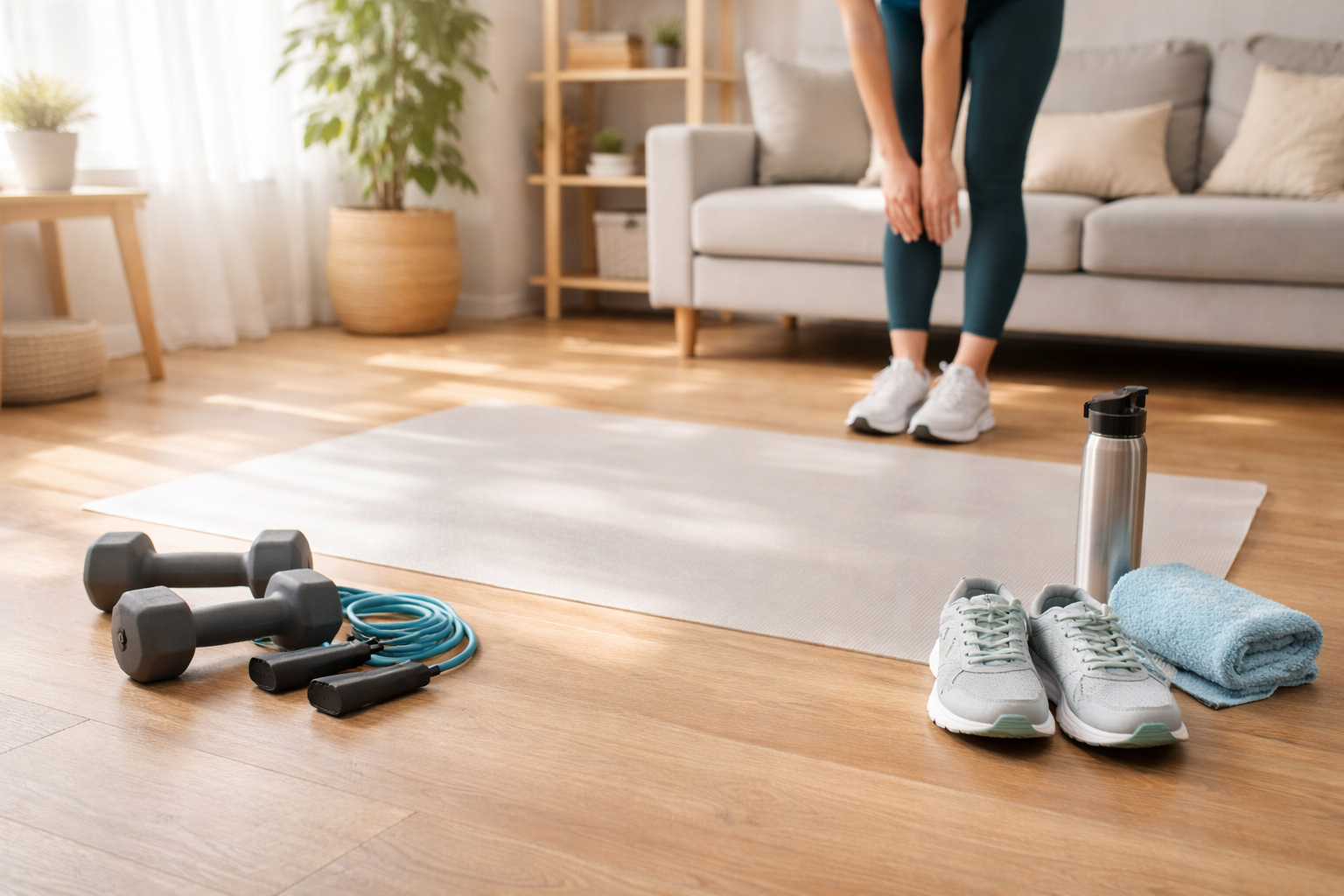
Select equipment appropriate to your skill level and available space; even bodyweight training requires a clear, stable surface. Ensure flooring is non-slip and free of obstacles, and secure heavier equipment to prevent tipping. Maintain equipment according to manufacturer guidance and inspect items regularly for wear. Adequate lighting and ventilation also contribute to safer, more comfortable sessions.
- Keep a clear workout area with at least a small safety perimeter.
- Use supportive shoes and proper mats for impact activities.
- Limit distractions and keep hydration nearby.
Simple environmental adjustments often prevent the majority of home exercise accidents. Invest time in setup for long-term safety benefits.
Monitoring Progress and When to Seek Help
Track workouts, pain responses, and recovery to recognize patterns that indicate overtraining or improper technique. Mild, transient discomfort is different from sharp or persistent pain; the latter requires pause and evaluation. If a movement consistently causes pain, consult a qualified professional for assessment and instruction. Professional input helps tailor exercises to individual needs and accelerates safe progress.
Use wearable trackers or a simple journal to maintain accountability. When in doubt, prioritize caution and seek guidance to stay on a healthy path.
Conclusion
Careful preparation and gradual progression make home exercise both safe and effective.
Small environment changes and attention to form reduce injury risk.
Seek professional advice for persistent pain or complex health concerns.