Creating a home environment that minimizes exercise injuries starts with deliberate setup and small habits. Even modest living spaces can be rearranged to support safer movement, reduce slips, and prevent trips. This article outlines practical adjustments and daily practices you can apply without major expense. Implementing a few focused changes will help maintain consistency and protect your body over time.
Assessing Your Space
Begin by surveying the area you plan to exercise in, noting dimensions, traffic flow, and potential hazards. Look for loose rugs, low furniture corners, electrical cords, and items stored at ankle height. If the space is shared, consider when others use the area and how that affects timing and access. A clear, dedicated zone—even if compact—reduces cognitive load and lowers the chance of accidental contact with obstacles.
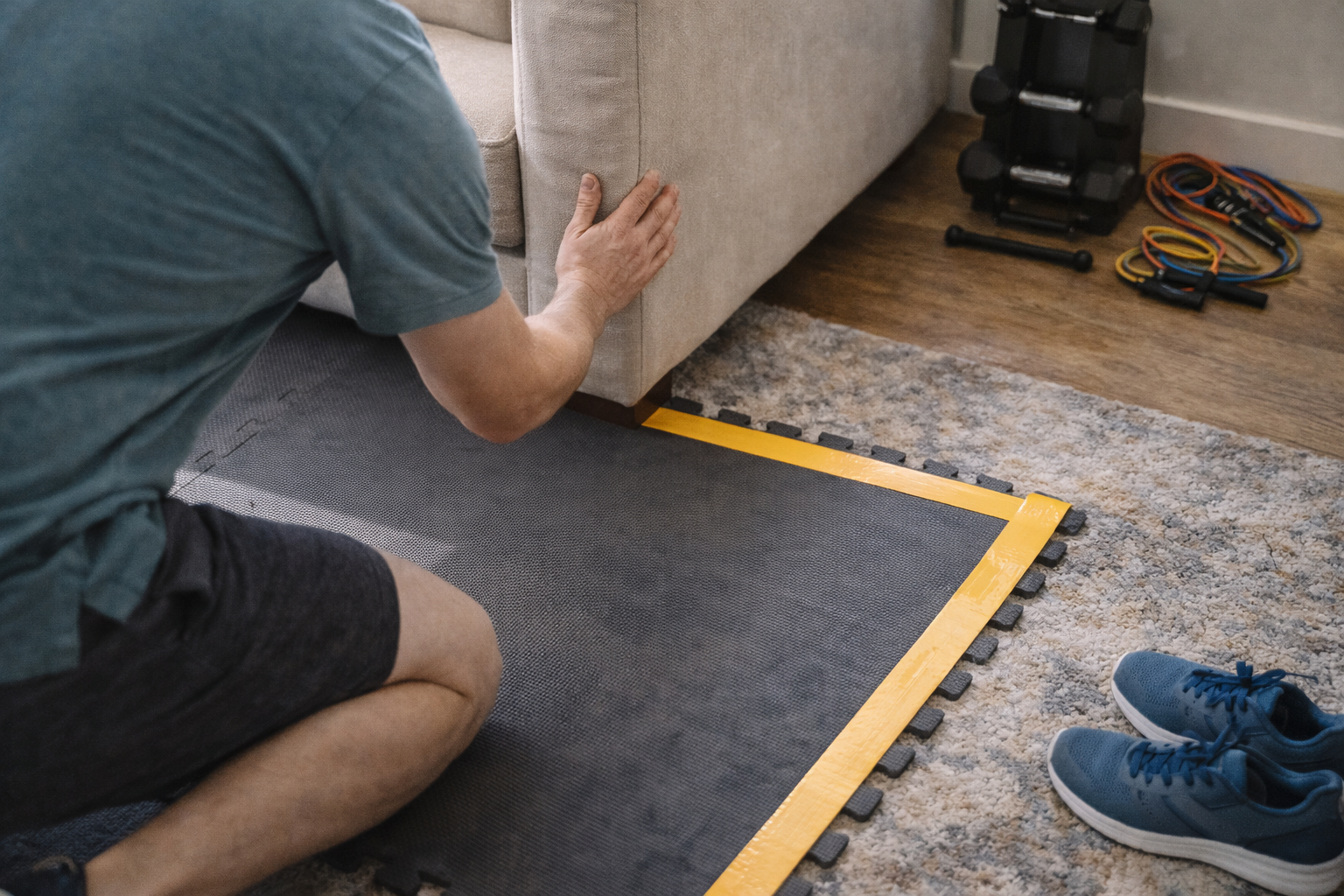
Mark the boundaries with tape or a mat to remind yourself of the safe zone. Consistent layout reduces setup time and supports better focus.
Flooring and Footwear
Flooring choice matters more than many home exercisers realize; shock-absorbent but stable surfaces cut impact forces and improve balance. Remove or secure rugs that can slide and use interlocking foam or a stable mat for movements that involve jumping or rapid direction changes. Consider the needs of the activity: heavier cardio or plyometrics benefit from thicker cushioning, while strength work often requires firmer ground for stability. Regularly inspect flooring for wear and replace mats that have compressed or curled edges.
Wearing activity-appropriate shoes keeps feet supported and reduces ankle strain. If space limits footwear changes, dedicate a clean mat and keep shoes nearby.
Equipment Placement and Maintenance
Place larger equipment against walls to create clear walkways and anchor points for balance. Keep frequently used items within easy reach to avoid awkward lifting or twisting, and store heavy objects low to the ground. Check moving parts and cables for fraying or looseness before each session, and tighten bolts or replace worn straps promptly. A simple maintenance log helps track inspections and extend the life of gear.
- Store weights on racks with labels.
- Coil cables and secure loose cords.
- Replace rubber bands and grips at first sign of wear.
Even inexpensive resistance bands can snap if neglected, so replace them at first sign of wear. Small maintenance habits prevent many common injuries.
Lighting, Ventilation, and Visual Cues
Good lighting reduces the risk of missteps and allows you to monitor form in mirrors or camera feedback. Ensure windows or fans provide airflow to prevent dizziness during intense sessions, and avoid exercising in overly humid or poorly ventilated corners. Use contrasting colors or tape to indicate edges of platforms or steps to maintain spatial awareness.
Improved visibility and airflow support both safety and performance. These inexpensive adjustments make sessions more comfortable and reduce distraction.
Conclusion
Optimizing your living space for exercise is largely about reducing predictable hazards and creating repeatable routines. Small investments in flooring, layout, lighting, and basic equipment care yield outsized returns in safety and consistency. Start with one change this week and build lasting habits.