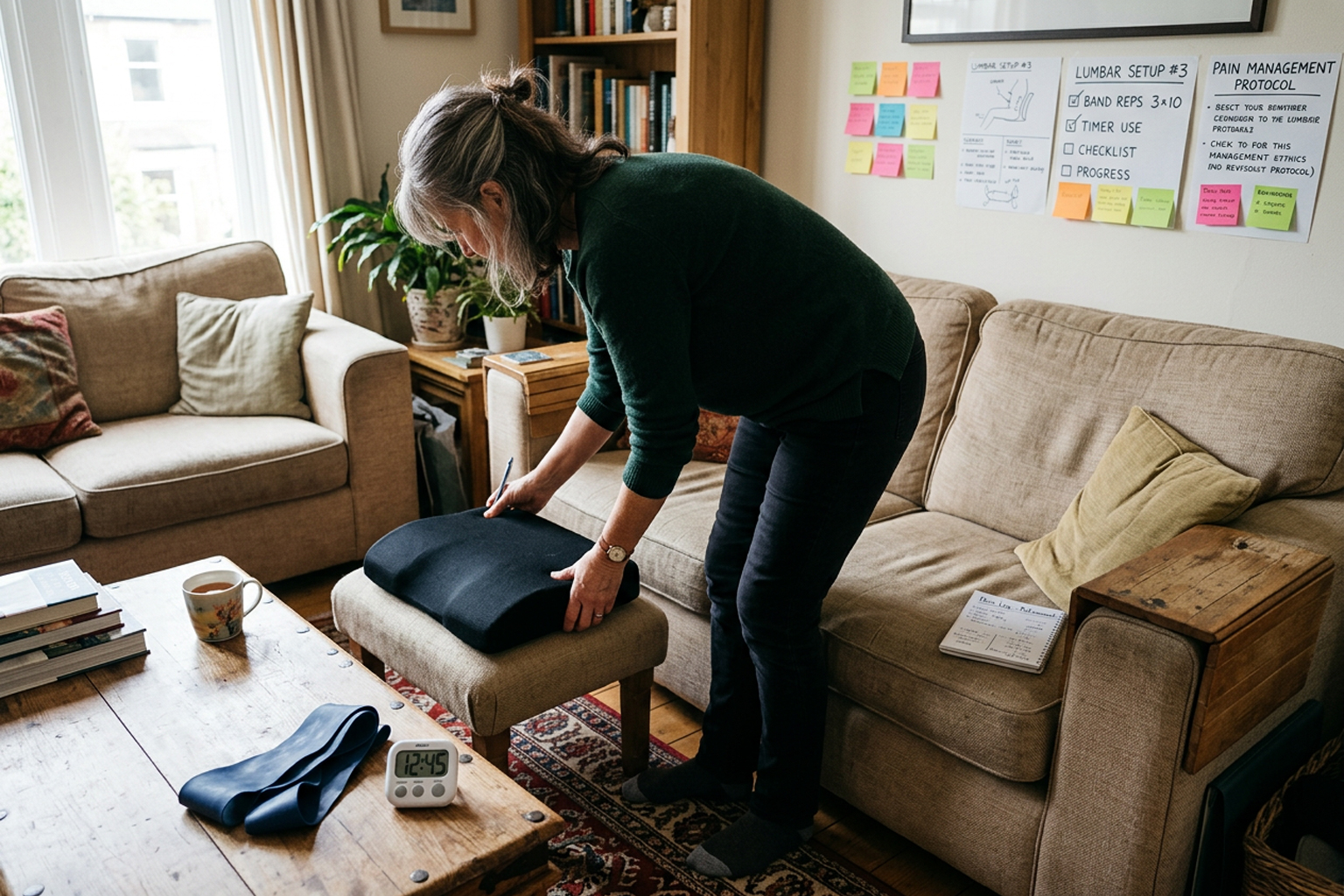
Living with chronic musculoskeletal pain often demands small, consistent changes rather than dramatic fixes.
A practical home system prioritizes posture, predictable movement, and simple environmental tweaks.
This approach reduces unnecessary strain and makes steady improvement more achievable.
The suggestions that follow focus on habits you can sustain day to day.
Assess the Home Environment
Start by surveying the places where you spend the most time and note positions that provoke discomfort. Consider seating height, mattress support, and how often you bend or reach for items. Look for patterns of repeated loading—tasks or postures that happen frequently and add up across the day. Small adjustments to layout and frequently used surfaces can reduce cumulative strain.
Use inexpensive tools like cushions, small risers, or a lightweight stool to change angles and force distribution. Simple fixes are often enough to break repetitive stress cycles and make movement less painful.
Build a Gentle Daily Routine
Create a predictable movement plan that mixes short, regular activity with intentional rest periods. Include low-load strength work, gentle mobility drills, and short walks or standing breaks every 30 to 60 minutes. Keep sessions brief and consistent so they become habits instead of tasks that are easy to skip. Emphasize variety across the day to avoid overloading the same tissues repeatedly.
Set clear cues to support adherence, such as alarms, visual reminders, or pairing activity with daily tasks. Gradual progress and reliability are more important than intensity.
Monitor and Adjust Progress
Track how different setups and routines affect pain and function using simple notes or a short diary. Pay attention to what increases symptoms and what supports recovery, and treat changes as experiments rather than failures. When a flare occurs, scale back to gentler options and reintroduce activity more slowly.
Periodic reviews help refine the system so it stays aligned with daily life and goals. Small, measurable wins will guide ongoing adjustments.
Conclusion
Designing practical systems at home emphasizes steady, sustainable changes over quick fixes.
Consistent, small adjustments to environment and routine reduce cumulative strain and support recovery.
Over time these habits build resilience and improve day-to-day comfort.