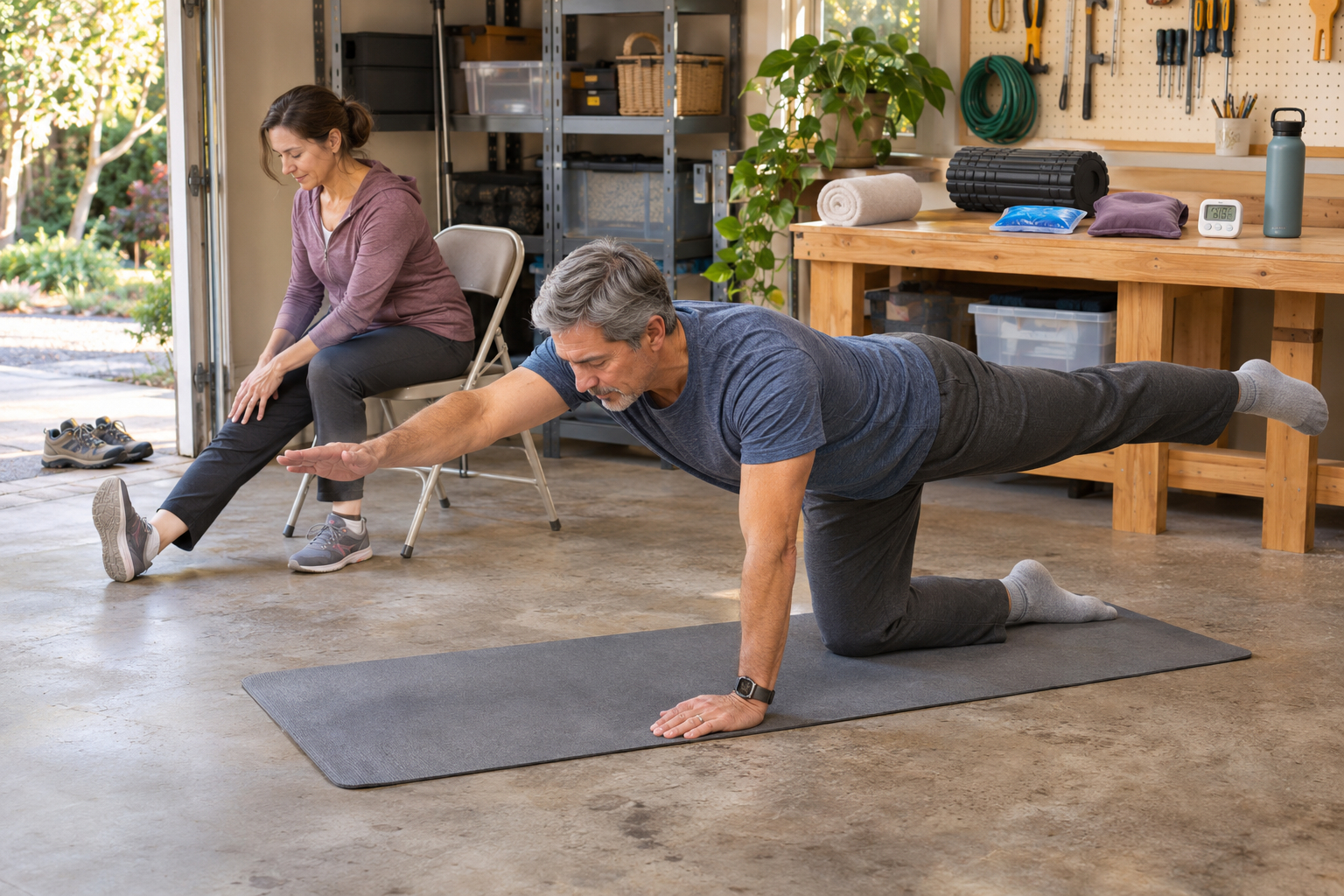
Lower back flare-ups can stop your plans and make routine tasks feel like chores. You don’t need elaborate gear to ease pain and rebuild support; steady, sensible habits are what matter. This piece outlines practical at-home choices—gentle movement, a short strengthening routine, small ergonomic fixes, and careful recovery tools—that fit into everyday life. Use these tactics gradually and consult a clinician if symptoms worsen or numbness appears.
Start with safe movement
When pain flares, resting for long periods often makes the problem linger; gentle activity increases circulation and reduces stiffness. Begin with short walks, pelvic tilts, and controlled hip hinges, keeping every movement within a comfortable range. Favor several brief sessions across the day rather than one long, strenuous effort.
- Pelvic tilts: 10–15 slow reps to engage the deep core.
- Short 5–10 minute walks, multiple times daily.
- Gentle hip hinges focusing on the hinge at the hips, not the waist.
Pay attention to sharp, shooting, or spreading pain — those are signs to stop and seek advice. Progress slowly and keep activities pain-aware so you build tolerance without provoking symptoms.
Build a short home routine
A focused 10–15 minute routine most days strengthens the muscles that support the spine without overtaxing them. Include core stabilization, glute activation, and gentle hamstring work; balance matters more than heavy loading. Prioritize controlled movement, steady breathing, and gradual increases in duration or repetitions.
- Bird-dog: 8–12 controlled repetitions per side.
- Glute bridges: 10–15 reps with a slow squeeze at the top.
- Seated or standing hamstring stretch: 30 seconds per side.
If an exercise increases nerve pain or numbness, stop and consult a professional. You can increase sets, reps, or hold times as comfort improves.
Set up a spine-friendly environment
Your day-to-day setup matters for loading on the lower back—chair height, lumbar support, screen level, and mattress firmness all influence comfort. Small swaps like a rolled towel for lumbar support or a firm pillow under the knees when lying down make noticeable differences. Make a habit of standing and moving every 30–60 minutes to break up prolonged postures.
- Adjust chair so hips are slightly higher than knees when seated.
- Raise screens to eye level to avoid slumping forward.
- Use a lumbar roll or cushion to preserve the natural curve when sitting.
These tweaks reduce repetitive strain and support recovery while you keep working on strength and mobility. Think of them as simple, low-effort changes that let active strategies work better.
Use recovery tools carefully
Heat and ice both have roles: ice can help during the first 48 hours after an acute strain, while gentle heat can relax tight muscles afterward. Short-term over-the-counter pain relievers may ease symptoms for some people—follow label directions and check with a provider about interactions. Gentle self-massage, light foam rolling used with care, and supported decompression (lying with knees bent) can provide relief but avoid aggressive pressure on the spine.
- Ice: 10–15 minutes, several times a day in the first 48 hours.
- Heat: 15–20 minutes to reduce muscle tightness after the acute phase.
- Foam rolling: brief, gentle use; avoid direct pressure on the spine.
Recovery tools are aids to comfort and movement, not standalone fixes. Use them alongside movement and ergonomic changes to support steady improvement.
Conclusion
Recovering a stronger lower back at home depends on consistent, sensible choices: gentle movement, a short strengthening routine, ergonomic adjustments, and cautious use of recovery tools. Small daily improvements add up faster than occasional intense efforts. If pain persists, intensifies, or you notice numbness or weakness, seek professional evaluation promptly.