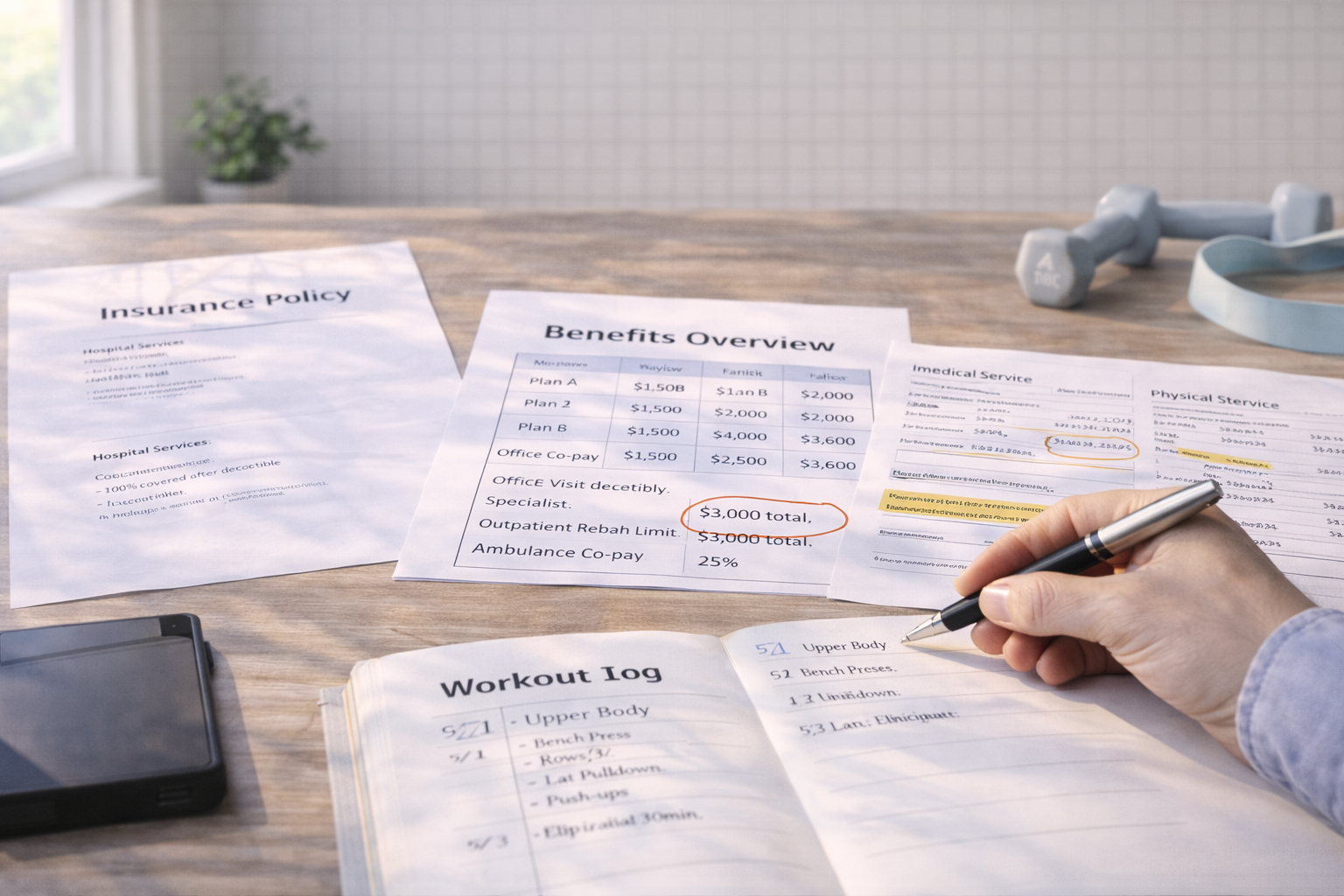
Choosing the right medical insurance can be confusing for people who train primarily at home. Small differences in coverage determine whether common workout injuries are treated smoothly or become administrative headaches. This article outlines practical steps to match a policy to home fitness routines. Use these points to focus conversations with agents and compare plans effectively.
Assessing Your Risk Exposure
Start by identifying the types of workouts you do and the equipment you use, because risk profiles differ between bodyweight sessions and heavy resistance training. Consider frequency and intensity: more frequent or higher-intensity sessions raise the chance of strain or acute injury. Also factor in any preexisting conditions that may affect treatment options or premiums. Understanding these elements helps you prioritize the coverage features you actually need.
Once risks are mapped, estimate typical costs for care in your area, including urgent care, imaging, and rehabilitation. That estimate will inform acceptable deductible and out-of-pocket limits. With clear figures, you can weigh plan trade-offs more objectively.
Policy Features to Prioritize
Look beyond premiums to features that matter for workout-related injuries. Key elements include emergency and urgent care coverage, outpatient physical therapy limits, and imaging and specialist access. Also check whether telemedicine and remote consultations are included, as these can speed assessment and referrals. Exclusions and waiting periods are especially important to review before starting new training regimens.
- Emergency and urgent care limits
- Outpatient rehabilitation allowances
- Imaging and specialist referral policies
- Telemedicine and virtual care options
Compare these features across plans and request specific examples from providers about how a common injury would be handled. Concrete scenarios reveal hidden costs and delays.
Documenting Workouts and Incidents
Maintaining a simple workout log and recording any incidents can improve claims outcomes. Note dates, activities, equipment used, and symptoms immediately after an event. If an injury requires a visit, provide clinicians with this history to support diagnosis and treatment decisions. Clear records help insurers understand context and reduce disputes over coverage.
Keep receipts and referral paperwork organized and submit claims promptly to avoid denials. A tidy file makes follow-up easier and speeds reimbursement when it is due.
Working with Providers and Costs
Ask potential insurers about preferred provider networks and whether you need preauthorization for certain treatments. Network restrictions can affect your choice of physical therapists or specialists after an injury. Also evaluate cost-sharing elements such as copays, coinsurance, and maximum out-of-pocket limits that could impact your finances after a significant injury. Seek clarity on how appeals are handled if a claim is denied.
Armed with plan comparisons and a list of common scenarios, negotiate or select a policy that balances premium costs with the protection you need. Periodically review your coverage as your training evolves.
Conclusion
Match policy features to the risks of your home fitness routine and document incidents carefully.
Prioritize access to urgent care, rehabilitation, and telemedicine when comparing plans.
Review and update coverage as your workouts and equipment change.