

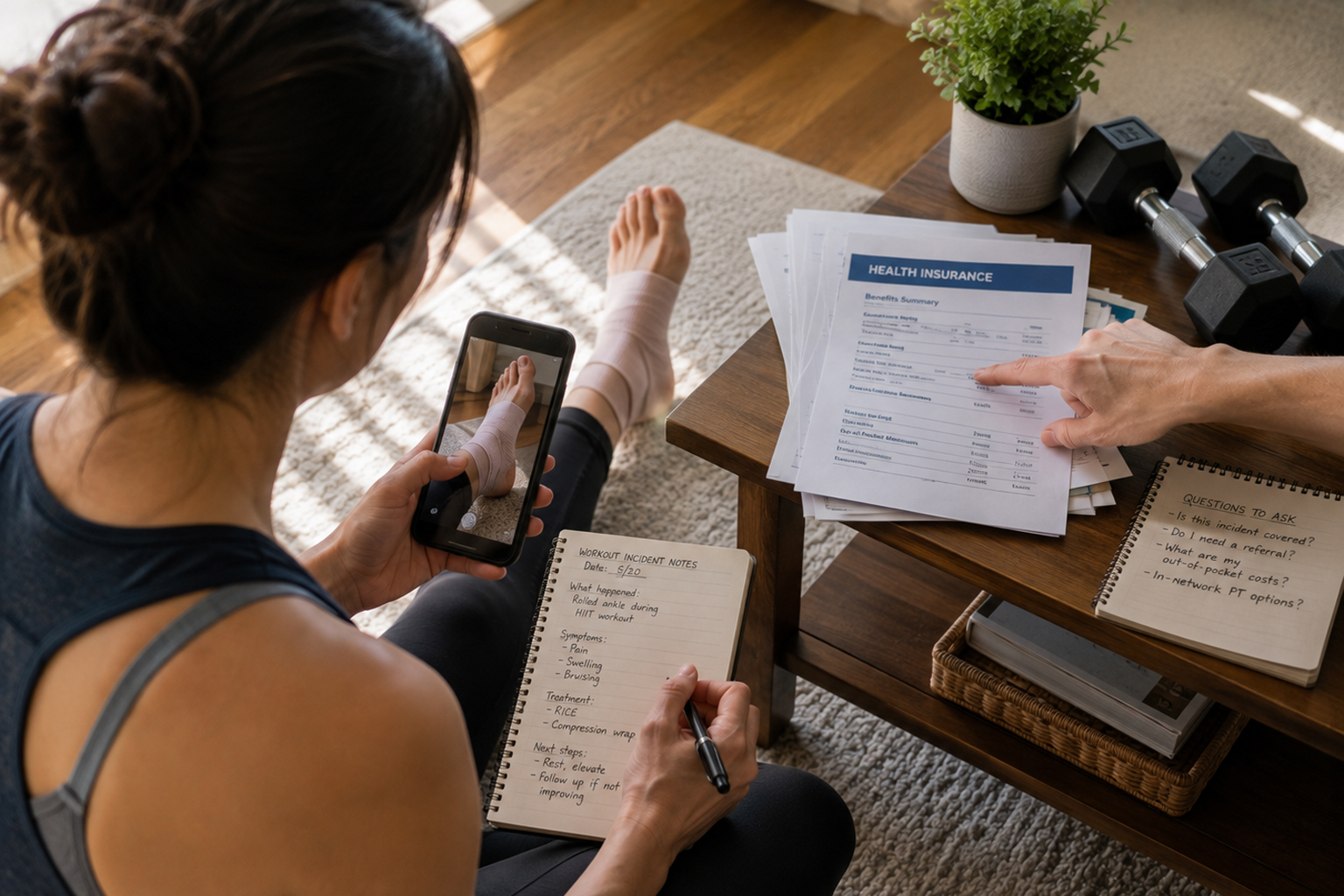
Home workouts are convenient but can lead to unexpected injuries requiring medical care. Understanding how insurance handles these situations reduces stress and speeds access to appropriate treatment. This guide outlines practical steps to review your coverage and prepare documentation for possible claims. Following a few key practices helps you protect both your health and finances.
Why insurance matters for home workouts
Even minor strains or falls can trigger consultations, imaging, or therapy that carry significant costs. Knowing your plan’s emergency, urgent care, and specialist rules clarifies where to seek care without incurring unnecessary bills. Coverage differences can affect out-of-pocket costs, approval timelines, and whether rehabilitation services are available. Assessing these elements ahead of time reduces surprises after an incident.
Being proactive also means confirming in-network providers and preauthorization requirements. This minimizes delays in receiving appropriate follow-up care.
What policy details to review
Start by checking deductibles, copays for urgent and specialty visits, and any rehabilitation or physical therapy limits. Look for exclusions that might apply to non-work-related injuries or activities considered high risk by the insurer. Review prior authorization rules for imaging and specialist referrals, and note any timelines for filing claims. Also confirm whether telehealth visits are covered for initial triage or follow-up consultations.
- Deductible and out-of-pocket maximum amounts.
- Limits on physical therapy sessions and coverage for durable medical equipment.
- Prior authorization and preexisting condition clauses.
Keeping a clear checklist of these items makes policy comparison practical and actionable. Save screenshots or policy excerpts for quick reference after an injury.
Documenting incidents and preparing claims
Accurate, timely documentation strengthens any insurance claim after a home workout injury. Record the date, time, activity, and a brief description of how the injury happened, and photograph the scene or equipment if relevant. Obtain medical notes, receipts, and referrals promptly, and keep a running file of communications with providers and the insurer. Organized records speed processing and support appeals if a claim is denied.
- Write a concise incident statement within 24–48 hours.
- Keep copies of all medical records and billing statements.
Prompt documentation also helps clinicians deliver targeted care based on the reported mechanism of injury. Maintain a digital and physical backup of these materials.
Choosing supplements and providers strategically
Consider supplemental plans or riders that reduce out-of-pocket costs for rehabilitative care if your current policy has strict limits. When possible, select in-network clinics and therapists and ask about bundled care packages that insurers recognize. Verify provider billing codes to avoid unexpected denials and ask whether a prior authorization can be obtained before costly diagnostics. Working with a patient advocate or insurance navigator can clarify confusing policy language.
These choices can significantly lower long-term costs and improve continuity of care. Regularly revisit policy options during open enrollment periods.
Conclusion
Preparing ahead and understanding policy details makes handling a home workout injury less stressful. Clear documentation, in-network care choices, and knowledge of prior authorization rules protect both recovery and finances. Take time now to review your plan so you can focus on healing if an incident occurs.










