Designing a home exercise routine is about more than equipment and schedules. It also pays to plan around how your medical insurance will respond if something goes wrong. Understanding common policy features before you train can reduce surprises and protect your budget. This article outlines practical steps to match your fitness habits with reliable coverage and claims readiness.
Coverage Checklist
Start by reviewing key policy sections that affect care after a home workout incident. Check emergency coverage, telehealth options, rehabilitation and physical therapy limits, and whether diagnostic tests are covered without high out-of-network penalties. Pay attention to deductibles, copays, and annual out-of-pocket maximums so you can estimate likely costs for an injury. Also confirm any exclusions that reference sports or activity-related injuries, as wording varies across plans.
- Emergency and urgent care rules
- Telehealth and virtual visit allowances
- Rehab, PT, and durable medical equipment coverage
Use this checklist to prioritize the benefits most relevant to your routine. Carry a summary of these items when choosing providers or filing claims so you can respond quickly after an incident.
Choosing Providers and Rehab
Network status heavily influences cost and access to care, so identify preferred urgent care centers and physical therapists that accept your plan. If your policy requires referrals or prior authorization for rehabilitation, confirm that process ahead of time to avoid denied claims. For ongoing recovery, consider providers offering combined telehealth and in-person services to keep continuity of care manageable. Look into coverage for home-based physical therapy if you prefer recovery at home.
Maintaining a shortlist of approved providers and noting authorization requirements helps you act efficiently. Clear communication with your insurer and clinicians reduces delays in necessary treatments.
Documenting Claims and Managing Costs
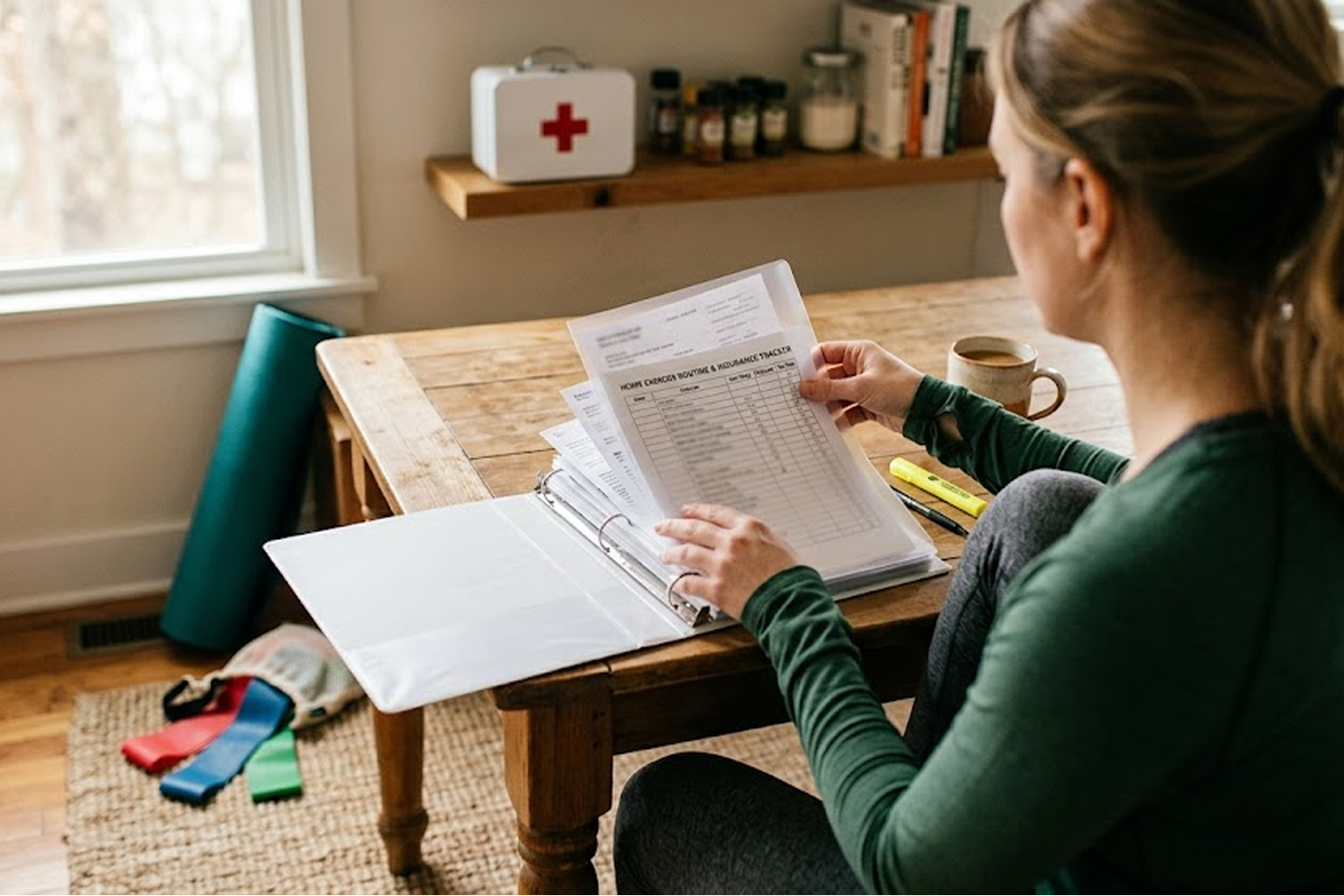
Thorough documentation can make the difference when a claim is reviewed. Record the date, circumstances, and immediate care steps after an injury, and retain receipts, visit notes, and any imaging or test results. When submitting claims, include a concise timeline and copies of relevant records to support medical necessity. If a claim is denied, follow the insurer’s appeal process promptly and provide additional documentation as requested.
Tracking expenses against your deductible and out-of-pocket maximum helps you decide when to pursue elective or additional care. Proactive documentation and an organized claims folder simplify appeals and reduce frustration.
Conclusion
Plan your routine with an eye to how your policy responds to injuries and recovery. Keep provider lists, authorization rules, and clear documentation on hand. Doing so makes home fitness safer and more financially predictable.