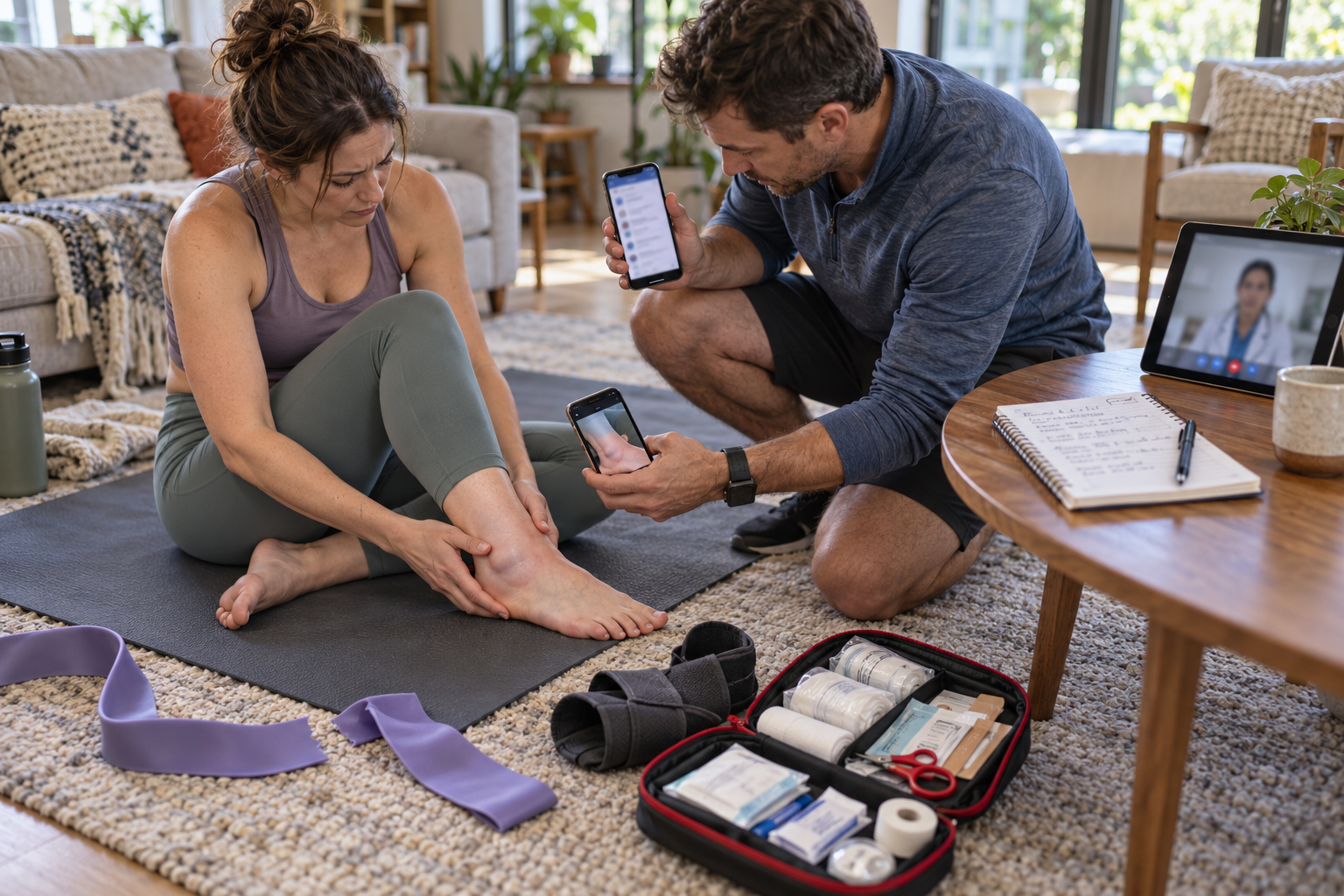
If a sprain or cut happens during a home workout, medical bills usually go to your health plan.
Before you need care, check what your policy covers for at-home exercise incidents.
Small details—where you seek care and how you document the event—affect what you pay.
Below are practical questions to ask and steps to reduce surprises after an injury.
Store the answers somewhere handy so you can act quickly if something happens.
Know what counts as emergency care
Insurance plans differ on whether they cover urgent versus emergency services; a painful but non-life-threatening injury may be routed to urgent care or telehealth, and costs will vary. Ask your insurer what defines an emergency under your policy and whether out-of-network emergency care is covered. Also confirm ambulance rules and whether prior notification is required for transfers to a hospital. These distinctions change the bills you might face after a fall or severe strain.
Keep the insurer’s emergency guidance saved on your phone and note any required numbers for pre-authorization. A quick call at the scene can sometimes avoid big out-of-network charges.
Check provider networks, telehealth, and rehab options
Rehabilitation and physical therapy are often key after a sports injury, but limits on visits or network restrictions can cause unexpected costs. Verify which physical therapists, clinics, and hospitals are in-network and whether virtual follow-ups are accepted. Ask about prior authorization needs for therapy and whether your plan covers durable medical equipment such as braces or crutches. If your insurer offers telehealth, confirm whether virtual exams count toward visit limits.
- In-network hospitals and clinics to use for injuries.
- Prior authorization rules for therapy or imaging.
- Allowed number of physical therapy sessions per injury.
- Coverage for braces, splints, or other durable equipment.
- Whether telehealth visits meet documentation requirements.
Having these answers ahead of an injury makes choosing a clinic or therapist faster and cheaper. Keep a short list of in-network rehab providers for quick reference.
Documenting injuries and filing claims
Accurate records speed claim approval: note the date, time, and exact activity that caused the injury, and keep photos and equipment details if relevant. Request itemized receipts, clinic notes, and any imaging reports; these documents matter when insurers review whether an injury is treatment-related. Understand your plan’s timelines for submitting claims and appeals so you don’t miss deadlines that could cost you coverage. If a guest is injured during your workout, learn whether your homeowner’s or the guest’s health policy is expected to pay first.
Store copies of documents digitally and back them up to avoid lost paperwork when you need to file. When in doubt, call the insurer’s claims department and confirm which forms or notes to include.
Conclusion
Insurance won’t eliminate every bill, but clear answers reduce surprises and speed recovery.
Verify emergency definitions, network choices, rehab rules, and claim timelines now.
A short checklist and saved contacts make a stressful injury easier to manage.