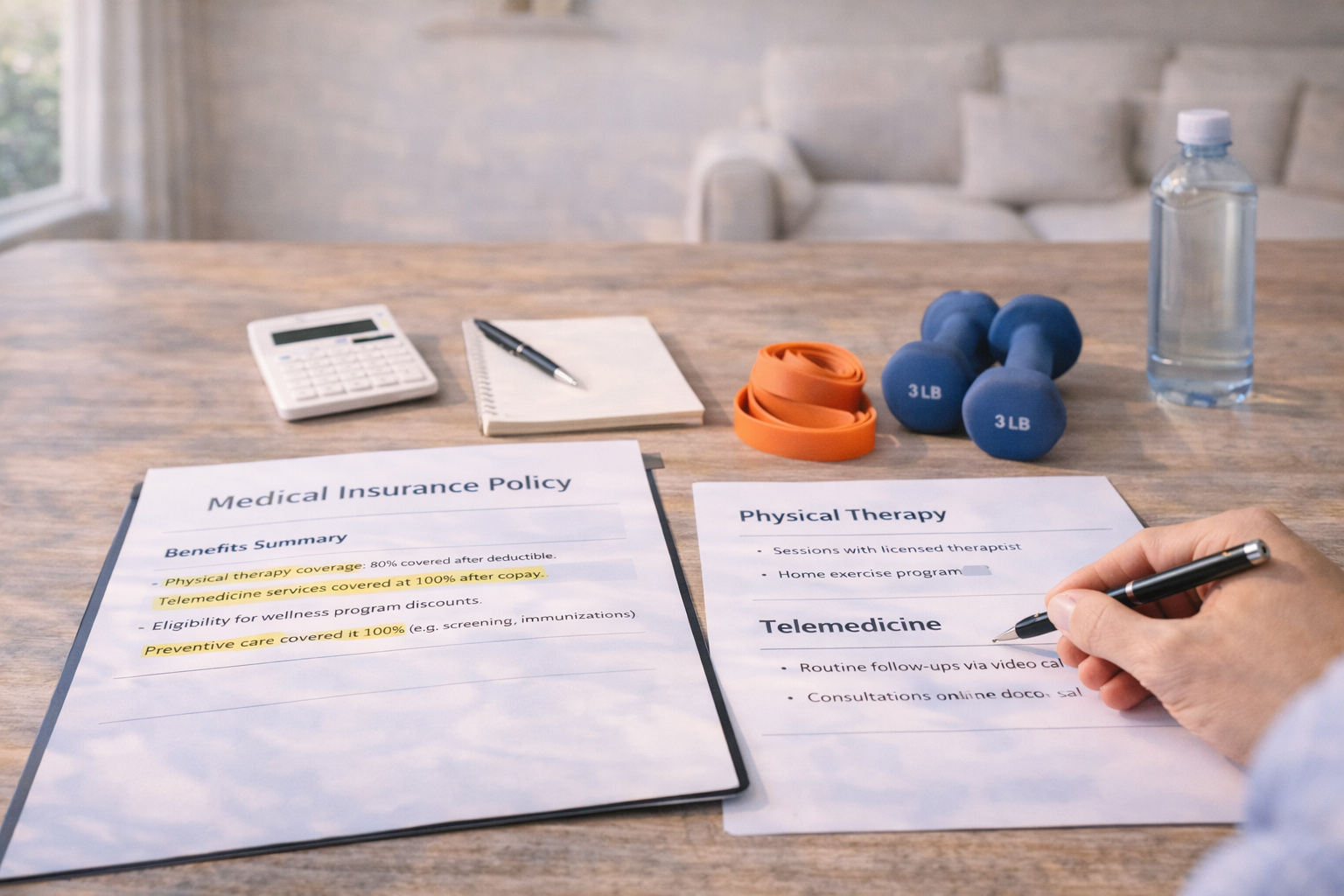
Managing health risks from regular at-home workouts starts with understanding how your medical insurance works. Many households assume standard policies cover all fitness-related care, but specifics vary by plan. Reviewing benefits, networks, and exclusions helps avoid surprises if you need treatment after an injury. This article outlines practical considerations to match coverage to an active at-home lifestyle. Knowing how claims are processed helps families plan financially.
Understanding Policy Basics
Begin with the policy summary and the list of covered services to identify what types of care are included. Check whether physical therapy, diagnostic imaging, urgent care visits, and telemedicine are covered, and note any prior authorization requirements. Pay attention to in-network provider rules, out-of-pocket maximums, and how copayments or coinsurance apply. Understanding these items clarifies likely costs and access when an injury occurs.
Keep a copy of plan documents and a clear summary of key limits. This makes it easier to compare options or to file a claim when care is needed.
Selecting Plans That Support Home Fitness
When comparing plans, prioritize coverage categories that align with common home workout injuries and preventive care. Plans with robust physical therapy benefits and reasonable imaging policies reduce financial barriers to proper diagnosis and rehabilitation. Consider plans offering telemedicine, which can be useful for quick triage of minor strains or guidance on whether in-person care is necessary. Also review wellness or preventive services that may help reduce future injury risk.
- Physical therapy coverage and limits
- Telemedicine access for quick consultations
- Network breadth for rehabilitation specialists
Factor in premium versus anticipated out-of-pocket costs based on your household’s fitness habits. If you use specialized equipment or trainers, check whether any services might require additional rider coverage. Weigh the value of lower premiums against higher potential treatment costs.
Practical Steps After an Injury or Claim
If an injury happens during a home workout, seek appropriate care promptly and document the incident. Keep records: dates, symptoms, provider notes, and any correspondence with the insurance company. Before scheduling tests or extended therapy, confirm coverage and whether prior authorization or referrals are required. Timely communication with both your provider and insurer minimizes denied claims and unexpected bills.
Use appeals processes if a claim is denied and provide supporting medical documentation. Consider consulting a benefits manager if you encounter recurrent coverage obstacles.
Conclusion
Aligning medical insurance with at-home exercise routines reduces stress when injuries occur. Invest time in policy review and provider conversations to ensure coverage fits your habits. Regularly revisit choices as activities or household needs change.