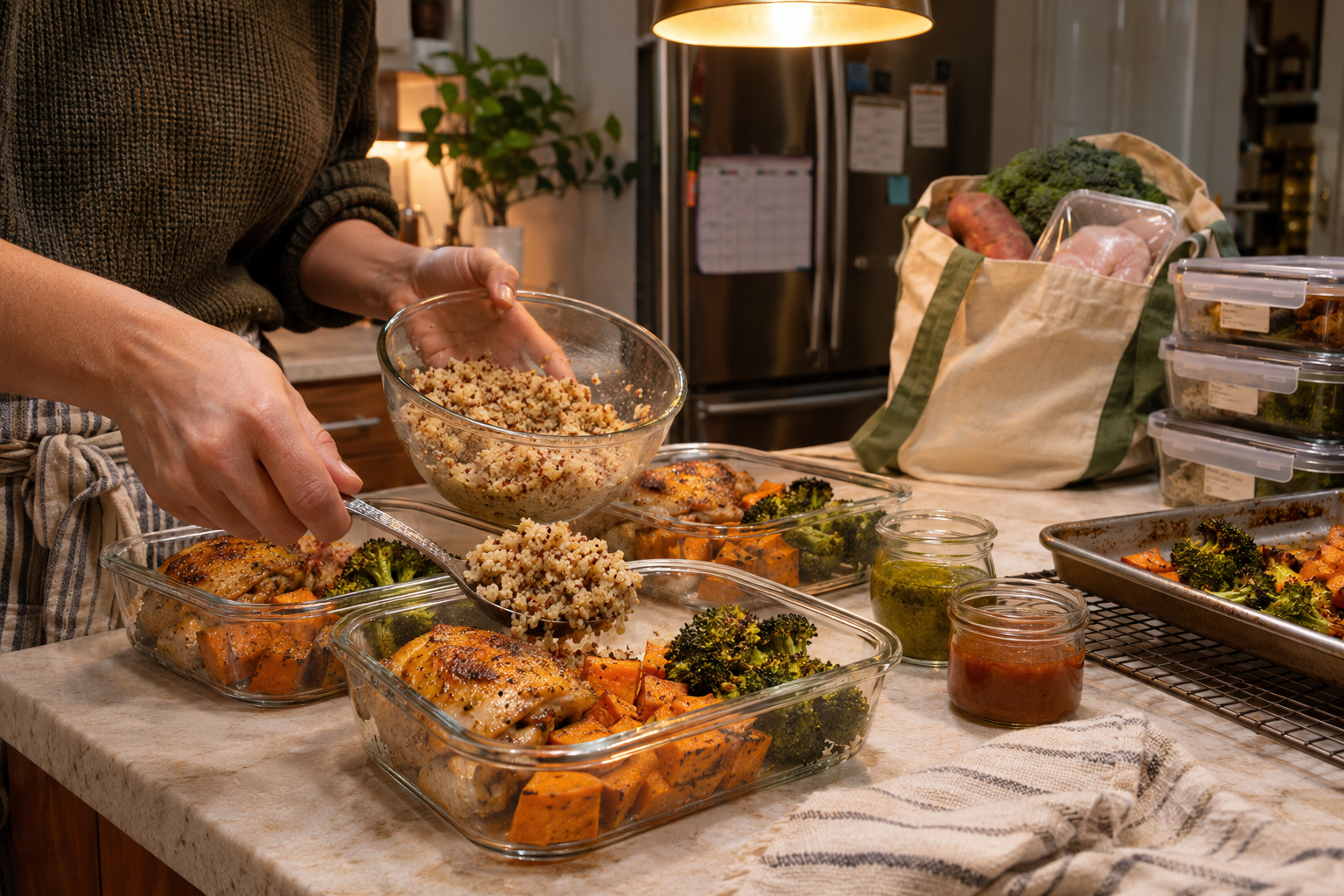
Meal prep doesn’t have to be a weekend marathon reserved for free afternoons. Small, consistent habits can free time, reduce food waste, and make healthier choices automatic. This piece lays out practical steps you can fit into evenings and short weekend blocks. Expect usable techniques that work with a typical countertop, a few storage containers, and basic ingredients.
Plan with purpose
Start by choosing three to five meals you actually enjoy and rotate them over two weeks. Write a short shopping list focused on ingredients that cross over between recipes so nothing gets wasted. Keep one flexible slot for a leftover night to absorb any cooking overruns. Planning this way shortens decision time and prevents impulse buys at the grocery store.
Use a simple calendar or a notepad on the fridge to mark cooking days and what to prep. Over time you’ll learn how much your household eats and can scale portions to avoid extra work. A little consistency here pays off big later in convenience and savings.
Batch-cooking techniques that save time
Pick one protein, one grain, and two vegetables to roast or sauté in larger quantities at once. For example, roast a tray with seasoned chicken thighs, sweet potatoes, and broccoli; portion them into containers for three meals. Cook a big pot of grains such as rice or quinoa that can be mixed with sauces and toppings. These base elements become the building blocks for varied bowls, wraps, or salads across several days.
Keep sauces and dressings separate until serving to preserve texture and flavor. Label containers with dates and intended uses, which makes grabbing lunch for work or a quick dinner a no-brainer. Investing an hour or two in batch cooking multiplies into many ready-to-eat options.
Storing, reheating, and safety
Cool foods quickly before refrigerating to keep quality and food safety high; shallow containers speed this process. Use airtight containers that are microwave-safe so reheating is simple and hygienic. Arrange your fridge so grab-and-go items sit at eye level and older cooked portions are rotated forward.
When reheating, bring foods to steaming hot to ensure safety, and toss anything that’s been in the fridge for more than four days. Freezing single-portion meals is a good fallback for batches you won’t finish within the week. Treat storage as part of the cooking process rather than an afterthought.
Conclusion
Small, regular prep beats rare, intense sessions. Start with one batch and one planning habit this week. You’ll quickly notice how much easier mealtime becomes.