Planning everyday meals around simple principles makes healthy eating manageable and sustainable. Focus on combining lean protein, whole grains, and colorful vegetables to keep energy steady throughout the day. Small, repeatable routines in the kitchen reduce decision fatigue and help maintain progress toward fitness goals. This article outlines practical habits and easy swaps that fit a busy home routine.
Practical Plate Building
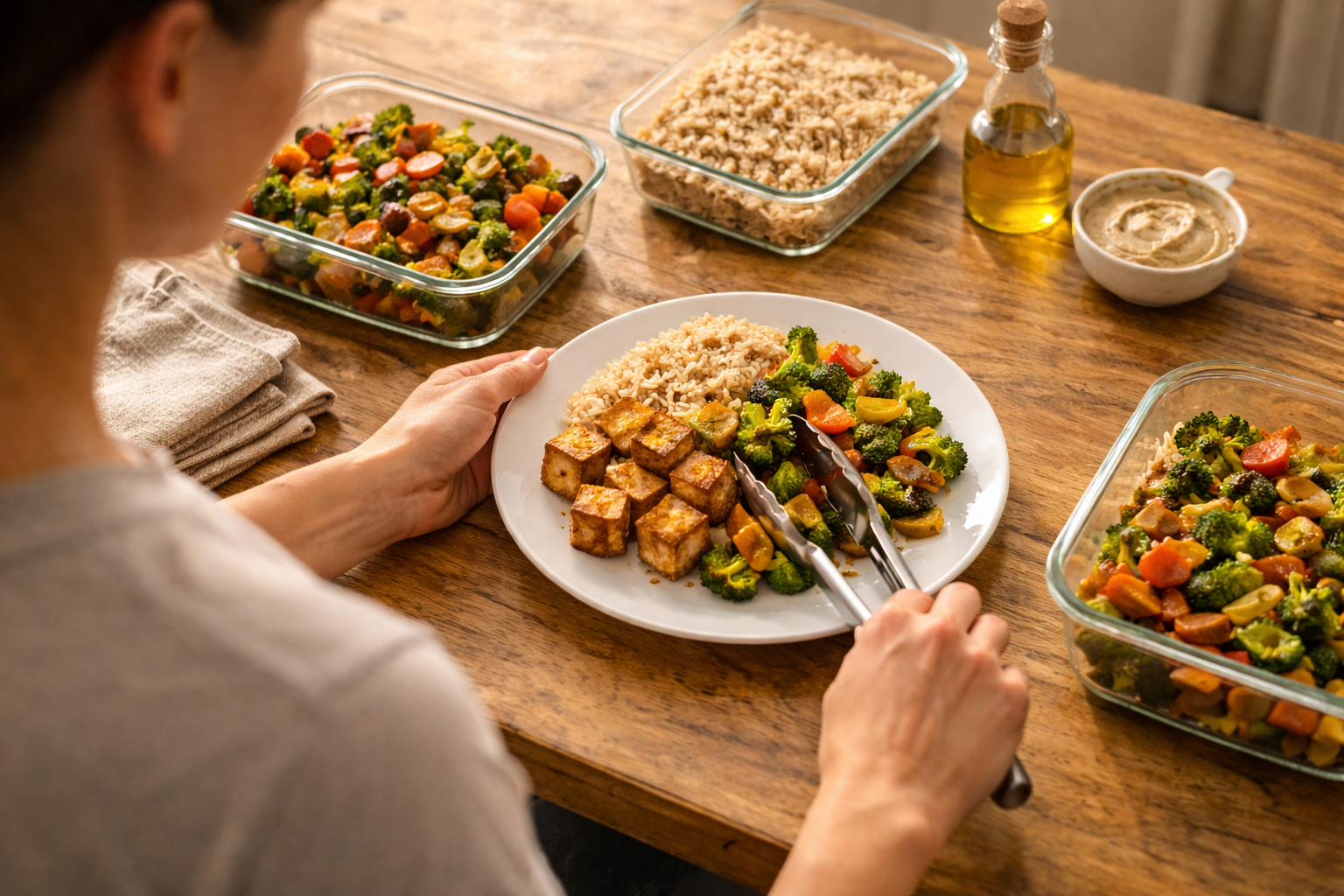
Start each meal by visualizing portions: half the plate vegetables, a quarter lean protein, and a quarter whole grains or starchy vegetables. This approach balances macronutrients and keeps portions sensible without rigorous tracking or complicated recipes. Emphasize high-fiber vegetables and moderate healthy fats to aid satiety and nutrient absorption. Consistency with this template simplifies grocery shopping and meal assembly across the week.
- Rotate proteins: beans, eggs, poultry, tofu, and fish.
- Choose whole grains like quinoa, brown rice, or oats.
Adopting a simple plate rule makes it easier to improvise with what’s on hand. Over time it becomes an automatic guide for building nourishing meals quickly.
Smart Pantry and Prep Habits
A stocked pantry and minimal weekly prep shorten the gap between intention and action. Keep foundational staples—canned tomatoes, legumes, whole grains, nuts, and a few spices—so you can assemble balanced meals without last-minute shopping. Dedicate one cooking session to batch-roast vegetables or cook grains to speed evening meals. These small investments mean healthier choices when time is tight or energy is low.
- Pre-chop salad greens and store them dry for quicker salads.
- Cook a grain or protein for multiple meals to mix and match.
Meal prep doesn’t require hours; even 30–45 minutes once or twice weekly moves the needle. The goal is usable options, not perfection.
Timing, Portions, and Mindful Eating
Regular meal timing helps stabilize blood sugar and energy for home workouts or daily tasks. Pay attention to portion cues—start with the simple plate and adjust based on hunger and activity. Slow, mindful eating supports digestion and prevents overeating by allowing natural fullness signals to register. Hydration between meals also supports satiety and performance.
- Eat a balanced snack if workouts demand extra fuel: yogurt with fruit, or a small sandwich.
Small timing adjustments can improve recovery and energy without drastic diet changes. Build habits that fit your schedule and priorities.
Conclusion
Practical, repeatable habits simplify healthy home eating and support steady energy. Use a plate-based template, streamline pantry staples, and prep strategically to reduce friction. Over time these small changes create lasting improvements in nutrition and daily performance.