Small, consistent food habits at home shape energy, mood, and long-term wellbeing.
You don’t need rigid rules to make steady progress with everyday meals.
This article highlights simple pantry, plate, and prep strategies that reduce friction.
Focus on easy swaps and routines that preserve flavor while improving nutrition.
Adopting a few reliable practices can make healthy eating the default choice.
These ideas are designed to fit busy schedules and varied tastes.
Build a Functional Pantry
A well-stocked pantry removes the biggest barrier to healthier cooking: lack of options. Keep a rotation of whole grains, canned beans, jarred tomatoes, and low-sodium broths for quick bases. Add frozen vegetables and fruits for convenience and shelf-stable proteins like canned fish or nut butters. A handful of spices, olive oil, and vinegar expands flavor without excess salt or sugar, making simple meals more appealing.
- Staples: brown rice, lentils, canned tomatoes, frozen greens.
- Flavor: garlic powder, smoked paprika, black pepper, soy or tamari.
- Convenience: pre-washed greens, rotisserie-style proteins, single-serve packs for portion control.
Rotate items so nothing goes to waste, and buy duplicates of what you use weekly. A predictable shopping list saves time and decisions at the store.
Create Balanced Plates Effortlessly
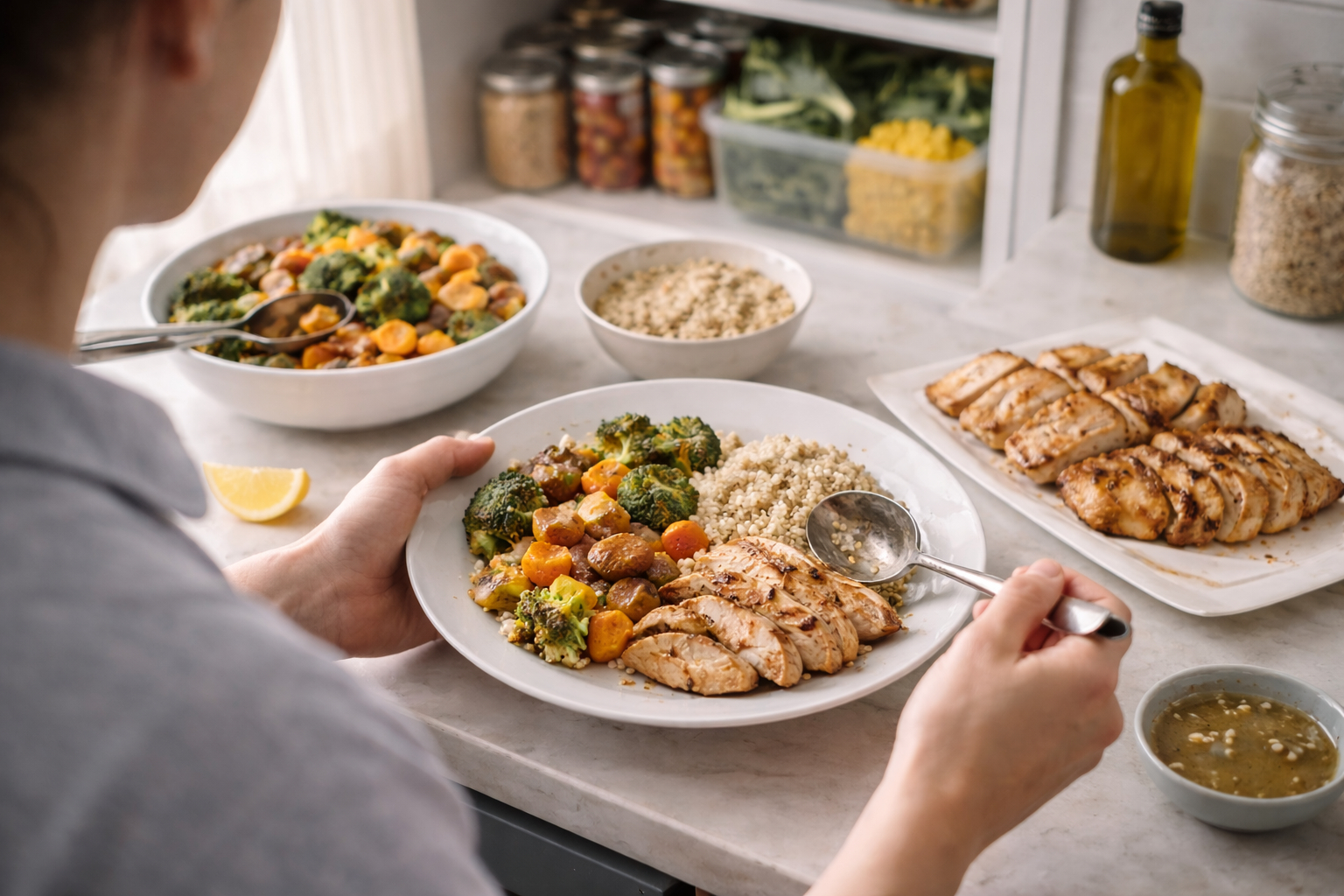
Strive for a plate model that combines protein, vegetables, whole grains or starchy vegetables, and a source of healthy fat. Visual portioning—half the plate vegetables, one quarter protein, one quarter grains—simplifies choices without strict measuring. Prioritize protein at meals to support satiety and include colorful produce for fiber and micronutrients. Small swaps, like swapping refined grains for whole ones or adding a simple vinaigrette, boost nutrient density with little effort.
- Example plate: grilled chicken, quinoa, roasted broccoli, olive oil drizzle.
- Snack idea: Greek yogurt with fruit and a sprinkle of seeds.
Consistency beats perfection: small improvements each meal compound into meaningful change. Keep flavors you enjoy so habits stick.
Simple Meal Prep and Timing
Block 60–90 minutes once or twice a week for basic prep: wash and chop vegetables, cook a grain, and prepare a protein source. Batch-cooking components lets you mix and match throughout the week for variety. Prepare portable snacks and portion them for grab-and-go moments to avoid impulse choices. Pair meals with mindful timing, eating when you’re moderately hungry rather than overly depleted, which helps you choose balanced options.
Maintain flexibility by swapping components rather than following rigid recipes. Small, repeatable prep sessions protect time while improving meal quality.
Conclusion
Practical pantry and plate habits make nutritious eating manageable and sustainable.
Focus on staples, simple plate rules, and short prep sessions to reduce daily effort.
Over time, consistent small changes lead to greater energy and wellbeing.