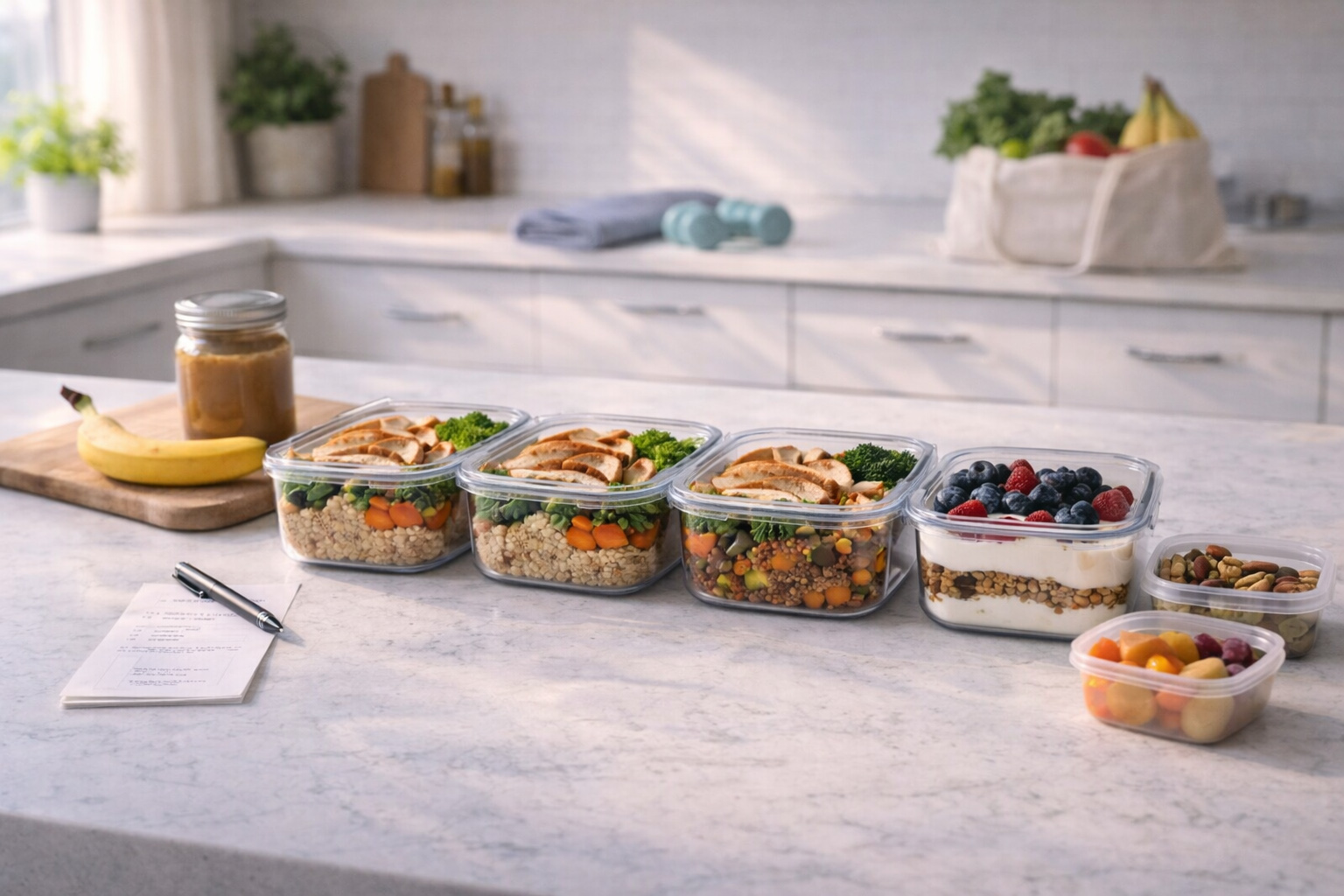
Good nutrition supports energy, recovery and consistency for people training at home. Small changes to what and when you eat can improve workout quality without complicated dieting. This article outlines simple, practical food strategies that fit busy routines and modest grocery budgets. Use these ideas to build reliable eating habits that complement home fitness goals.
Pre-workout fuel: what and when
Timing and composition of a pre-workout snack influence energy and focus during training. Aim for a mix of easily digested carbohydrates and a little protein about 30 to 90 minutes before exercise, adjusted by personal tolerance. Examples include yogurt with fruit, a banana and nut butter, or a small bowl of oatmeal with a spoonful of seeds. Avoid heavy, greasy meals that can cause sluggishness and interfere with performance.
- Greek yogurt + berries
- Banana + almond butter
- Oatmeal with milk and fruit
Keep portions moderate so digestion doesn’t interfere with movement. Experiment with timing and small adjustments to find what consistently feels best for your workouts.
Post-workout recovery essentials
After exercise, the goal is to replenish glycogen stores and provide amino acids for muscle repair. Prioritize a source of protein alongside carbohydrates within about an hour to support recovery and adaptation to training. Aiming for roughly 20–30 grams of protein in a post-workout meal or snack is practical for most people, paired with a carbohydrate portion that matches the intensity and duration of the session. Hydration and electrolytes are also important when training leads to significant sweating.
- Protein shake with a piece of fruit
- Chicken, rice, and steamed vegetables
- Cottage cheese with pineapple and whole-grain crackers
Simple, repeatable recovery options make consistency easier. Focus on what you can reliably prepare rather than complex formulas.
Snack and meal ideas for busy schedules
For busy days, focus on versatile, portable options that require minimal prep and stack easily into meals. Batch-cooked proteins, hard-boiled eggs, canned beans, and pre-chopped vegetables make assembling balanced plates quick. Combine these staples with whole grains or starchy vegetables and a source of healthy fats to create sustaining meals that support performance and satiety. Keep a few go-to combinations so decision fatigue doesn’t derail healthy patterns.
- Whole-grain wrap with turkey, spinach, and hummus
- Quinoa salad with chickpeas, cucumber, and olive oil
- Rice bowl with tofu, broccoli, and soy-ginger dressing
- Snack box: nuts, fruit, cheese, and carrot sticks
Rotate through a shortlist of favorites to simplify planning and shopping. Repetition makes it easier to maintain good choices over time.
Prep and shopping strategies to stay consistent
Smart shopping and light weekly prep reduce friction and support adherence to meal plans. Build a list that covers proteins, quick carbs, vegetables, and a few flavor boosters like herbs, dressings, and spices. Use resealable containers to portion snacks and lunches for grab-and-go convenience and to control serving sizes. Freezing cooked portions also extends shelf life and reduces food waste.
- Create a two-week rotating shopping list
- Prep single-serve portions for busy mornings
- Keep a small variety of frozen proteins and vegetables
Adjust quantities based on what you actually eat during the week. Small systems and realistic prep windows make healthy eating more sustainable.
Conclusion
Practical, consistent nutrition choices amplify the benefits of home workouts. Focus on timing, simple recovery practices, and repetitive meal building blocks. Over time these habits will support energy, recovery, and steady progress.