

Creating home meals that reliably deliver energy and support recovery doesn’t require complicated plans or rare ingredients. With a few simple principles you can design plates that balance carbohydrates, protein, and healthy fats while staying practical for daily life. This article outlines clear swaps, portion ideas, and small meal-prep habits to make nutritious eating sustainable. The focus is on approaches that fit busy schedules and improve how you feel throughout the day.
Why balanced meals matter
Balanced meals provide steady energy, stabilize blood sugar, and supply the nutrients needed for muscle repair and cognitive focus. Including a source of protein at each meal helps recovery after activity and increases satiety, which can prevent energy slumps. Carbohydrates are important for fueling both daily tasks and workouts, while healthy fats support hormone balance and nutrient absorption. Combining these components also makes meals more satisfying and easier to stick with over time.
When you regularly build balanced plates, small gains add up into better sleep, improved endurance, and reduced cravings. Prioritizing whole foods over highly processed options ensures you get more vitamins, minerals, and fiber without extra work.
Smart ingredient swaps and portion guidance
Simple swaps can instantly improve nutrient density without changing favorite dishes. Opting for whole grains or starchy vegetables instead of refined grains adds fiber and micronutrients that support sustained energy. Choosing lean or plant proteins and combining them with colorful vegetables increases fullness and recovery potential. Portioning is flexible: aim to fill about half your plate with vegetables, a quarter with protein, and a quarter with carbohydrates for most meals.
- Swap white rice for quinoa or mixed whole grains.
- Replace sugary condiments with yogurt-based dressings or herb vinaigrettes.
- Choose beans or tofu a few times weekly in place of processed meats.
These modest changes make it easier to meet daily nutrient needs without elaborate recipes. They also keep grocery shopping straightforward and budget-friendly.
Simple meal-prep habits for consistency
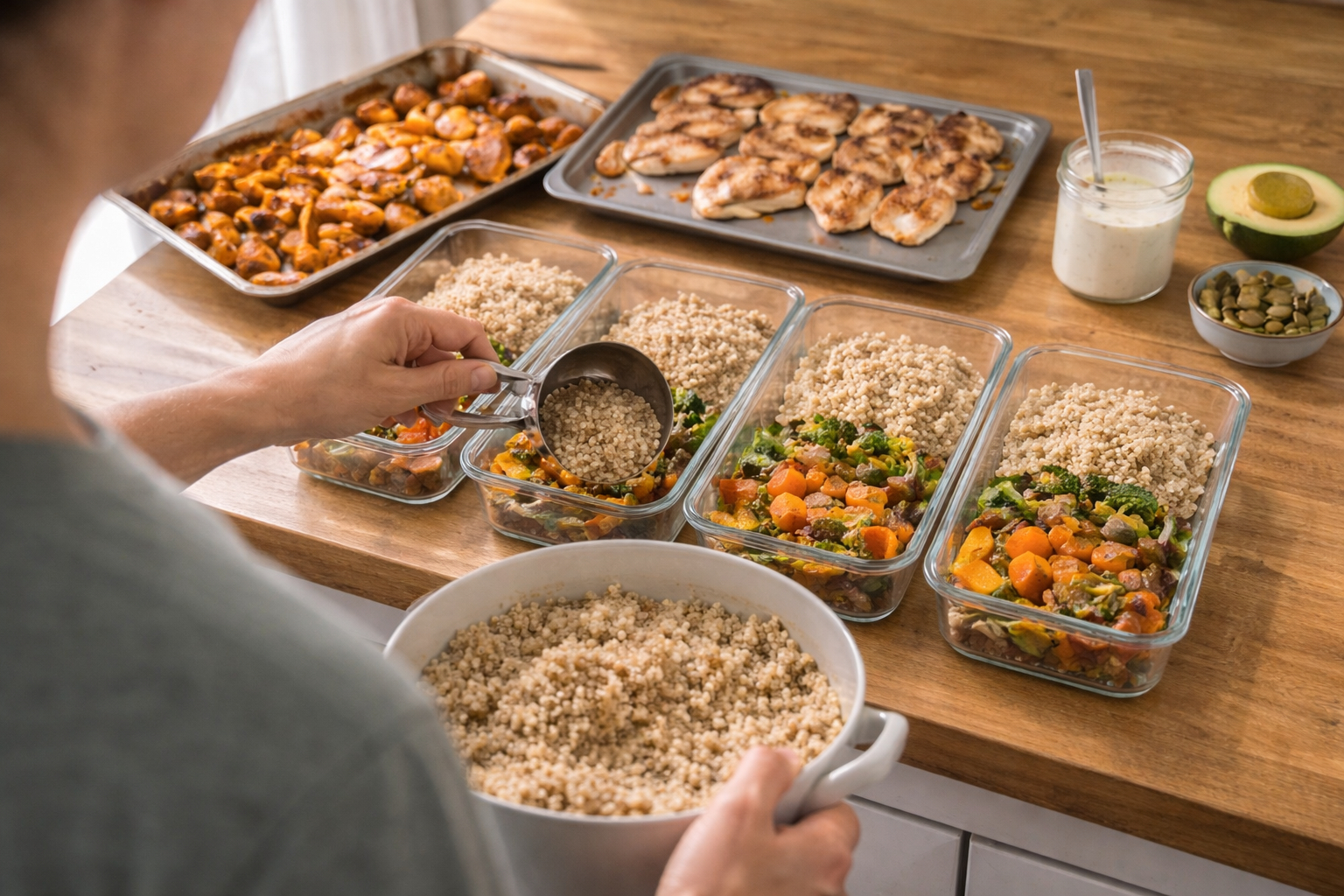
Consistent meals come from simple routines: batch-cooking a grain, roasting a tray of vegetables, and preparing a protein source on a weekend or evening can supply multiple meals. Use portioned containers to combine components quickly so you can assemble balanced plates in minutes. Keep a few versatile staples on hand—canned beans, frozen vegetables, and pre-washed greens—to reduce friction on busy days. Small rituals like planning two different lunches for the week reduce monotony and improve adherence.
Over time, these habits reduce decision fatigue and make it easier to maintain energy-supporting nutrition. They also allow flexibility so you can enjoy occasional treats without losing momentum.
Conclusion
Focusing on balanced components, smart swaps, and repeatable meal-prep routines creates reliable energy and supports recovery. Small, consistent changes are more sustainable than strict rules, and they fit into everyday life without added stress. Start with one swap or one weekly prep session and build from there.










