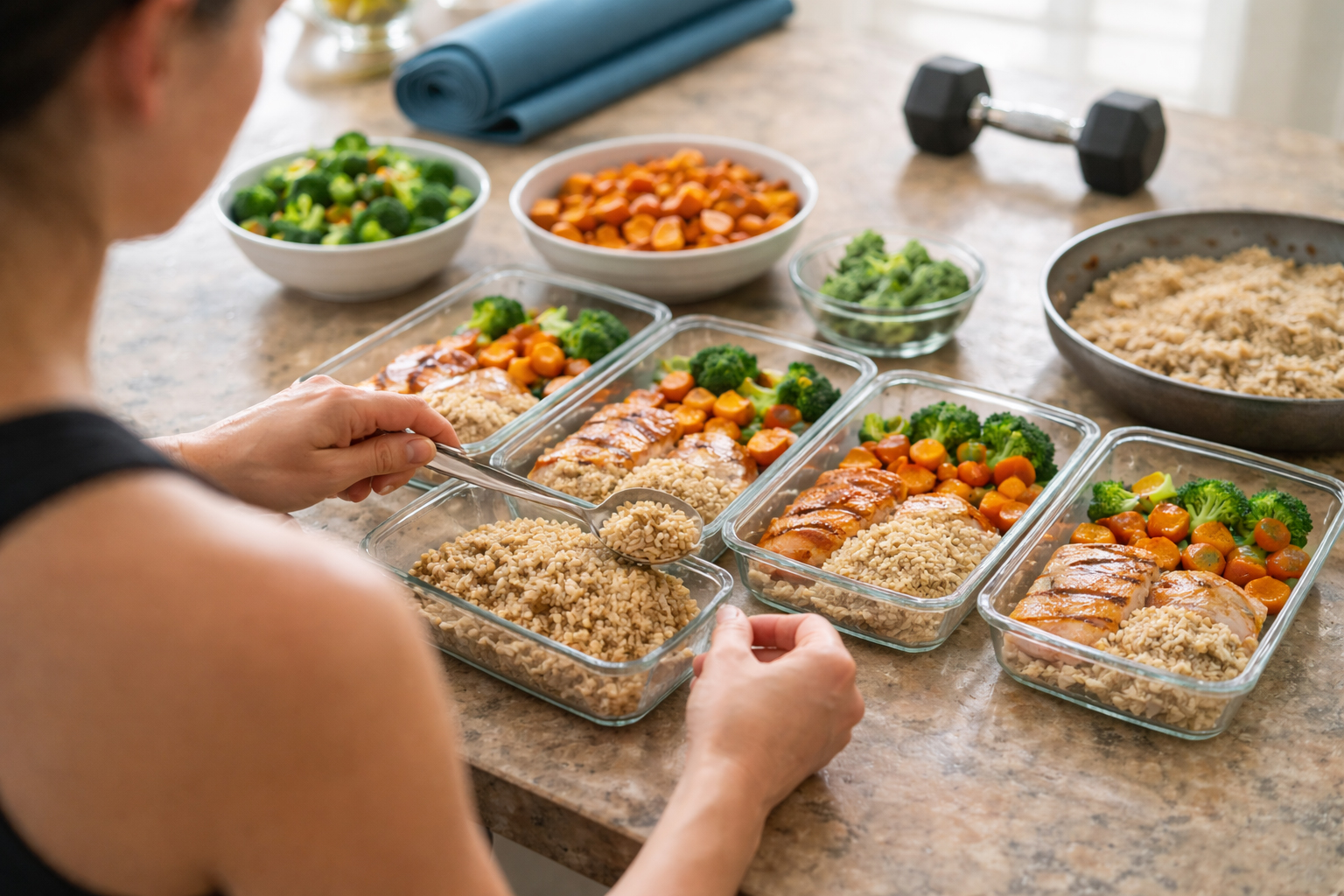
Consistent nutrition is one of the simplest levers to improve at-home training outcomes.
Small, repeatable food choices shape energy, recovery, and progress across weeks.
You do not need perfect meals to get results; consistent patterns matter more.
This article outlines practical rhythms you can adopt without drastic effort.
What balanced fueling looks like
A balanced daily approach focuses on protein at each meal, steady carbohydrate sources, and healthy fats for satiety. Prioritize whole foods such as legumes, whole grains, nuts, vegetables, and lean proteins to supply steady energy. Portion control centers on matching meal size to training intensity and daily activity. Hydration and regular meal timing reduce energy dips and support consistent workouts.
Start by assessing your typical day and identify one meal to improve. Small adjustments compound quickly when repeated.
Timing and portion practicalities
When you plan around workouts, aim for a carbohydrate-protein combination one to two hours before training to top up energy and support muscle engagement. After a session, a protein-rich snack or meal within a couple hours helps recovery and reduces soreness. Portions should be sensible: larger meals on heavier training days, lighter plates on rest days. Experiment with simple templates so timing becomes automatic rather than a chore.
Track how you feel during sessions and adjust timing accordingly. Consistency beats perfect precision in most cases.
Simple meal and snack examples
Use easy templates to remove decision fatigue: grain + protein + vegetable, or fruit + yogurt + nut butter as a snack. Prepare staples like cooked grains, roasted vegetables, and hard-boiled eggs so assembling meals takes minutes. Snacks should combine carbohydrate and protein for stable energy, for example a banana with cottage cheese or whole-grain crackers with hummus. Planning two to three simple combinations will cover most training days.
- Oatmeal with milk and seeds for pre-workout fuel
- Grilled chicken, rice, and steamed greens for balanced dinners
- Yogurt, fruit, and nuts as quick protein-carb snacks
Rotate these options to keep meals interesting while maintaining rhythm. Over time they’ll become habits that support steady progress.
Meal prep habits that stick
Consistent meal prep reduces barriers to eating well and saves time during busy weeks. Choose one or two prep actions each weekend, like batch-cooking grains, chopping vegetables, or portioning proteins. Label containers with the day and intended use so decisions are faster during the week. Small, repeatable prep habits lower friction between intention and action.
Start with 30 minutes and build slowly so the habit persists. The goal is practical momentum rather than perfection.
Conclusion
Adopting simple, repeatable food rhythms makes at-home training more effective.
Focus on balanced plates, sensible timing, and a handful of reliable meals.
Small consistent steps deliver measurable gains across weeks and months.