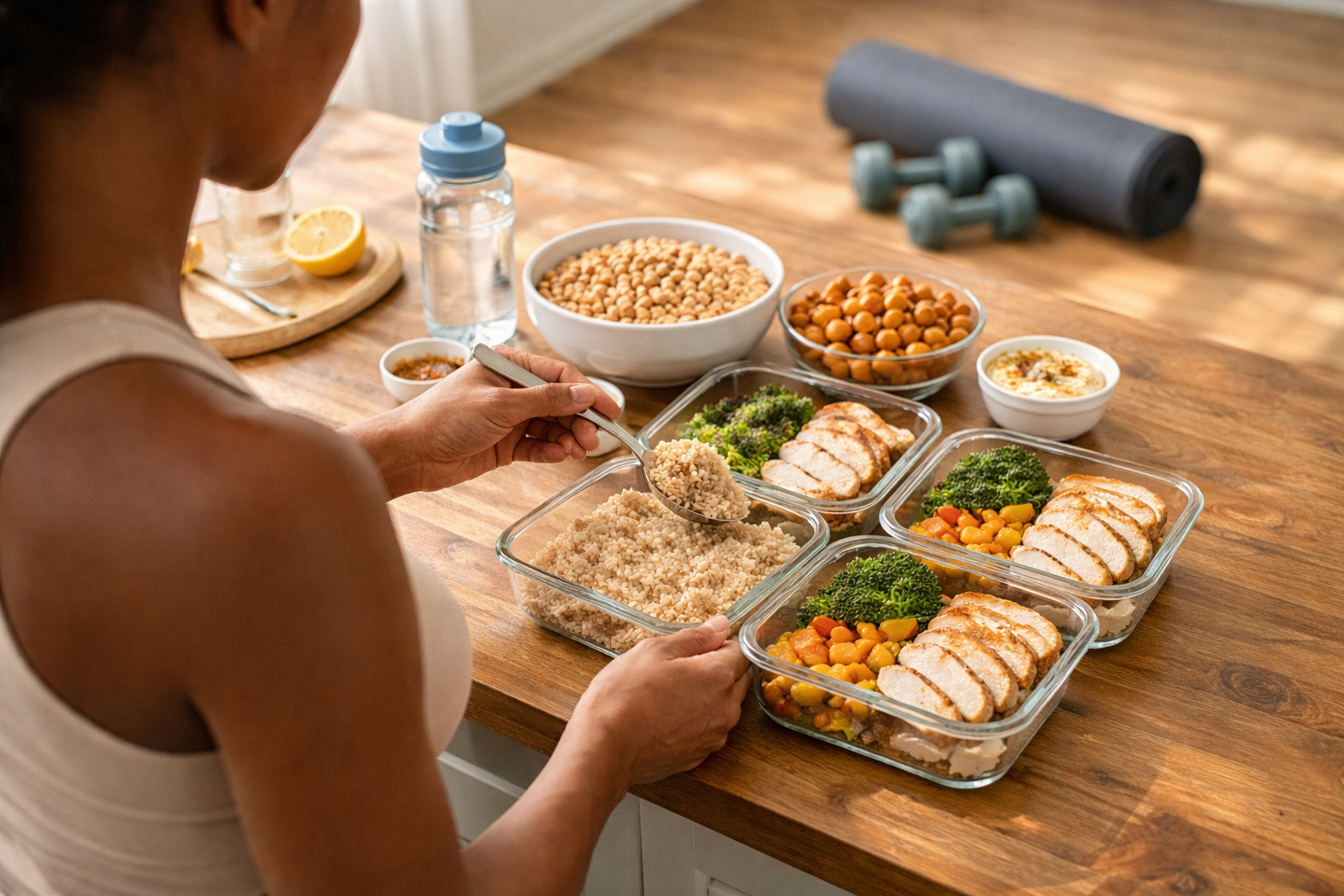
Consistent eating patterns are a practical way to support regular home workouts and steady progress. Small changes to what you eat and when you eat can improve energy, focus and recovery without overhauling your day. This article highlights simple, sustainable approaches you can apply to everyday meals and snacks. The goal is to make nutrition predictable and supportive of training, not burdensome.
Smart Grocery and Pantry Choices
Start by stocking a few reliable staples that combine convenience with nutrition. Choose lean proteins, whole grains or versatile starchy vegetables, fiber-rich produce, and a mix of healthy fats to make balanced plates easier. Keep simple, minimally processed items on hand so you have fewer decisions to make when it’s time to eat. Thoughtful shopping reduces the chance of reaching for empty-calorie options when you are tired or pressed for time.
- Staples: eggs, canned beans, brown rice, oats, frozen vegetables, nuts.
- Quick fats: olive oil, nut butter, avocado.
- Portable proteins: yogurt, canned tuna, cooked chicken.
These choices minimize prep time and support performance over the week. With a stocked pantry, you can build meals that suit both energy needs and recovery goals.
Timing and Meal Composition Around Workouts
Meal timing should support your workout intensity and schedule rather than follow rigid rules. Aim for a modest carb-plus-protein option 60–90 minutes before exercise to fuel training and a similar combo within a couple of hours afterward to promote recovery. Portions can be scaled to session length and effort: lighter meals before short workouts, fuller portions for long or intense sessions. Hydration and electrolytes also matter, especially when sweat losses are high.
- Pre-workout: banana with peanut butter or a small yogurt and fruit.
- Post-workout: sandwich with lean protein or a rice bowl with beans and vegetables.
Flexible timing lets you fit nutrition around daily life while still supporting progress. Focus on realistic windows rather than perfection.
Recovery-focused Snacks and Simple Meals
Recovery is easier when snacks and meals combine protein and carbohydrates in convenient formats. Batch cooking grains and proteins, freezing single portions, and prepping snack packs of fruit and nuts save decision energy. Keep a rotation of easy-to-assemble meals so you can recover well even after busy days. Prioritize sleep and consistent meal patterns to amplify recovery benefits.
- Easy meals: grain bowl with roasted veggies and grilled protein.
- Snack ideas: cottage cheese with fruit, hummus and whole-grain crackers.
Small, repeated acts—like prepping one component per week—compound into better nutrition habits. Over time these routines make fueling workouts simple and sustainable.
Conclusion
Adopting practical, repeatable eating patterns supports energy, performance, and recovery for home workouts. Focus on a stocked pantry, simple timing strategies, and easy recovery meals you can rely on. These steady habits will help you make consistent progress without unnecessary stress.