Creating a kitchen that supports consistent nutrition doesn’t require a complete overhaul of habits.
Small adjustments to staples, tools, and meal patterns make it easier to fuel workouts and recovery.
This article outlines practical, sustainable steps to keep your cooking efficient and performance-focused.
You’ll find templates, pantry picks, and simple shopping habits to reduce decision fatigue.
Kitchen Foundations for Healthy Cooking
Start by organizing a few reliable zones: proteins, vegetables, whole grains, and quick snacks. Keep commonly used ingredients visible so meal assembly is faster and decisions are simpler. Investing in a couple of multifunctional tools, like a quality nonstick pan and a sheet pan, reduces the friction of cooking after a long day. These small changes increase the likelihood you’ll choose homemade meals over convenience options.
- Keep pre-washed greens and ready-to-eat proteins accessible.
- Store grains and legumes in clear containers for easy portioning.
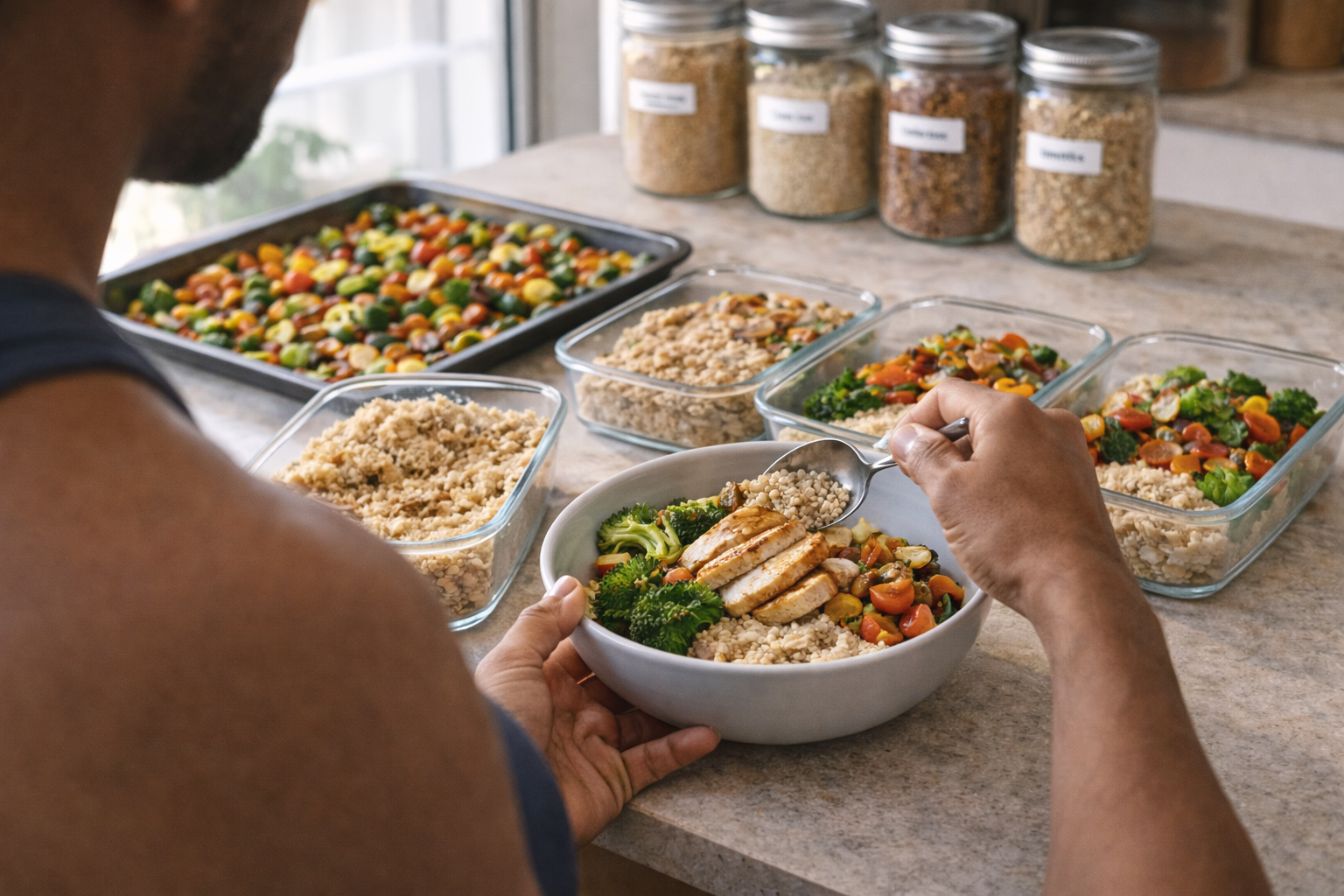
- Designate a prep day for chopping and batch-cooking basics.
Organizing intentionally saves time and mental energy. A tidy kitchen directly supports consistent, nutritious eating.
Quick Meal Templates for Training Days
Use simple templates that combine carbohydrates, lean protein, and vegetables to match training intensity. Templates reduce thinking: for example, grain + protein + vegetable, or wrap + protein + crunchy topping. Keep portion sizes aligned with your activity—bigger portions around heavier sessions and lighter options on rest days. Templates help you adapt quickly without compromising balance or flavor.
- Breakfast: oats + yogurt + fruit + nuts.
- Lunch: bowl of rice/quinoa + grilled protein + roasted vegetables.
- Dinner: whole grain wrap + hummus + greens + lean protein.
Rely on one or two templates for each meal to streamline prep. Over time, rotate ingredients to maintain nutritional variety and enjoyment.
Smart Pantry and Shopping Habits
Build a pantry focused on versatile, minimally processed items to support frequent home meals. Prioritize canned beans, whole grains, frozen vegetables, nuts, and shelf-stable proteins that pair easily with fresh produce. Make a shopping list organized by meal templates to avoid impulse buys and ensure you have complementary ingredients. Regularly review and restock essentials so last-minute cravings don’t derail healthy plans.
- Shop with a list tied to planned templates or workouts.
- Keep a small buffer of staples to avoid gaps in meal prep.
- Rotate frozen and fresh produce to reduce waste and cost.
Consistent shopping routines reduce decision fatigue and food waste. A well-stocked pantry makes it simpler to choose nutritious, training-supportive meals.
Conclusion
Start with one pantry refresh and one go-to meal template.
Build habits that match your schedule and training intensity.
Small changes compound into consistent, better nutrition.