Finding the right foods can make home workouts more productive and sustainable. Small, consistent nutrition habits help you maintain energy, support recovery, and build strength without complicated meal plans. This article outlines practical choices and timing strategies that fit busy routines and limited kitchen time. Use these ideas to create a simple, flexible eating plan that complements regular exercise at home.
Fueling before and during workouts
Timing a light carbohydrate-rich snack 30–90 minutes before exercise can lift energy and focus without gastrointestinal discomfort. Options like a banana with a smear of nut butter or a small bowl of oatmeal provide quick glucose and some sustained release. For sessions longer than 45 minutes, include a portable source of carbs to prevent dips in intensity. Staying mindful of portion size keeps workouts comfortable and performance steady.
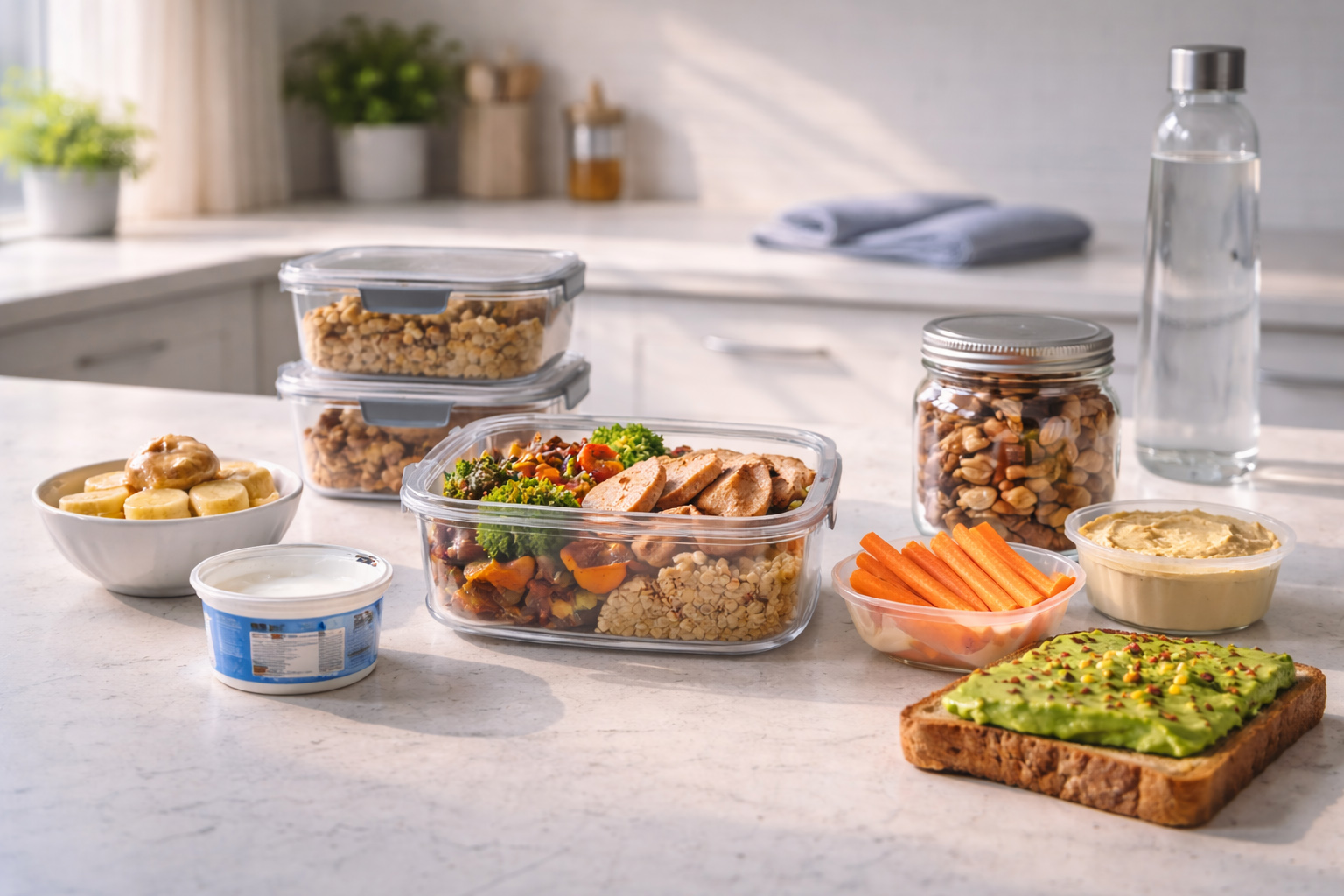
- Banana with nut butter or a small yogurt
- Whole-grain toast with avocado or peanut butter
Simple pre-workout routines remove guesswork and make consistency easier. Adjust timing and portions based on how you feel during training.
Building meals for recovery and strength
After exercise the body needs both protein to repair muscle and carbohydrates to refill glycogen stores, along with small amounts of healthy fats for overall recovery. Aim for a balanced plate with lean protein, whole grains or starchy vegetables, and a colorful portion of vegetables for micronutrients. Practical examples include grilled chicken with quinoa and roasted vegetables or a chickpea salad with whole-grain bread. Prioritize meals within two hours after training when possible to support adaptation and reduce soreness.
Consistency outweighs perfection; choose familiar foods you enjoy and can prepare regularly. Batch cooking or simple templates make post-workout nutrition practical.
Snacks, hydration, and sustainable habits
Smart snacking can bridge long gaps between meals and prevent energy crashes that derail workouts. Pick nutrient-dense options like mixed nuts, Greek yogurt, or hummus with sliced vegetables to blend protein, healthy fats, and fiber. Hydration matters too: sip water throughout the day and consider electrolytes during extended sweating. Long-term progress comes from simple habits like meal prep, realistic grocery lists, and adjusting portions as activity changes.
Small dependable routines are easier to sustain than rigid diets. Over months, they compound into measurable improvements in performance and body composition.
Conclusion
Smart, sustainable nutrition supports every home fitness goal by providing steady energy, effective recovery, and enjoyable meals. Focus on timing, balanced plates, and practical snacks to keep training consistent. Small changes maintained over time will deliver the biggest results.