Short workouts at home deserve food that’s fast, satisfying, and actually useful for recovery. You don’t need complicated recipes or strange supplements to refuel effectively. A few simple plates built from staples — a grain, a protein, and some fruit or veg — will cover most sessions. This piece lays out practical, everyday meal ideas and small kitchen habits that make recovery straightforward.
Quick Pre-Workout Plates
Before a brief session you want a light source of easily digested carbohydrates plus a bit of protein to steady energy. Think a banana with a spoonful of nut butter, plain yogurt mixed with a handful of oats, or a slice of whole-grain toast topped with cottage cheese. Smoothies also work well when time is short: blend milk or a dairy-free alternative, frozen fruit, and a scoop of protein powder or Greek yogurt. Keep portion sizes modest so the meal fuels rather than weighs you down.
Plan pre-workout bites for 30–90 minutes before exercise depending on how you feel. If you have only 20 minutes, stick to simple liquids or small fruits to avoid discomfort. Practice a couple of options to find what your body tolerates best.
Post-Workout Refuel Without Fuss
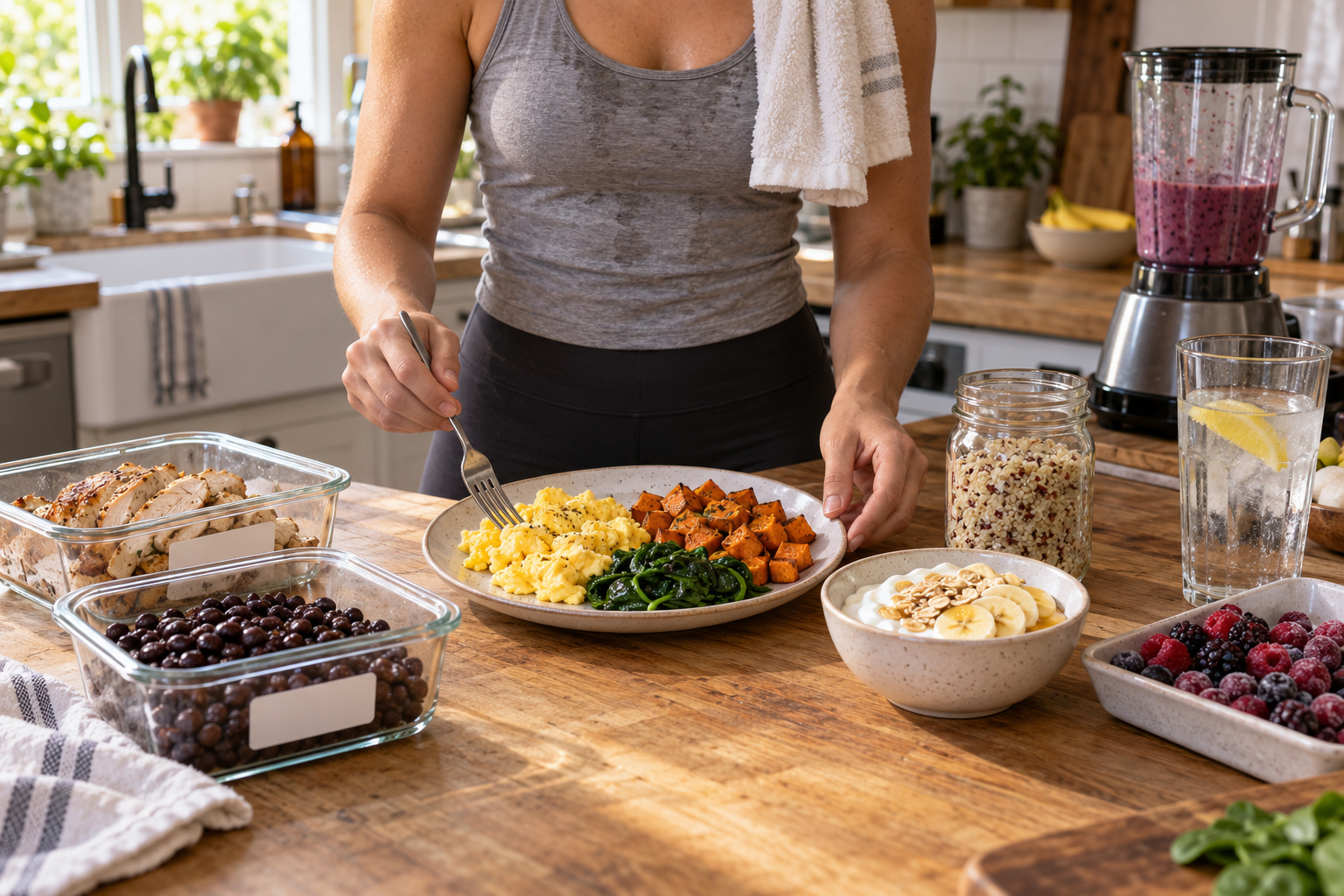
Recovery meals should emphasize protein to support repair and carbohydrates to restore energy. A quick scramble with two eggs, a side of roasted sweet potato, and a handful of spinach covers both bases without a long cook time. Canned tuna or salmon tossed with whole-grain crackers and a fruit salad is another fast, balanced option that needs almost no preparation. Keep dinner-ish plates simple: protein, a grain or starchy veg, and some color from vegetables or fruit.
Try to eat within an hour after finishing exercise when possible, but don’t stress if your schedule won’t allow it. Hydration matters too — water or a simple electrolyte drink alongside your meal will speed overall recovery.
Small Kitchen Habits That Make Meals Easier
Little practices save time and keep recovery reliable. Cook a batch of chicken, beans, or lentils once or twice a week and portion into containers for quick assembly. Keep cooked grains like rice or quinoa chilled, and stock the freezer with ready vegetables and pre-washed greens. Simple seasonings — olive oil, lemon, salt, and pepper — turn these building blocks into a pleasant meal in minutes.
- Cooked proteins: chicken, beans, tofu.
- Cooked grains: rice, quinoa, barley.
- Frozen veg and quick fruits: berries, peas, spinach.
These habits reduce friction when you’re tired after training and make it easy to combine items into balanced plates. Over time they keep nutritious choices within reach.
Conclusion
Recovery doesn’t require long recipes or special ingredients — just predictable plates you can assemble quickly. Focus on a protein, a carbohydrate, and some produce, and use batch cooking to simplify the process. Small kitchen routines make consistent post-workout nutrition achievable on busy days.