Nutrition shapes how you feel during and after home workouts, influencing energy, recovery, and consistency.
Small, purposeful food choices across the day can produce noticeable improvements without complex dieting.
This article outlines practical, sustainable guidelines you can apply to common meals and snacks.
Follow these ideas to support strength, stamina, and steady progress while training at home.
Why daily food choices matter for at-home training
Consistent food patterns provide the substrate your body needs to perform and recover between sessions. Carbohydrates supply usable energy for higher-intensity efforts, while protein supports muscle repair and preservation. Fats are essential for hormonal balance and longer-term satiety, and micronutrients enable metabolic processes that underpin performance. When meals are balanced and predictable, you reduce energy dips and improve training quality.
Adopting modest, repeatable habits prevents the boom-and-bust effect of erratic eating. This stability helps you stay consistent with both workouts and calorie needs. Small changes add up faster than drastic, short-lived plans.
Quick daily plate guidelines to follow
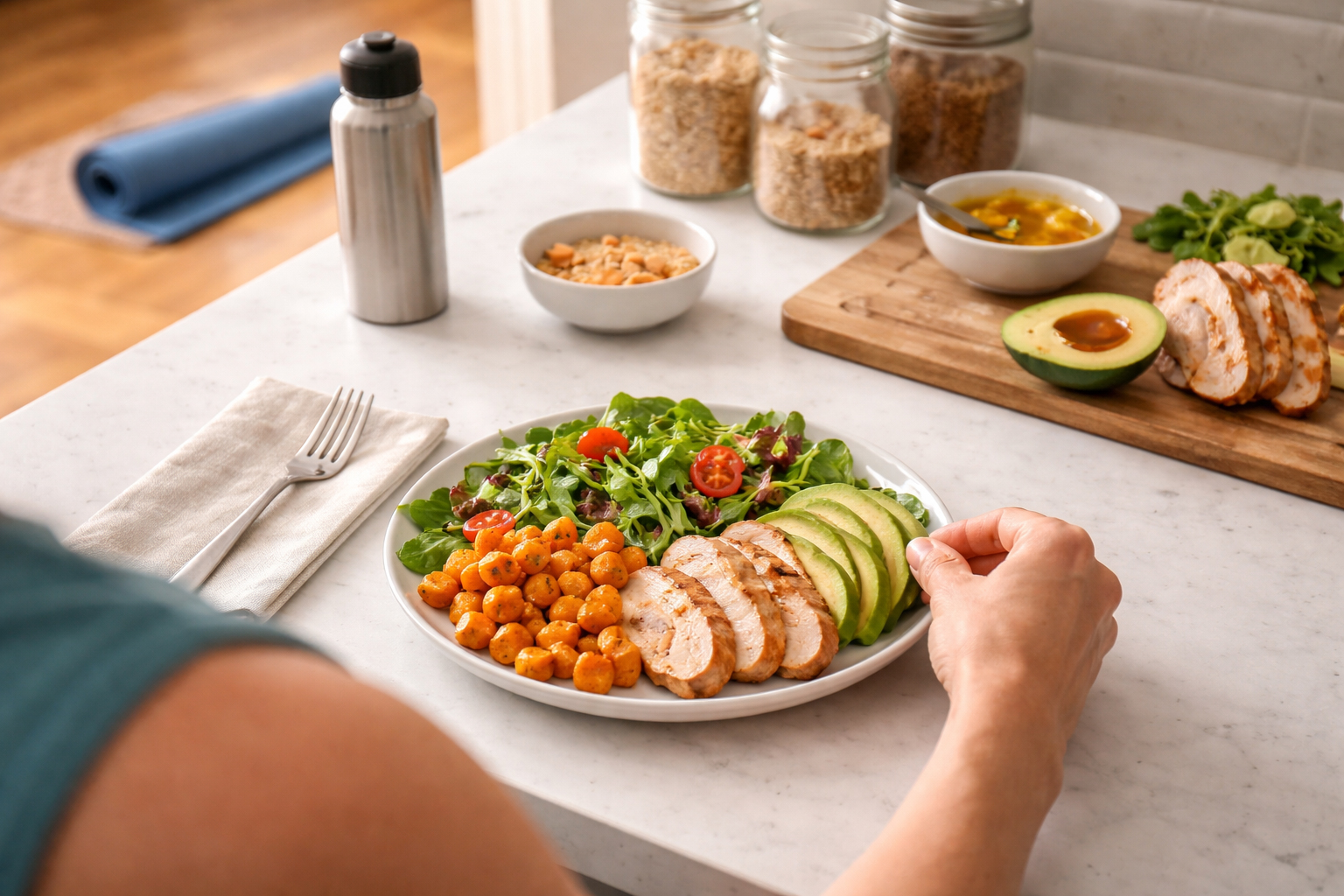
Build each main meal around three simple elements: a portion of protein, a serving of whole carbohydrates, and vegetables or fruit for fiber and micronutrients. Aim for protein at every meal to preserve muscle and support recovery, and choose whole grains or starchy vegetables for sustained energy. Include a source of healthy fat to improve nutrient absorption and keep you satisfied between meals. These guidelines scale easily to different portion sizes and training demands.
- Protein: lean meats, dairy, eggs, legumes, or tofu.
- Carbs: oats, brown rice, potatoes, whole-grain bread, or quinoa.
- Fats and extras: olive oil, nuts, seeds, avocado.
Using this plate framework makes meal decisions faster and minimizes reliance on processed choices. It also supports flexibility, so you can adjust calories without abandoning structure. Keep staples on hand to streamline cooking and portioning.
Snack choices and timing for better energy and recovery
Strategic snacks bridge the gap between meals and workouts, helping you avoid energy slumps and encouraging recovery. A small, balanced snack 60–90 minutes before a session improves performance; after training, prioritize a combination of protein and carbohydrate to kickstart repair. Choose portable options like yogurt with fruit, a nut butter and banana sandwich, or a simple hummus and whole-grain cracker plate. Hydration also plays a role—plain water or lightly flavored options maintain performance and aid recovery.
Consistent timing and composition reduce guesswork and support steady progress. Track how different snacks affect your energy and adjust based on workout intensity and personal preference.
Conclusion
Practical, balanced food choices enhance energy, performance, and recovery for home workouts.
Simple plate rules and consistent snacks make nutrition manageable and effective.
Build habits that fit your routine to sustain progress over the long term.