

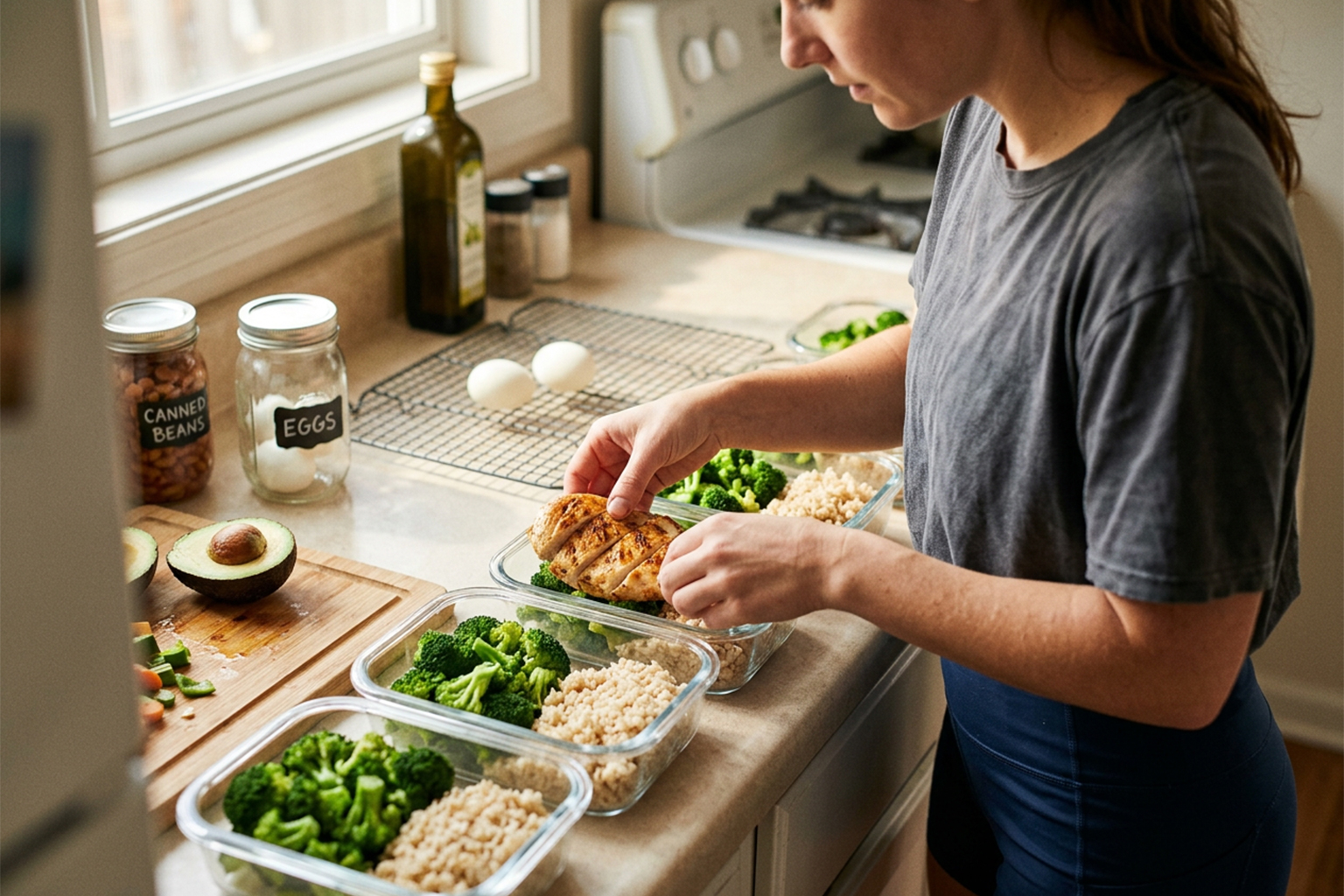
Consistent home workouts rely on predictable, nourishing meals as much as they do on movement. Small, repeatable habits in meal composition and timing create steady energy and support recovery without adding complexity. This article outlines practical meal habits that fit a busy lifestyle and a modest kitchen setup. The focus is on whole foods, simple portioning, and meal patterns you can maintain week after week.
Adopting a few core rules makes meal planning less about strict rules and more about reliable choices. These guidelines aim to reduce decision fatigue while improving performance and recovery. Read on for concrete building blocks and plate examples you can use immediately.
Core Meal Building Blocks
Every balanced meal should include three components: a quality protein source, minimally processed carbohydrates for sustained energy, and vegetables or fruits for micronutrients and fiber. Healthy fats are useful in moderation to support satiety and nutrient absorption, especially in snacks and post-workout meals. Prioritize items that store well and cook quickly, such as canned beans, whole grains, eggs, and frozen vegetables. Keep a small list of go-to proteins and starches to streamline grocery shopping and reduce time spent deciding what to eat.
When these building blocks are present, meals naturally feel complete and satisfying. Focus on variety over perfection to cover a range of nutrients without overcomplicating meals. Consistency in these basics leads to steady performance gains.
Meal Timing and Portioning
Align meal size with activity level: larger meals on training days or before longer sessions, and lighter plates when activity is lower. Aim for a moderate portion of protein at each meal to support muscle repair, and distribute carbohydrates evenly across the day to avoid energy crashes. Pre-workout snacks should be simple and easily digestible, combining a small portion of carbs with a touch of protein or fat as needed. Post-workout meals are an opportunity to replenish glycogen and supply amino acids for recovery.
Using simple visual cues—palm-sized protein, fist-sized carbs, and two cupped hands of vegetables—helps standardize portions without weighing and tracking. This approach keeps meals practical and adaptable.
Practical Plate Examples
Concrete examples make it easier to translate principles into action. Build plates that are quick to assemble from staples and adjust components based on what you have in the pantry or fridge. Rotate flavors and cooking methods to prevent boredom while keeping the same underlying structure of protein, carbohydrate, and produce.
- Grilled or pan-seared chicken, brown rice, and steamed broccoli with olive oil.
- Scrambled eggs, sautéed spinach, and whole-grain toast with avocado.
- Chickpea salad with mixed greens, quinoa, and a lemon-tahini dressing.
These examples are flexible: swap proteins, change grains, and use seasonal produce to keep meals interesting. Small substitutions maintain nutritional balance while adapting to preferences and availability.
Conclusion
Focus on simple, repeatable meal habits that pair protein, carbohydrates, and produce at every sitting. Use basic portion cues and a short list of pantry staples to make cooking reliable and fast. Over time, these routines sustain energy and recovery for consistent home workouts.










