Consistent nutrition matters as much as regular workouts when you train at home and want steady energy throughout the day. This article outlines simple, sustainable food routines that support recovery, focus, and performance without complex meal plans. You’ll find practical guidance on balanced plates, pantry essentials, and easy rhythms that fit busy schedules. The goal is to create small changes that are easy to maintain long term.
These suggestions are adaptable to different tastes and time constraints, and they prioritize whole foods and simple preparation. Small shifts can compound into better energy, clearer recovery, and less decision fatigue at meal times.
Plan Balanced Plates
A reliable plate template makes meal choices quick and consistent: fill about half your plate with vegetables, a quarter with lean protein, and a quarter with whole grains or starchy vegetables, adding a small source of healthy fat. Emphasize protein at each meal to support muscle repair and satiety, aiming for a palm-sized portion for most meals. Choose colorful vegetables for micronutrients and fiber, and prefer minimally processed carbohydrates that release energy steadily. Small swaps—like mixing beans into a grain bowl or adding a handful of greens to scrambled eggs—boost nutrition without extra work.
Use this template as a flexible starting point rather than a strict rule; adjust portions based on activity level and hunger. Over time, the template helps simplify grocery lists and cooking choices.
Stock a Functional Pantry
A well-organized pantry reduces friction and makes nutritious meals possible on busy days. Keep staples such as canned beans, canned tomatoes, whole grains (brown rice, quinoa), frozen vegetables, nuts, seeds, and versatile spices on hand to assemble balanced meals quickly. Include quick proteins like eggs, canned tuna, and yogurt, along with shelf-stable nut butters for snacks and smoothies. Rotate items regularly and label leftovers so nothing goes to waste and meal prep stays manageable.
When shopping, prioritize multi-use ingredients that combine easily into bowls, stir-fries, or salads. A compact, consistent pantry saves time and supports healthier choices by default.
Build Simple Meal Rhythms
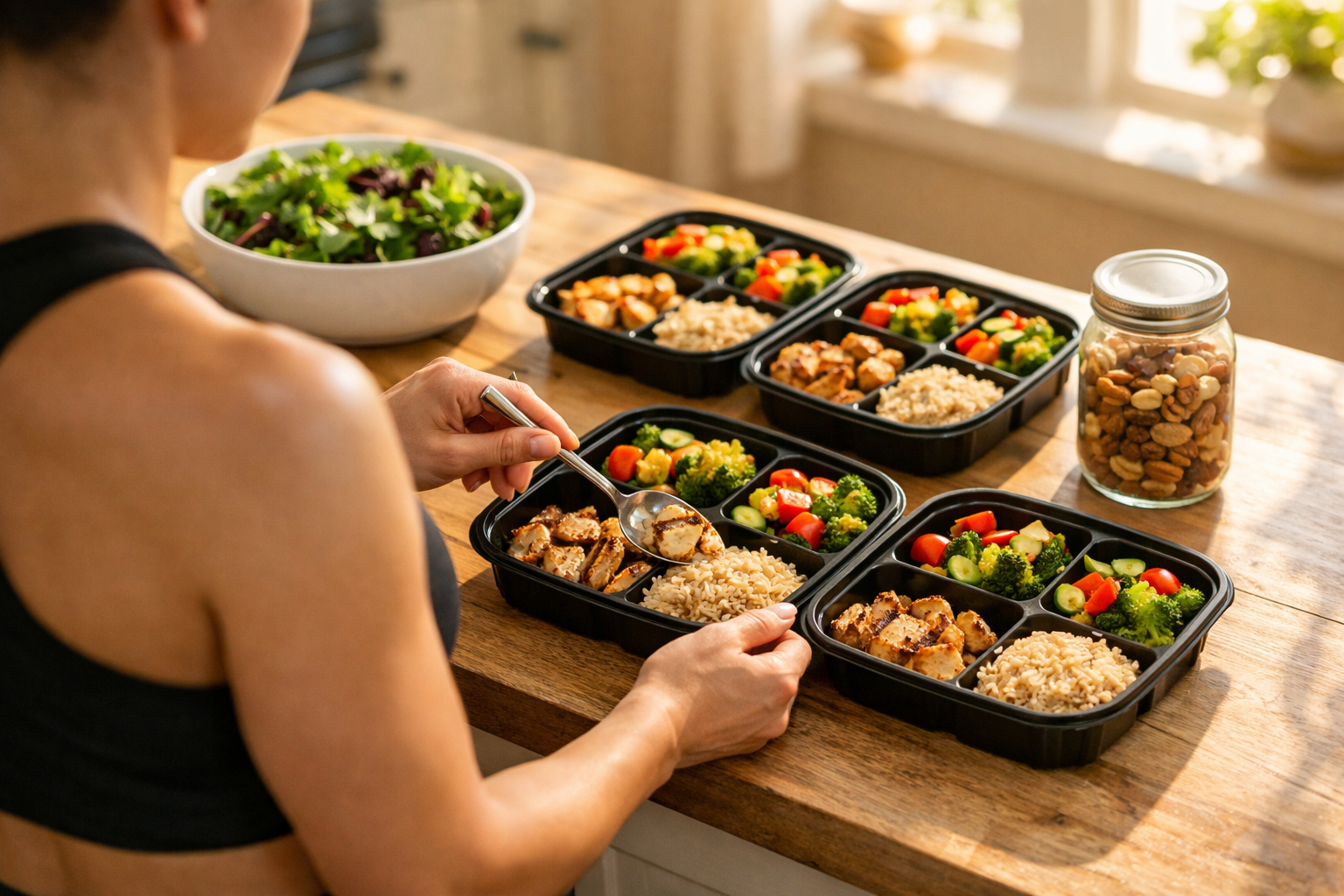
Create predictable meal and snack times that align with your workouts and energy needs to avoid large swings in hunger or poor choices. Plan a balanced breakfast, a steady lunch, and a satisfying dinner, with small snacks if workouts fall between meals; consider a protein-rich snack shortly after exercise to aid recovery. Batch-cook components like grilled chicken, roasted vegetables, and cooked grains once or twice weekly to shorten daily cooking time. Hydration and sleep routines also influence appetite and performance, so pair food rhythms with consistent sleep and fluid intake.
Start with one or two habits—like prepping proteins on Sunday and packing a fruit or nut snack each day—and add more over time. Consistency, not perfection, drives results.
Conclusion
Adopting simple, repeatable food routines makes healthy eating compatible with home training and a busy life. Focus on balanced plates, a functional pantry, and predictable meal rhythms to reduce decision fatigue and sustain energy. Small, consistent changes compound into meaningful improvements in performance and wellbeing.