Building a consistent kitchen routine makes nutritious eating easy to sustain alongside at-home workouts.
Small systems for shopping, prepping, and combining ingredients cut decision fatigue and save time.
This guide outlines practical steps to align your pantry, meals, and habits with fitness goals.
Use the templates and strategies below to create a weekly rhythm that supports energy, recovery, and progress.
Assess Your Kitchen and Goals
Start by clarifying what you want to achieve with your nutrition — fat loss, strength gain, better energy, or general health.
Take stock of your kitchen to identify staples you already have, appliances you use, and the time you can realistically devote to cooking.
Prioritize versatile ingredients like whole grains, lean proteins, vegetables, healthy fats, and quick-cooking options.
Being honest about constraints helps you design meals you’ll actually make.
- Whole grains (rice, oats, quinoa)
- Lean proteins (chicken, fish, tofu, eggs)
- Fresh or frozen vegetables and canned legumes
Once you know your resources and goals, set simple rules for shopping and storage.
These rules keep choices aligned and reduce impulse purchases.
Simple Meal Templates for Efficiency
Create a handful of reliable meal templates to mix and match across the week.
For example, a protein + vegetable + whole grain formula or a salad foundation with added protein and fat.
Use breakfast, lunch, and dinner templates so you can rotate ingredients without recreating recipes.
Templates lower mental load and make portioning easier.
- Breakfast: Protein + whole grain + fruit or vegetables.
- Lunch: Large salad or bowl with protein, veg, and a grain.
- Dinner: Roasted or sautéed protein, two vegetables, and a starch.
With templates you can scale portions to match training days or rest days.
They also simplify grocery lists and meal decisions.
Smart Grocery and Prep Habits
Plan grocery trips around your templates and shop for ingredients that serve multiple dishes.
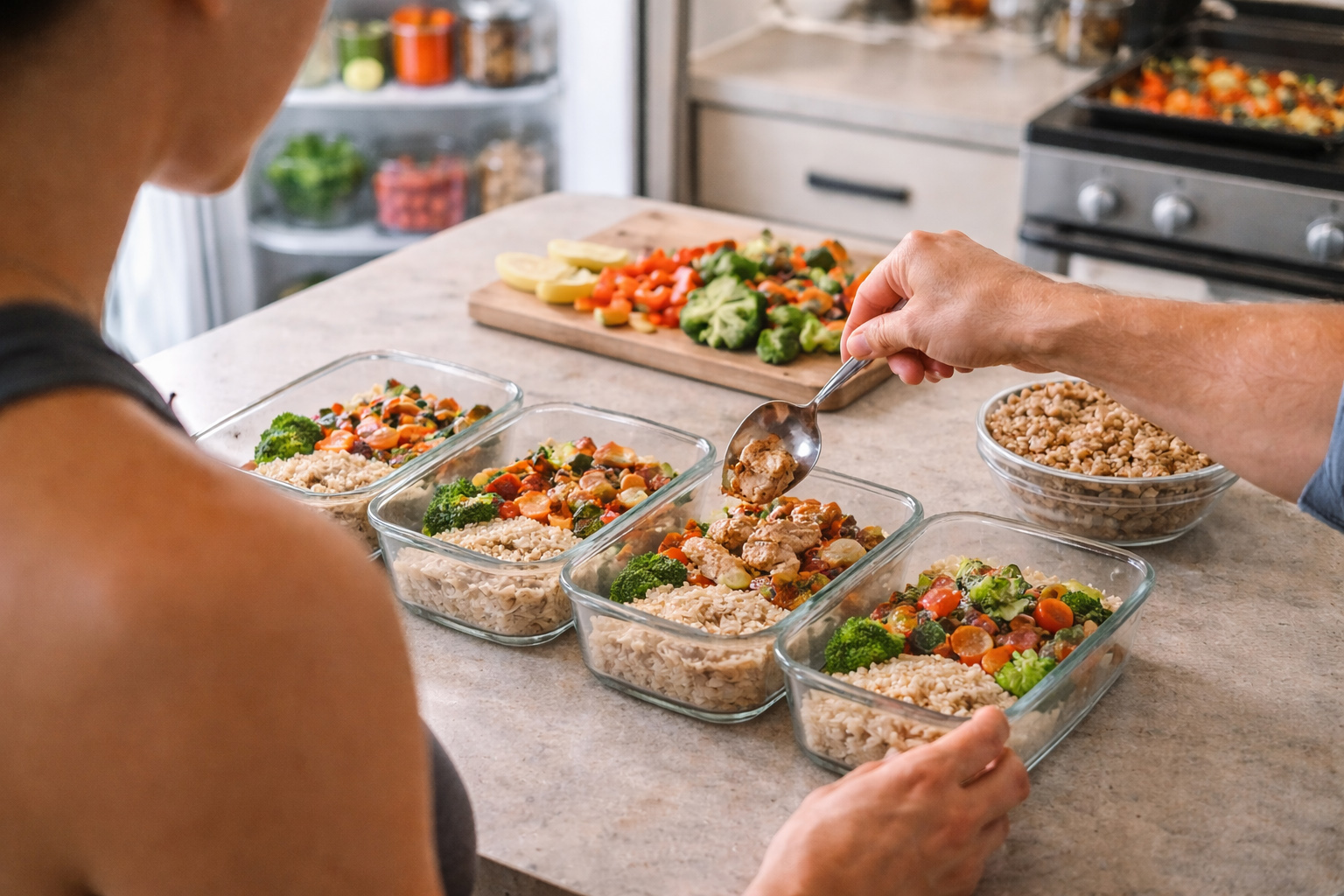
Batch-cook proteins, chop vegetables, and portion snacks into containers so healthy options are ready when you are.
Frozen vegetables and canned legumes provide convenience without sacrificing nutrition and extend variety.
Keep a running list of replacement items to avoid last-minute poor choices.
- Batch-cook two to three proteins for the week.
- Pre-chop vegetables and store portions in clear containers.
- Portion snacks and breakfast items for grab-and-go access.
Consistent prep reduces mealtime stress and supports adherence.
Over time it becomes a flow rather than a chore.
Tracking and Adjusting for Progress
Monitor how you feel, performance in workouts, and changes in body composition rather than obsessing over daily numbers.
Use simple metrics like energy levels, workout recovery, and steady weight trends to guide adjustments.
If progress stalls, adjust portion sizes, meal timing, or macronutrient balance gradually rather than making radical shifts.
Regular review helps you refine the routine while staying flexible.
Small, consistent changes compound into meaningful results.
Keep your system adaptable so it evolves with your training and lifestyle.
Conclusion
Establish small systems in the kitchen that support your fitness priorities.
Start with clear templates, smart shopping, and weekly prep.
Consistency and gradual adjustments will keep you progressing.