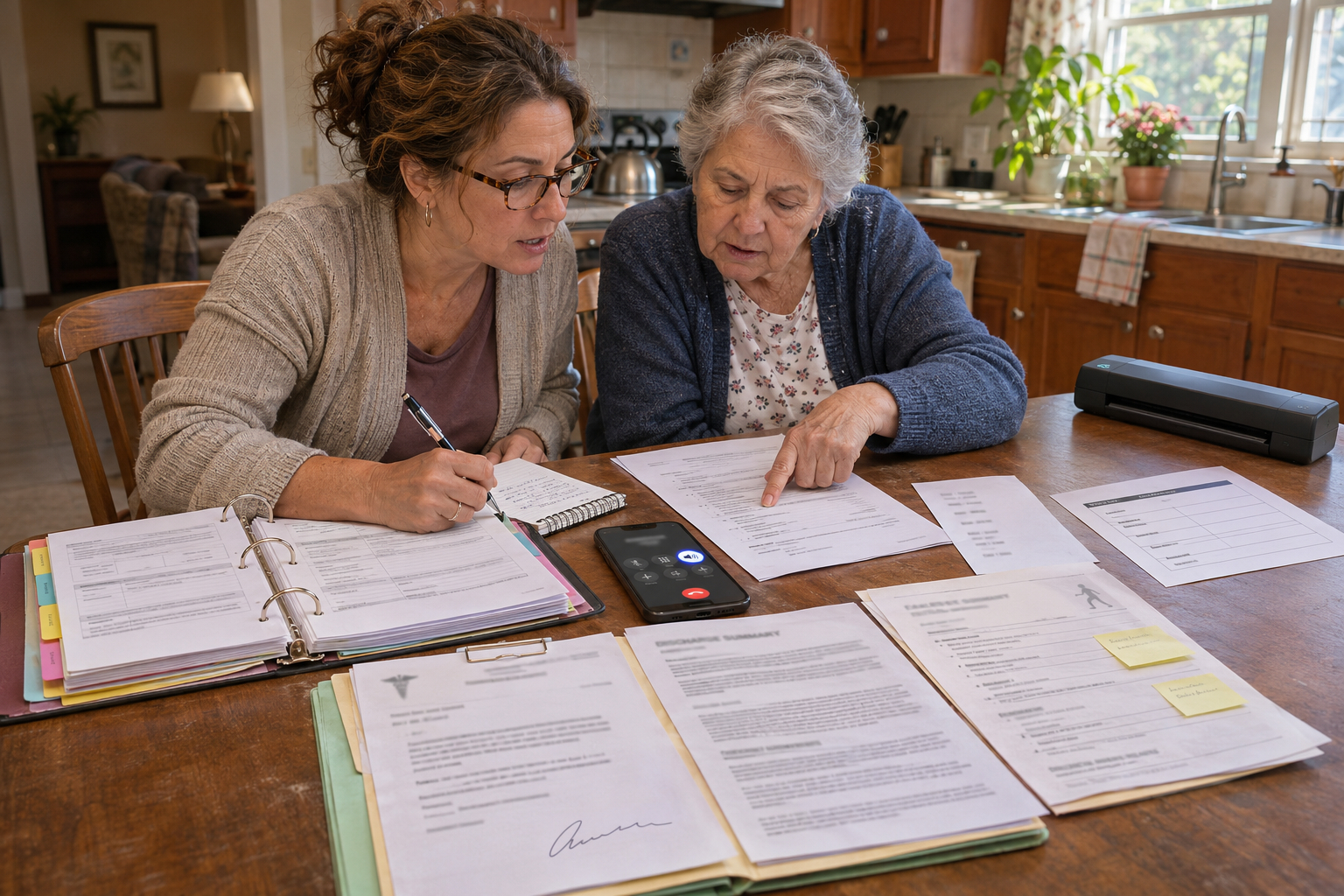
Filing a claim for home health services is rarely straightforward.
Insurers examine clinical necessity, proper coding, and provider documentation before granting approval.
Asking the right questions before you call reduces back-and-forth and helps avoid common denials.
This practical checklist will help you prepare the paperwork and the conversation.
Before You Call Your Insurer
When you prepare to call, assemble the patient’s diagnosis, recent clinical notes, and a concise description of the home service requested. Also confirm benefit details such as copays, deductibles, visit limits, and whether services fall under medical benefits or another plan area. Ask whether a physician order, a face-to-face evaluation, or a specific referral form is required for authorization. Finally, confirm the list of in-network providers and whether non-contracted providers need pre-approval to be covered.
Write down the representative’s name, ID number, and any reference or authorization numbers you receive. Those details make appeals and follow-up calls faster and more effective.
Gathering the Right Documentation
Insurers expect documentation that demonstrates the medical necessity and the expected duration of home care. Common supporting items include progress notes, hospital discharge summaries, therapy evaluations with measurable goals, medication lists, and a signed physician order that specifies frequency and objectives. If the care replaces facility-based services, include notes explaining why home-based care is safer or equally effective. When possible, provide the suggested CPT or HCPCS codes to reduce interpretation errors during claims processing.
- Physician order with signature and date.
- Recent clinical notes or hospital discharge summary.
- Therapist evaluation with measurable goals and timelines.
- Durable medical equipment prescription or mobility assessment.
- Suggested billing codes or prior authorization forms, if required.
Organize documents clearly—chronologically or by document type—and keep a digital copy. Uploading files to the insurer’s portal or faxing with a cover sheet that lists included items speeds review.
Understanding Prior Authorization and Appeals
Prior authorization requirements vary widely by plan and service type; some approvals are retroactive and others must be secured before care starts. Ask how long an approval lasts, whether periodic recertification is needed, and how many visits are authorized per period. If a claim is denied, request a written denial that cites the specific policy language or exclusion used to justify the decision. Understanding internal appeal timelines and external review rights prevents missed deadlines and strengthens your case.
If you disagree with a denial, file an appeal promptly and include any missing clinical evidence or clarifications. Keep copies of everything and note dates so you can escalate to an external reviewer if necessary.
Conclusion
Asking focused questions and submitting well-organized medical documentation improves the odds of approval.
Track conversations, reference numbers, and document transfers carefully.
If a denial occurs, follow the insurer’s appeal procedures and consider external review options.