Your evening meal is more than the last box to tick on a long day — it’s the window where your body rebuilds. A focused dinner supplies the protein your muscles need, the carbs to restore glycogen, and modest fats to support hormones and sleep. If you train later in the day, the choices you make after exercise directly affect soreness and next-day performance. Small, consistent tweaks to dinner are often easier to keep than overhaul dieting or strict meal plans.
Key components to include
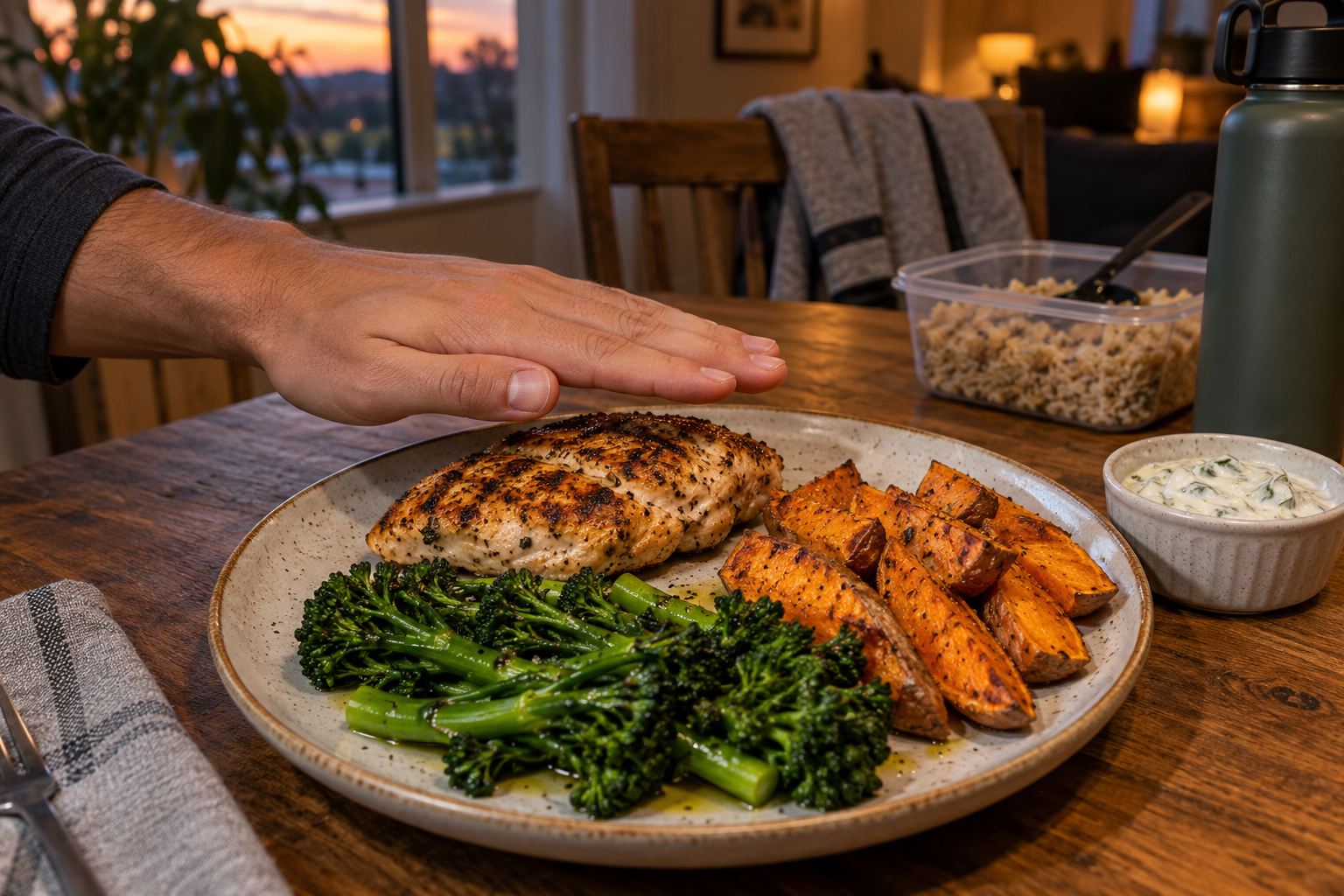
Keep each plate simple: a lean protein, a moderate starchy or whole-grain carbohydrate, and a colorful vegetable. Protein helps repair muscle fibers; aim for a palm-sized portion for most people. Carbohydrates help refill energy stores — think sweet potato, rice, or a grain bowl — and vegetables supply vitamins and fiber to aid digestion and sleep quality. Don’t forget a little healthy fat like olive oil or avocado to make the meal satisfying.
- Protein: chicken, tofu, fish, or Greek yogurt.
- Carbs: potatoes, brown rice, or whole-grain pasta.
- Veggies: greens, roasted root vegetables, or a quick salad.
Building dinners from these three blocks makes shopping and cooking straightforward. Rotate colors and textures so meals don’t become monotonous.
Quick swaps that save time and help recovery
You don’t need complicated recipes to support training. Swap processed meats for grilled or baked lean proteins and replace sugary sauces with tomato-based or herb-driven dressings. Use frozen vegetables and precooked grains to shave prep time without losing nutrients. A simple bowl with cooked grain, a protein source, and a handful of steamed vegetables will do more for recovery than an elaborate dish you skip because it’s time-consuming.
- Swap fries for roasted sweet potato wedges.
- Swap burger patties for grilled chicken breasts or chickpea patties.
- Swap heavy cream sauces for yogurt- or tomato-based alternatives.
These small exchanges preserve flavor while shifting nutrient balance toward recovery. Over weeks, those swaps compound into better training outcomes.
Timing and portions without overthinking
If you finish a workout within two hours of dinner, prioritize protein and easily digested carbs to speed repair. If your workout was light or earlier in the day, a balanced plate with slightly fewer carbs is fine. Portion by performance: bigger sessions get slightly larger carb servings, shorter sessions get less. Hydration alongside the meal influences digestion and sleep, so include water or a light electrolyte beverage as needed.
Keep rules flexible and respond to hunger and results rather than rigid metrics. Consistency is more important than perfection on any single night.
Conclusion
Small, protein-forward dinners built from a lean protein, a sensible carb, and colorful vegetables help muscles recover and keep energy steady. Make simple swaps and use pantry shortcuts so dinner supports training without extra stress. Over time these habits will preserve strength and make regular workouts more sustainable.