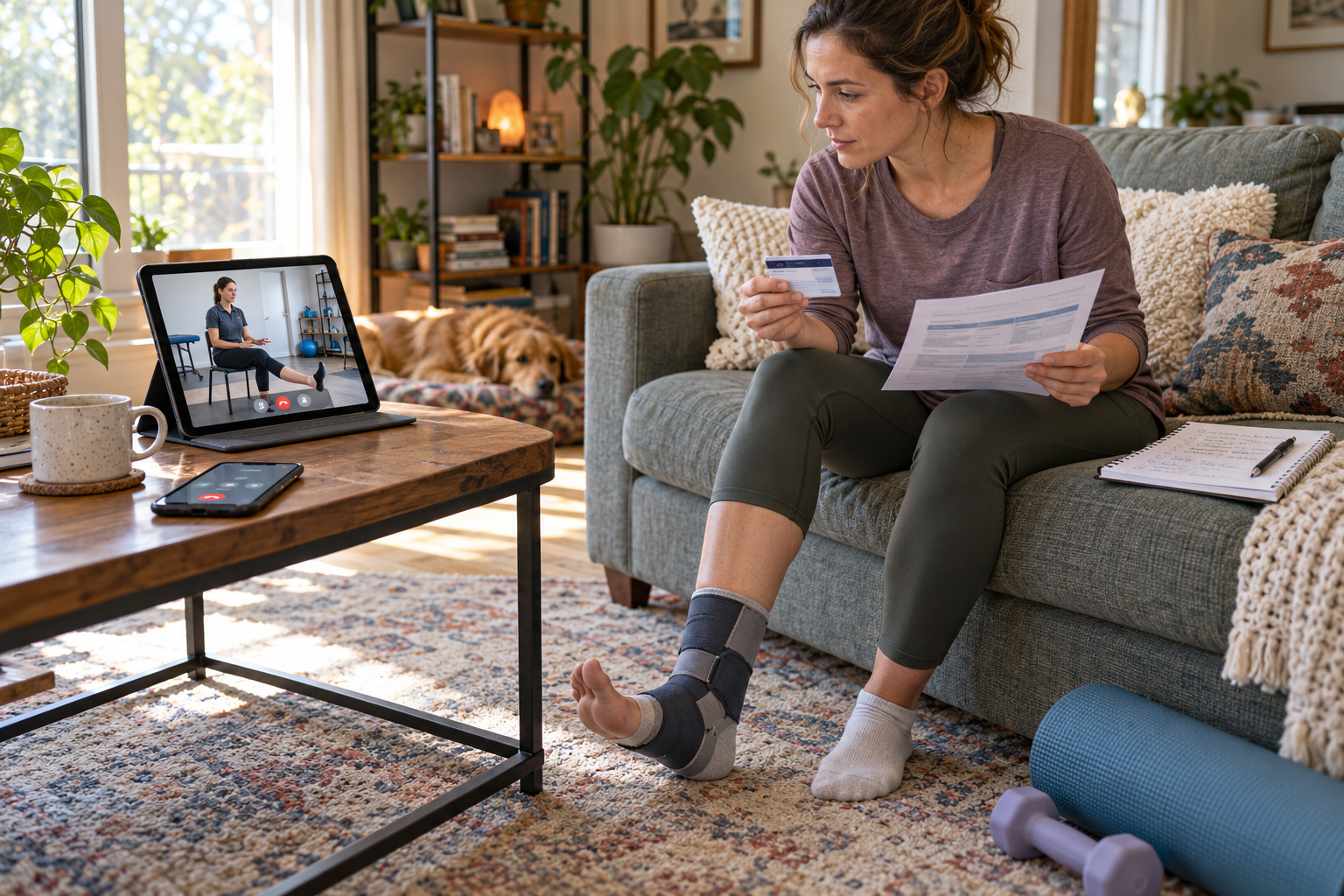
If a routine at-home workout goes wrong, the paperwork and phone calls that follow can be as draining as the injury itself.
Knowing what your health plan will cover and what it won’t helps you avoid surprise bills and delays in care.
This piece walks through concrete steps to verify benefits, document an incident, and pick the right care options after a home exercise injury.
Read on for practical actions you can take immediately and in the days after an injury.
Check Your Policy Essentials
Start by locating the member materials or logging into your insurer’s portal to review coverage details related to emergency care, urgent care, physical therapy, and outpatient imaging.
- Confirm deductible, copay, and coinsurance amounts for emergency and outpatient services.
- Find whether physical therapy requires prior authorization or a referral.
- Check in-network provider lists and telehealth options for follow-up care.
These specifics determine where you should seek care first and how much you’ll pay out of pocket. Keep a screenshot or a saved PDF of relevant pages for reference during calls.
Documenting an Injury at Home
Accurate documentation speeds claim processing and supports appeals if a service is denied. Write down the date, time, and how the injury occurred, take photos of any visible damage, and keep copies of all medical notes and bills.
Ask the treating clinician to note on records that the injury happened during exercise at home if relevant. That clarity can matter when an insurer evaluates whether care was medically necessary.
Choosing Providers and Rehab Options
When possible, choose in-network urgent care, imaging centers, and physical therapists to reduce costs and paperwork. If you need emergency care, go to the nearest emergency department, then verify follow-up providers with your insurer.
If rehab is likely, check how many sessions are covered and whether a referral or preauthorization is required. Consider telehealth or home-based therapy if your plan covers those and travel is a barrier.
Filing Claims and Handling Denials
Submit bills promptly and double-check that diagnosis and procedure codes on claims match the clinical notes. Keep a log of every call to the insurer with dates, names, and summaries of what was discussed.
If a claim is denied, request a written explanation, gather supporting documentation, and follow the insurer’s appeal process within required timeframes. Persistence and organized records often change outcomes.
Conclusion
Confirm benefits, document everything, and pick in-network care whenever possible.
Save copies of policy pages and medical records to support claims or appeals.
A few proactive steps can reduce stress and unexpected costs after a home workout injury.