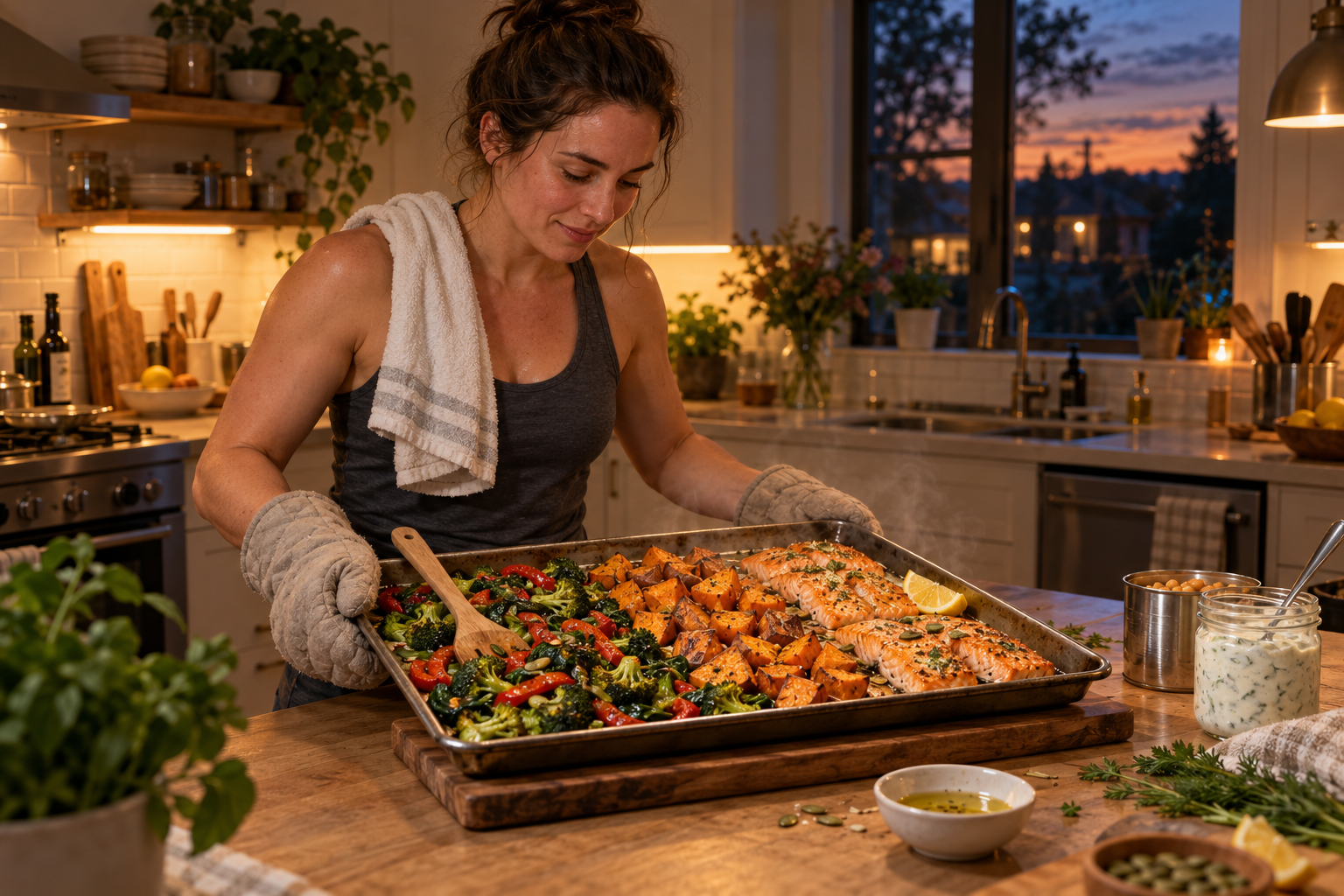
One-pan meals are a smart answer to late workouts and limited energy for cooking. They let you combine a solid protein, colorful vegetables, and a simple carbohydrate in one quick step. Cleanup is minimal, which makes it easier to eat well consistently. Below are practical composition tips and quick ingredient swaps to make recovery-focused one-pan dinners part of your routine.
Why one-pan dinners help recovery
After exercise the body needs building blocks and energy to rebuild muscle and restore glycogen stores, and a single pan can deliver both without fuss. Getting protein, a starchy source, and some vegetables together in one dish speeds prep and helps you eat sooner after a session. The gentle heat of a sheet-pan or skillet also preserves texture and nutrients in vegetables more reliably than long, elaborate methods. That combination supports both repair and appetite satisfaction, which matters for consistent recovery.
Beyond nutrition, the time and cleanup savings reduce barriers to cooking, so you’re more likely to choose whole foods over convenience options. One-pan approaches also make it easier to control portion balance without overcomplicating the process.
Composing a balanced one-pan plate
Start by allocating roughly one-quarter of the pan to a cooked protein, one-quarter to a starchy carbohydrate, and half to vegetables, adjusting for your own hunger and training demands. Proteins that roast well include chicken thighs, salmon fillets, firm tofu, or canned beans warmed and spiced; starches can be cubed sweet potato, par-cooked potatoes, or quick-cooking whole grains finished on the sheet. Toss vegetables with a little oil and seasoning so they caramelize while the protein cooks, and aim for a mix of colors to cover micronutrient needs.
Finish with a small splash of healthy fat like olive oil or a sprinkle of seeds for absorption of fat-soluble vitamins, and add an acid—citrus or vinegar—to brighten flavors and encourage appetite. These simple moves keep the meal balanced without extra effort.
Quick builds and pantry swaps
For speed, rely on pantry and freezer staples: frozen mixed vegetables, canned chickpeas, pre-cut sweet potatoes, and defrosted fish or chicken. A basic template is to roast a starchy base at high heat for 10–15 minutes, add protein and vegetables, then finish until everything is cooked through. Spices, a jarred sauce, or a quick yogurt-dill drizzle transform the plate in seconds while still supporting recovery goals.
Swaps make these dishes flexible—replace salmon with firm tofu, sweet potato with brown rice, or fresh greens with frozen spinach—and you’ll still hit the key nutrient groups. Keep a few versatile seasonings and a bottle of acid handy to change flavor profiles without extra shopping.
Conclusion
One-pan meals make it easy to eat a balanced recovery plate quickly and consistently.
They cut cleanup time and lower the friction of cooking after training.
With a few pantry staples and simple composition rules you can support repair without fuss.