Recovering movement after treatment can feel slow and unpredictable, but modest consistent habits at home often produce steady gains. Focus on short, repeatable actions you can do several times a day rather than pushing for large sessions that increase pain or fatigue. Small improvements in posture, timing, and load add up and protect progress. Always align any new activity with advice from the clinician overseeing your care.
Assess your starting point
Begin by noting what you can do comfortably and what provokes symptoms, keeping details simple and specific. Is walking across a room easy but climbing stairs difficult? Can you lift a mug without strain but not a full kettle? A brief daily log of one or two tasks and how they felt creates a reliable baseline to measure progress. This information helps prioritize which movements need gradual exposure and which need modification.
Knowing limits reduces guesswork and prevents setbacks from overdoing it. Track small wins like an extra five minutes of standing or a smoother bend to reinforce steady progress.
Set small, measurable goals
Translate your baseline into concrete goals: add distance, add repetitions, or shorten rest between efforts. Choose goals that are specific and time-bound, for example walking to the mailbox three times a day or performing ten sit-to-stands twice daily. Make one goal challenging but achievable, and another that maintains current capacity to prevent decline. Adjust targets weekly based on how your body responds.
Clear goals keep practice purposeful and make it easier to celebrate progress. They also guide safe progression so you avoid sudden spikes in activity.
Daily movement patterns to prioritize
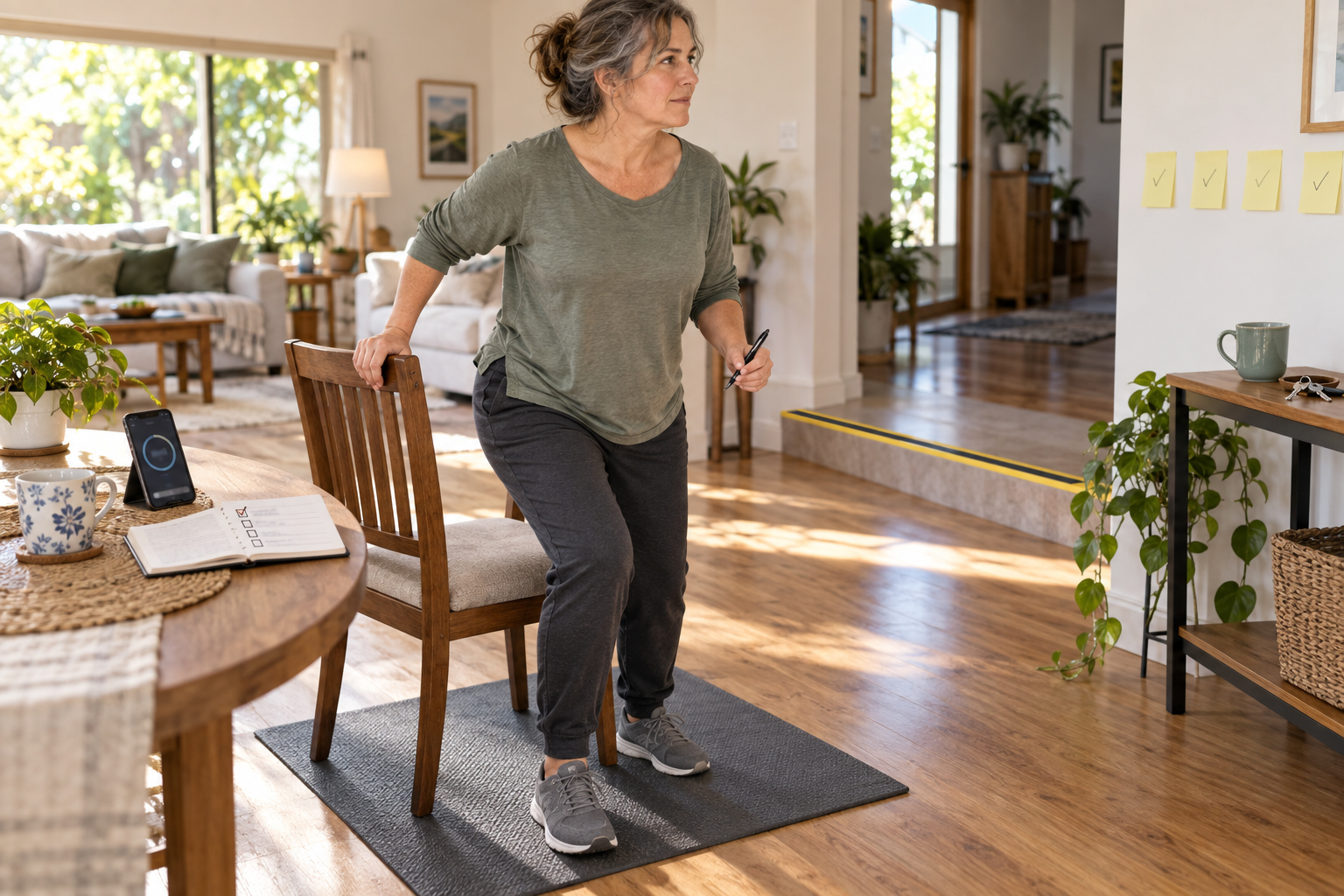
Build movement sessions around functional tasks you do every day: sit-to-stand transitions, reaching at counter height, gentle stair practice, and short walks. Use pacing: break tasks into smaller segments with planned rests and repeat those segments throughout the day. Add gentle mobility at the start of each session to prepare tissues and simple strength-oriented moves later to support endurance. Keep sessions brief but frequent to train tolerance without fueling fatigue.
Consistency matters more than intensity early on; regular repetition rewires movement patterns and builds confidence. Gradual increases reduce flare-ups and encourage independence.
Simple home adjustments that cut risk
Small environmental changes remove unnecessary strain: clear walking paths, raise frequently used surfaces slightly, add a stable chair for support, and ensure good lighting to avoid missteps. Arrange items so reaching and bending are minimized while you regain strength or balance. These changes are often inexpensive and offer immediate safety benefits while you work on mobility. Consult a therapist for targeted suggestions if balance or load-bearing remains a concern.
Reducing barriers makes it easier to practice movements often and safely. Think of adjustments as tools that support progress rather than permanent crutches.
Conclusion
Steady, well-paced habits at home help rebuild movement and confidence without unnecessary risk. Prioritize measurable goals, frequent short practice, and small environmental tweaks that support daily tasks. Pair these steps with professional guidance to keep recovery safe and effective.