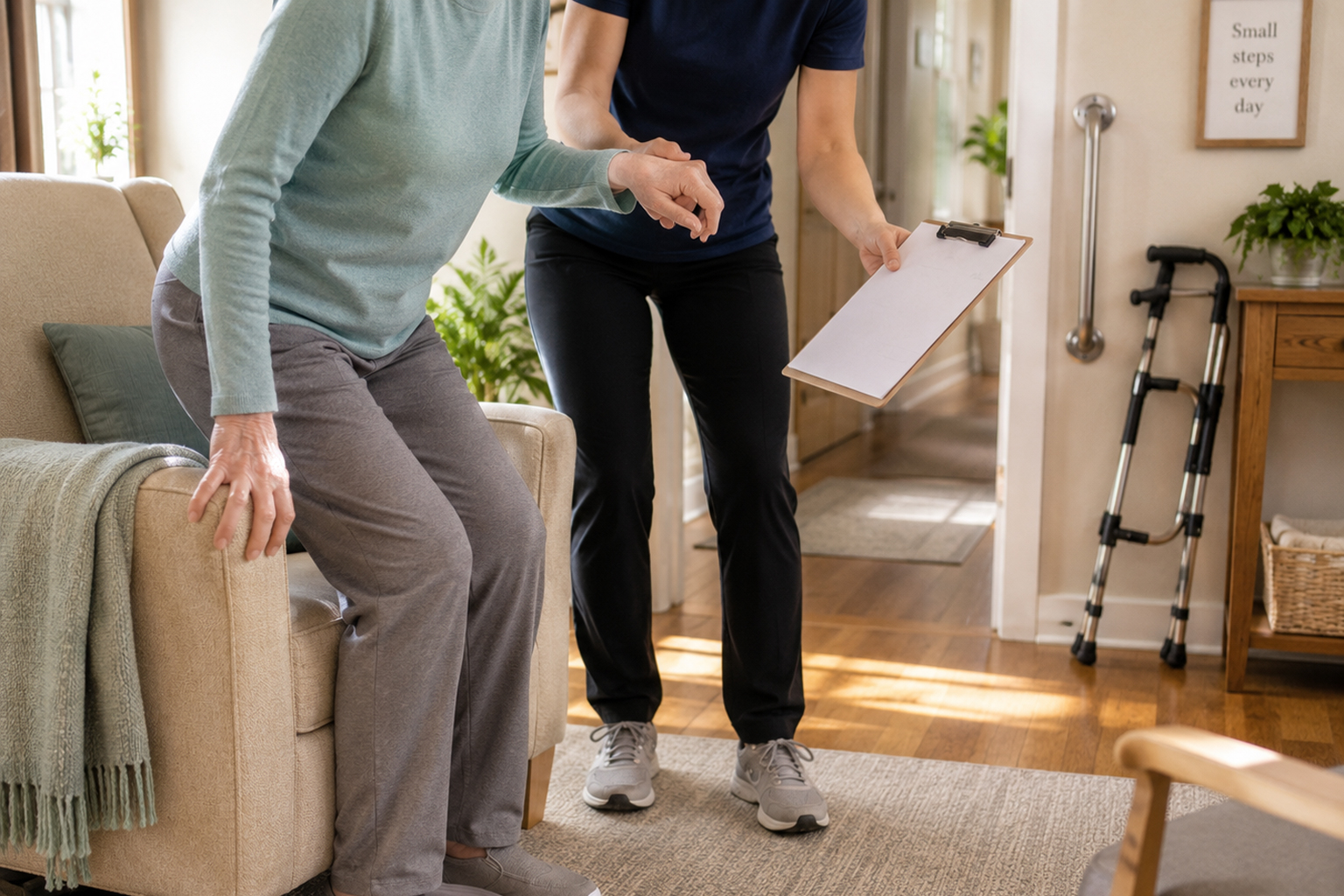
Recovering mobility at home requires clear planning and safe progress.
Small, consistent changes in daily movement and environment often matter more than sudden pushes.
This guide outlines practical, evidence-minded approaches to reduce risk and rebuild function.
Use these principles to structure routines, adapt your space, and set realistic goals.
Assessing Movement Needs
Begin by evaluating current abilities and limitations honestly, noting pain, balance, endurance, and range of motion. Simple tests like timed walking, sit-to-stand counts, or balance holds can reveal priorities and track progress. If you have medical guidance or physical therapy notes, integrate their recommendations into your assessment. This initial appraisal helps you choose appropriate activities and avoid common mistakes. Include a pain diary to spot patterns and guide pacing.
Record observations and update them weekly to monitor improvement and setbacks. Sharing these notes with a clinician can refine your plan and keep progress realistic. Be conservative with increases after setbacks.
Designing Gradual At-Home Routines
Build routines that combine mobility, strength, and flexibility with an emphasis on gradual increases. Start with low-intensity, functional exercises such as supported squats, heel raises, and seated leg extensions. Prioritize quality of movement over quantity and allow rest days to prevent fatigue-related setbacks. Use short, frequent sessions rather than one long workout to maintain consistency and reduce risk. Include breathing and posture cues to support safe execution.
Set measurable, attainable targets like adding five steps or one repetition per week. Regularly reassess and scale exercises as movement becomes easier. Celebrate small gains to reinforce adherence.
Modifying the Home Environment
Small environmental changes can dramatically lower fall risk and support independence. Improve lighting, clear walkways of trip hazards, secure rugs, and create non-slip surfaces in key areas. Position commonly used items within easy reach to reduce awkward bending and reaching. Evaluate bathroom and kitchen layouts for repetitive strain during daily tasks. Think about temporary aids that can be removed as independence returns.
- Handrails on stairs and grab bars in bathing areas.
- Night lights and motion sensors for hallways.
- Non-slip mats and clear adhesive strips in tubs.
- Stable seating with armrests near common workspaces.
Consider assistive devices only when they enhance safety and independence. A therapist or occupational specialist can recommend targeted changes based on your assessment. Test changes gradually and adjust based on comfort.
Monitoring Progress and Knowing When to Seek Help
Regularly measure progress with simple metrics like walking distance, step count, or frequency of pain-free tasks. Note trends rather than day-to-day variation, and adjust intensity accordingly to sustain gains. Seek professional advice if pain increases, numbness develops, or function declines despite adherence to the plan. Early consultation can prevent complications and speed appropriate adjustments to therapy.
Keep a recovery log and share it with your care team during follow-ups. Professional input helps balance independence with safety during recovery.
Conclusion
Progress in home mobility is gradual and measurable.
Prioritize safety, realistic goals, and consistent practice.
Consult professionals when unsure or when recovery stalls.