Consistent meal habits are one of the simplest levers to support steady energy and recovery for at-home training. Small, repeatable choices around timing and composition reduce decision fatigue and deliver reliable fuel for workouts. This article outlines a practical framework you can apply in a busy day without drastic dieting or complicated recipes. The focus is on realistic patterns that fit a home routine and improve both performance and enjoyment.
Start with a few dependable options you like and build around them so habits stick. Over time these habits compound into better energy and more consistent sessions.
Why consistent meal habits matter
Regular eating patterns stabilize blood sugar, which helps you avoid energy crashes during a workout and afterward. Predictable meals also make it easier to match meal size and macronutrient balance to the demands of your sessions, whether strength, conditioning, or mobility work. Consistency reduces stress: planning simple repeats lowers the mental load of daily cooking and grocery shopping. Finally, a stable rhythm supports recovery by delivering protein and carbohydrates in useful windows across the day.
Adopting simple rules is more effective than chasing perfect meals. Aim for progress through repetition rather than perfection every day.
Practical plate composition and timing
A basic, flexible plate is: a protein source, a fiber-rich carbohydrate, and a serving of vegetables or healthy fat. For pre-workout meals, prioritize moderate carbohydrates and some protein 60–90 minutes before activity. Post-workout, include a portion of protein plus carbs to kickstart recovery within two hours. Hydration should be regular across the day rather than crammed before exercise.
- Protein: eggs, canned tuna, Greek yogurt, legumes, or lean cuts.
- Carbs: oats, rice, whole-grain bread, sweet potato, or fruit.
- Veggies/fats: salad greens, frozen mixed vegetables, avocado, or olive oil.
Keep serving sizes simple and adjustable: when energy demands rise, add a portion of carbs or a snack. These small adjustments let you tune meals to training without overhauling your diet.
Pantry staples and quick meal ideas
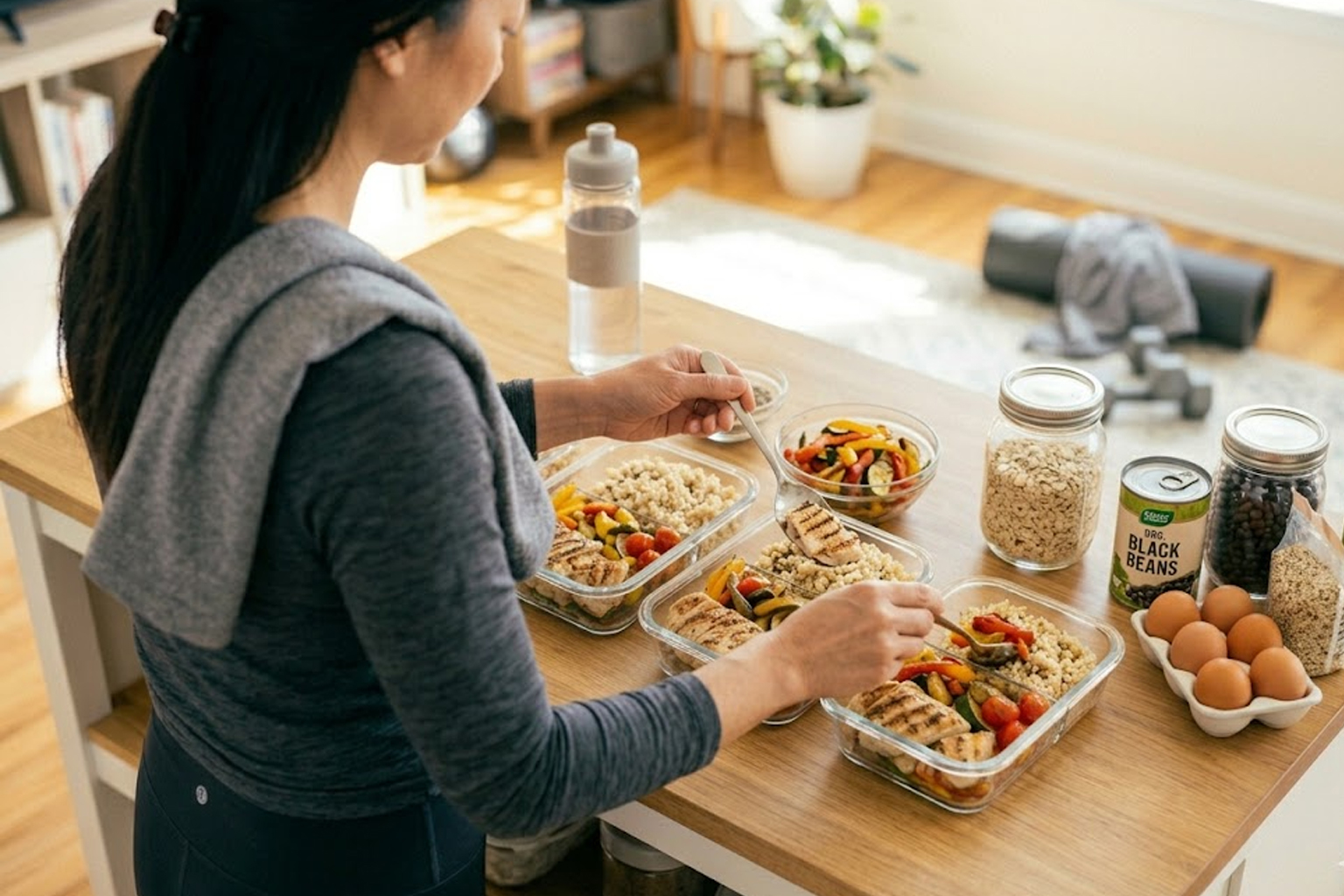
Stocking a few reliable items simplifies daily cooking and reduces barriers to eating well. Choose long-shelf staples like canned beans, whole grains, nut butter, frozen vegetables, and eggs to assemble balanced plates fast. Batch-cooking one or two protein sources and a grain on the weekend saves time during busy weekdays. Keep a handful of quick combos you enjoy so you can rotate without thinking too much.
- Example quick meal: scrambled eggs + spinach + toast with fruit.
- Example bowl: cooked grain + roasted veggies + canned chickpeas + tahini.
- Snack idea: yogurt with nuts and a piece of fruit.
With these staples you can create dozens of variations that meet your needs. The goal is availability and simplicity rather than culinary complexity.
Conclusion
Building sustainable meal habits around simple plate rules reduces friction and improves training consistency. Focus on repeatable choices: protein, carbs, and vegetables with predictable timing around workouts. Small, steady changes deliver the most reliable gains for at-home training over time.