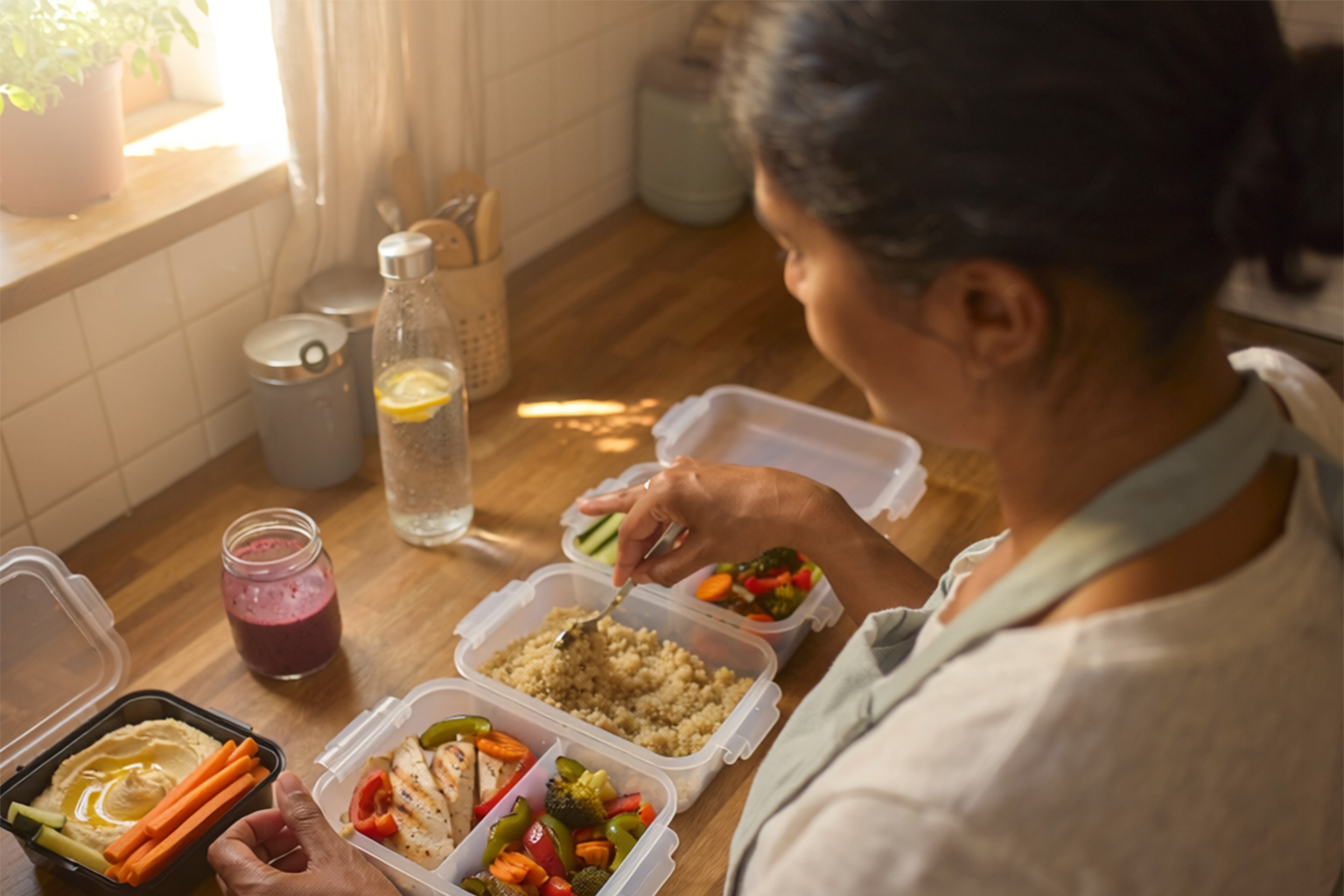
Maintaining steady energy and supporting recovery for home workouts depends largely on everyday food choices. Adopting simple, repeatable plate habits makes it possible to fuel exercise without overhauling your entire routine. This piece highlights practical adjustments that balance convenience with nutrition to keep momentum over weeks and months. The ideas are designed to slot into busy schedules and modest kitchens.
None of the steps require extreme restriction or expensive ingredients. With a few consistent shifts you can improve performance, reduce midday fatigue, and speed recovery.
Prioritize Protein and Fiber
Protein and fiber form the foundation of plates that sustain energy and support muscle repair. A serving of lean protein at each meal helps maintain strength and promotes recovery after resistance or interval sessions. Fiber-rich vegetables, whole grains, and legumes slow digestion, stabilize blood sugar, and prolong satiety between meals. Together they reduce cravings and make it easier to stick to a training plan.
- Examples: grilled chicken or tofu, lentil salads, Greek yogurt with berries.
- Quick swap: replace white rice with quinoa or a mixed-grain blend.
Focus on convenient sources you enjoy so the approach feels effortless. Small, repeatable choices are more sustainable than one-off strict menus.
Smart Carbs and Meal Timing
Carbohydrates are a valuable fuel for higher-intensity workouts and should be timed to match activity. Consuming a moderate portion of carbs 1–2 hours before a session supports performance, while a mix of carbs and protein after exercise aids glycogen restoration and muscle rebuilding. Choose whole-food carbs most of the time, and reserve simple carbs around intense sessions if you need a quick boost. Timing matters more than eliminating carbs entirely for home-based training.
- Pre-workout: a banana with nut butter or oatmeal with fruit.
- Post-workout: a smoothie with milk or a whole-grain wrap with lean protein.
Experiment with timing to discover what keeps your energy steady and your workouts productive. Personal adjustments are normal and expected.
Hydration, Snacks, and Recovery Focus
Hydration is often overlooked but directly affects performance and recovery; aim to sip fluids consistently throughout the day. Thoughtful snacks bridge gaps between meals and prevent energy crashes—pair protein and carbs for the best effect. Recovery-focused meals include anti-inflammatory items like colorful vegetables, fatty fish or plant-based omega-3 sources, and whole grains to replenish stores. Prioritizing these elements speeds return to readiness for the next session.
- Snack ideas: hummus with carrots, cottage cheese with pineapple, trail mix with nuts and dried fruit.
Keep portable options on hand so hunger doesn’t derail plans. Small preparations go a long way toward consistent training.
Simplify Meal Prep for Consistency
Consistency beats perfection when building supportive eating habits for home fitness. Batch-cook core ingredients like roasted vegetables, grains, and a protein source to assemble meals quickly. Use simple seasonings and rotate a few go-to recipes to prevent decision fatigue and reduce waste. When meals are easy to construct, you’re more likely to eat well around your workouts.
Even 30–60 minutes of weekly prep can transform daily choices. Treat meal prep as an investment in sustainable energy and training progress.
Conclusion
Adopting a handful of practical plate habits creates reliable energy and better recovery for home workouts. Emphasize protein and fiber, time carbohydrates around activity, stay hydrated, and simplify prep to maintain consistency. Small changes, repeated over time, yield the most durable fitness gains.