Small, consistent movement habits can materially reduce the chance of injury during home workouts.
They influence how you prepare, perform, and recover from every session.
This article highlights practical, easy-to-adopt habits that require little time or equipment.
The goal is safer exercise and steady progress without overcomplicating your routine.
Assessing Your Risk Areas
Begin by surveying your space and movement patterns to identify common hazards and weaknesses.
Look for tripping hazards, slippery floors, poorly placed furniture, and equipment that shifts during use.
Also consider personal factors such as previous injuries, limited mobility, or chronic tightness that affect form.
A brief self-check helps you prioritize the most important habit changes first.
- Check floor traction and remove clutter near your workout zone.
- Test equipment stability before full-intensity use.
- Note any movement patterns that cause pain or imbalance.
Documenting these observations takes only minutes and guides targeted adjustments.
Small fixes often prevent the majority of avoidable incidents.
Practical Habit Changes
Adopt a consistent pre-session routine that includes joint mobility and light aerobic warm-up to raise blood flow.
Focus on movement quality over quantity by using controlled tempo and attention to alignment during exercises.
Progress load and intensity gradually, using small increments to reduce overload risk.
Incorporate brief checks of posture and breathing at set intervals to reinforce good form.
Making these actions habitual reduces reliance on willpower when fatigue sets in.
Consistency in these simple behaviors builds durable movement patterns over time.
Equipment and Space Tips
Choose basic, reliable equipment and maintain it regularly to avoid failures that lead to injuries.
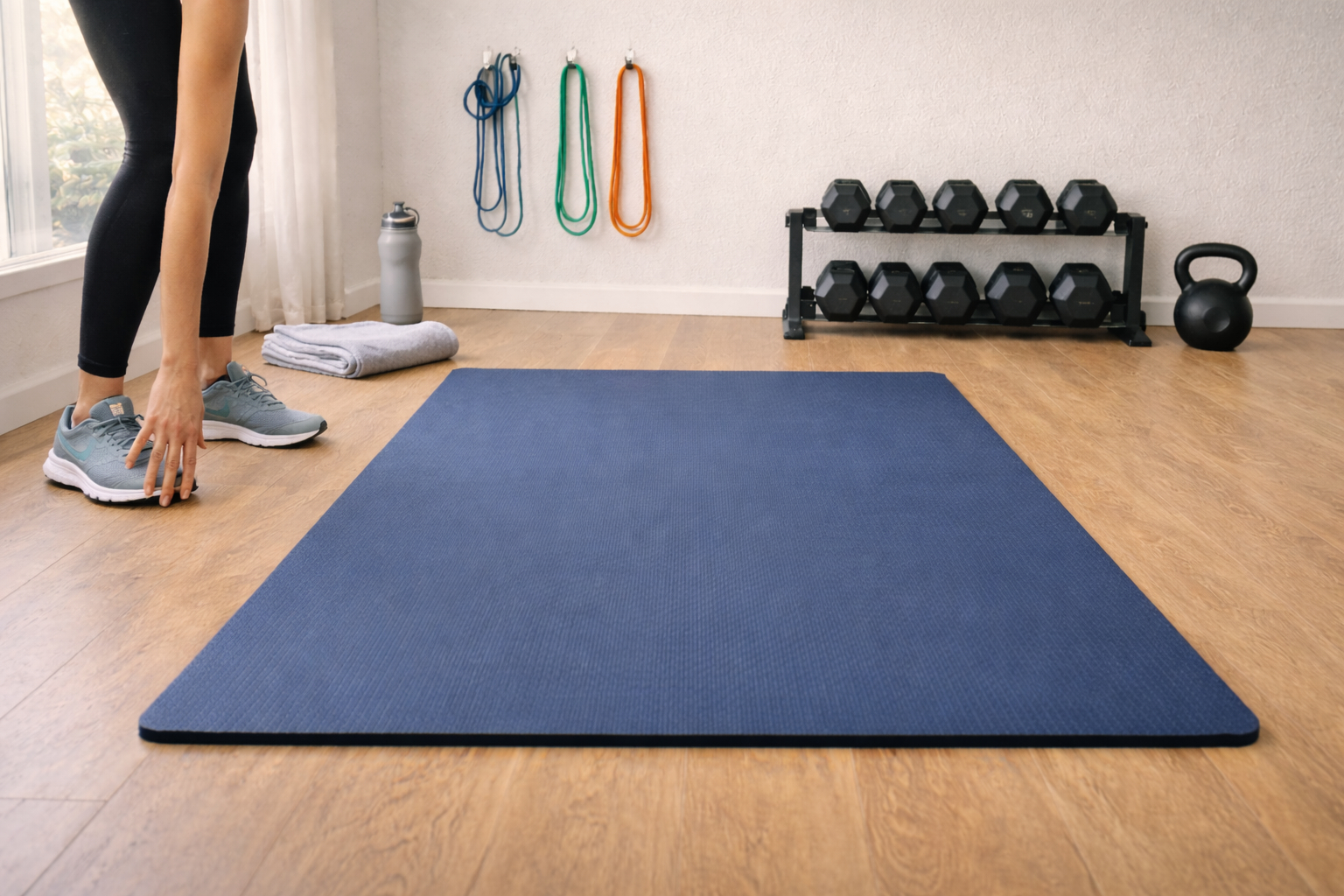
Use a non-slip mat and store weights where they cannot be tripped over or knocked down accidentally.
If you use resistance bands, inspect them for wear and replace at the first sign of fraying or cracks.
Good footwear and a clear, well-lit area make even bodyweight workouts safer and more effective.
Routine checks and tidy storage are low-effort habits that pay off immediately.
They also make it easier to sustain regular workouts without interruptions.
Warm-Up and Recovery Strategies
Develop short warm-ups tailored to your planned workout, with dynamic stretches that mirror key movements.
Prioritize mobility and activation for the joints and muscles you will use most that day.
After training, include a brief cool-down with slower movements and light stretching to aid recovery.
Hydration, adequate sleep, and periodic deload weeks support tissue repair and reduce cumulative injury risk.
Recovery habits complement on-the-spot safety practices to keep you training consistently.
Small daily actions compound into meaningful protection for your body.
Conclusion
Adopting small, repeatable movement habits reduces injury risk and builds confidence.
Start with simple checks and a consistent warm-up routine.
Over time, these practices protect your progress and enjoyment of home exercise.