Working out at home demands consistent energy and sensible recovery strategies to make progress. Nutrition controls how hard you can train and how quickly muscles repair after sessions. Small, deliberate adjustments to meals and timing often have outsized effects on performance and fatigue. This article outlines practical choices you can apply without complex planning.
Plan Meals Around Training
Start by aligning meal timing with your sessions to avoid training on an empty stomach or immediately after a heavy meal. Aim for a carb-focused snack or small meal 60–90 minutes before higher-intensity workouts to sustain energy, pairing it with light protein to reduce muscle breakdown. After exercise, prioritize a balanced meal within two hours that includes protein and carbohydrates to support glycogen replenishment and repair. Hydration throughout the day and immediately before exercise also significantly influence perceived exertion and recovery.
Experiment with portion sizes and timing to find what lets you train hard without gastrointestinal discomfort. Keeping a simple routine makes it easier to stay consistent.
Balance Macros and Prioritize Protein
Protein is central to recovery; include a moderate portion with each main meal to promote repair and adaptation. Carbohydrates provide the main fuel for intense sessions, while healthy fats support hormones and satiety on lower-intensity days. Micronutrients and fiber from whole foods keep digestion stable and energy steady, so prioritize vegetables, fruits, whole grains, and legumes. For many people, focusing on satisfying meals that meet protein needs and include colorful produce leads to steady progress without obsessing over numbers.
Use simple swaps like lean proteins, whole grains, and extra vegetables to lift nutrient density without much extra effort. Consistency matters more than perfection for long-term results.
Practical Meal and Snack Ideas
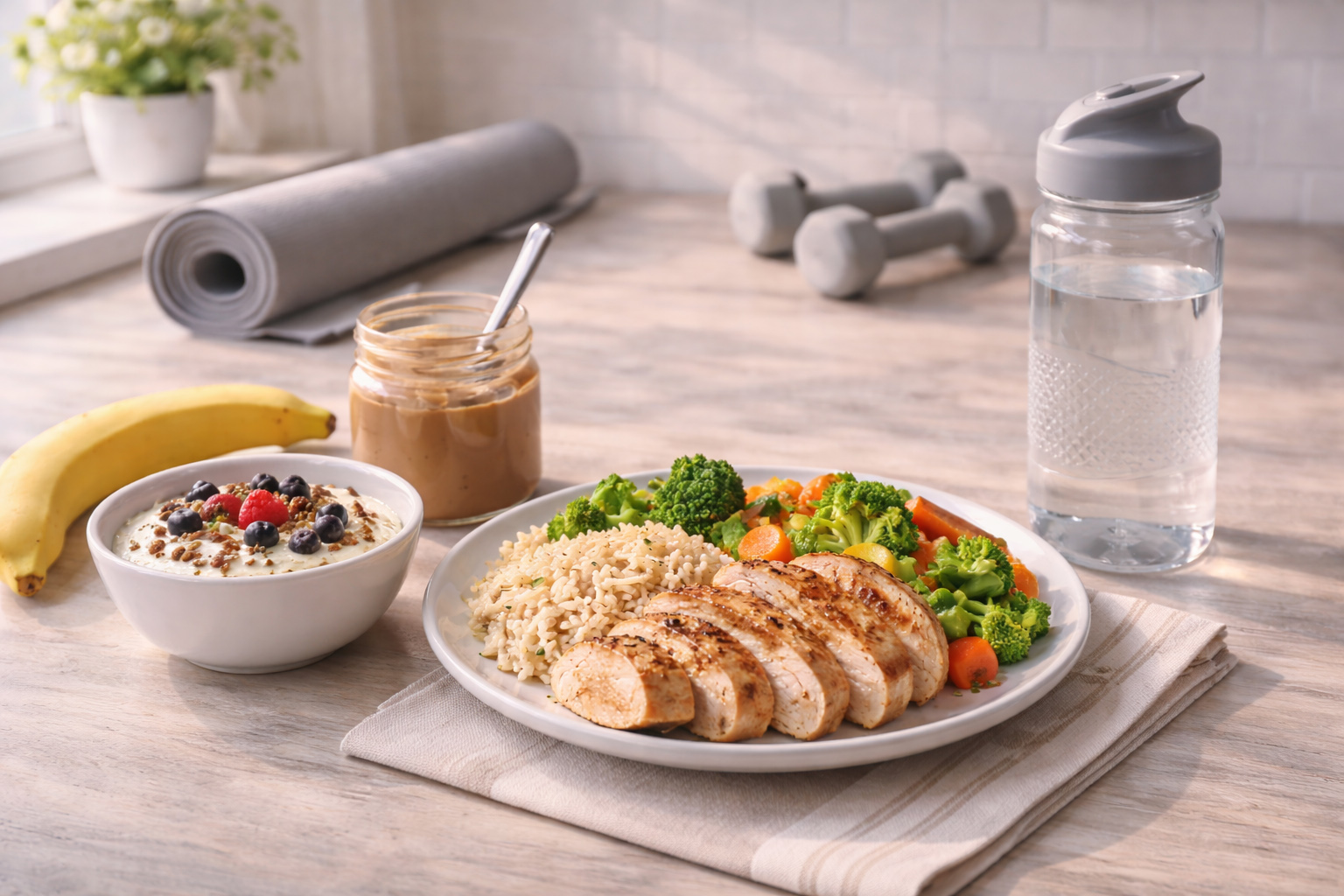
Choose meals that are easy to prepare and adaptable: a grain bowl with protein and vegetables, an omelet with greens and toast, or a yogurt parfait with fruit and nuts all work well. Snacks that combine carbs and protein, such as a banana with nut butter or cottage cheese with fruit, are quick pre- or post-workout options. Keep pantry staples—canned beans, frozen vegetables, whole-grain pasta—for days when time is tight, and batch-cook proteins to save minutes on busy nights. Simple preparation increases the likelihood you’ll eat well consistently.
- Pre-workout: toast with peanut butter and banana
- Post-workout: grilled chicken, rice, and steamed vegetables
- Quick snack: Greek yogurt with berries and a sprinkle of granola
Rotate a few favorite templates so you don’t get bored and can reliably hit your nutritional needs. Small, repeatable habits create the biggest gains over months.
Conclusion
Adopting straightforward meal timing, sensible macro balance, and easy-to-prepare options makes at-home training more effective. Focus on protein, adequate carbohydrates for your session intensity, and consistent hydration to support both energy and recovery. Over time the compounding effect of consistent nutrition will noticeably improve your workouts and results.