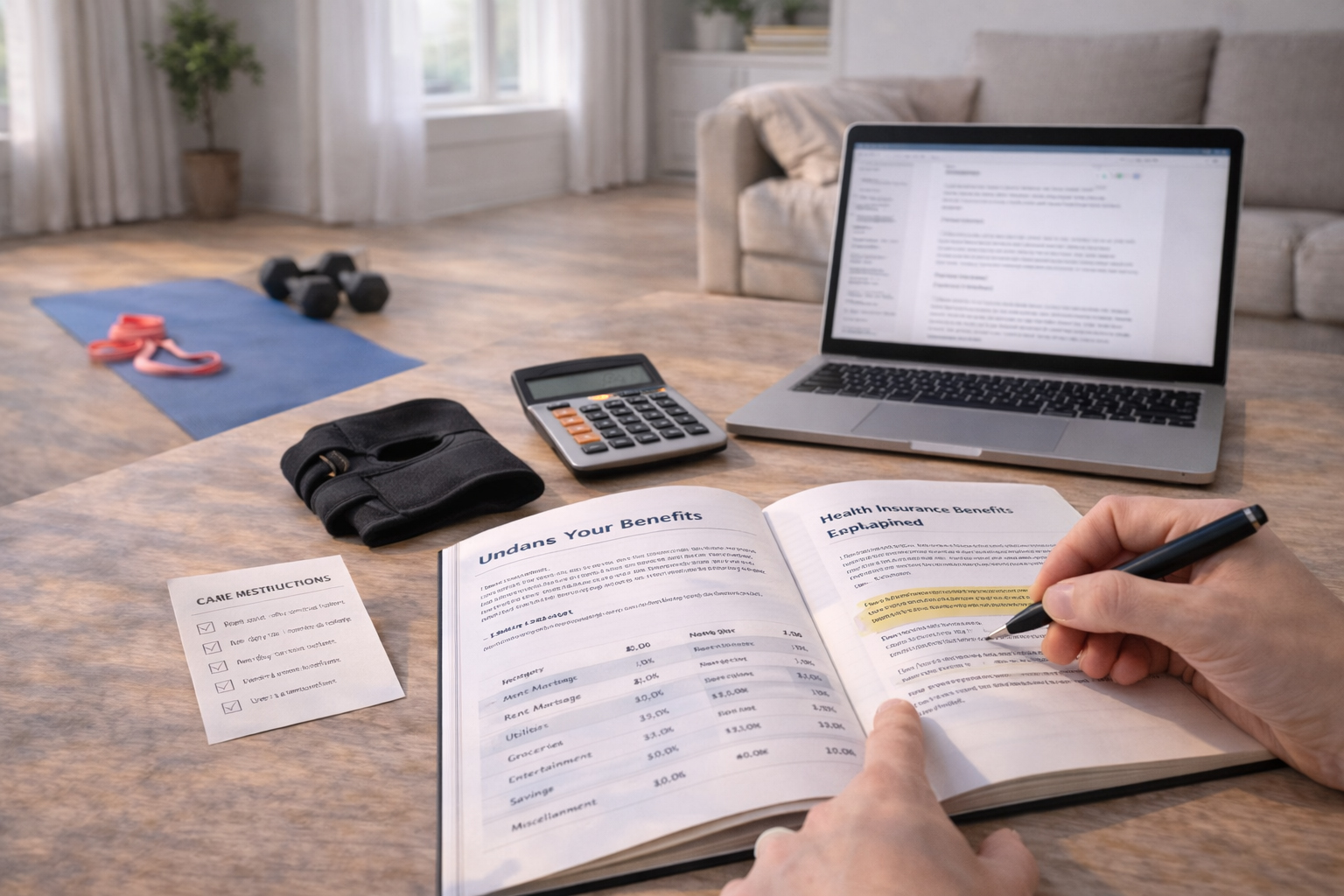
As more people build regular exercise into their home routines, understanding how medical insurance interacts with fitness-related care becomes important. A good plan covers preventive services, injury care, and access to rehabilitation without unexpected bills. This article explains practical ways to evaluate plans for people who train or recover at home. It focuses on coverages, networks, costs, and steps to choose policies that support an active lifestyle.
Coverage Basics
Start by reviewing what a policy defines as preventive care, urgent care, and physical therapy. Preventive services like screenings are often included at low cost, while acute injury treatment and ongoing rehab may be subject to deductibles or visit limits. Check exclusions and prior authorization rules for services that support recovery from exercise-related injuries. Knowing these definitions avoids surprises when you need care.
Policy summaries and benefit booklets are the best sources for this information. Keep a file of key pages for quick reference.
Home Fitness Considerations
Home fitness enthusiasts should assess whether telehealth, virtual physical therapy, and durable medical equipment are covered. Telehealth can shorten the path to diagnosis and referrals after a home workout injury, while coverage for equipment like braces or monitors can reduce out-of-pocket costs. Also review the plan’s approach to chronic condition management if training involves long-term therapy. Understanding coverage of preventive coaching or wellness programs can be an added benefit.
- Ensure telehealth visits count toward physical therapy referrals.
- Confirm durable medical equipment (DME) criteria and reimbursement processes.
Small benefits add up when practice is frequent and equipment matters. Verify these specifics before assuming they are automatic.
Comparing Costs and Networks
Compare premiums, deductibles, copays, and out-of-pocket maximums to estimate annual costs tied to fitness-related care. A lower premium may still lead to higher spending if the deductible and out-of-pocket limits are steep for rehabilitation services. Network breadth matters: choose plans with accessible primary care and specialists who understand sports medicine or physical therapy. Consider whether preferred providers are in-network to avoid balance billing.
Use sample claim scenarios to project costs for common services like MRI or therapy. This practical exercise highlights real differences across plans.
Choosing a Plan and Next Steps
When evaluating options, prioritize the benefits you will use most, such as rehabilitation, telehealth, and preventive care coverage. Contact plan representatives with specific questions about fitness-related services and ask for written confirmations of verbal statements. Maintain records of claims and appeals if coverage decisions affect your care. Lastly, coordinate with trainers or therapists to document medical necessity when seeking coverage.
An informed selection reduces interruptions to training and recovery. Regularly review your plan at renewal to adapt to changing needs.
Conclusion
Selecting a medical insurance plan that supports an at-home fitness routine is about more than price. Focus on coverage details for prevention, injury care, telehealth, and network access to protect both health and budget. Being proactive in research and documentation makes it easier to get the care you need.