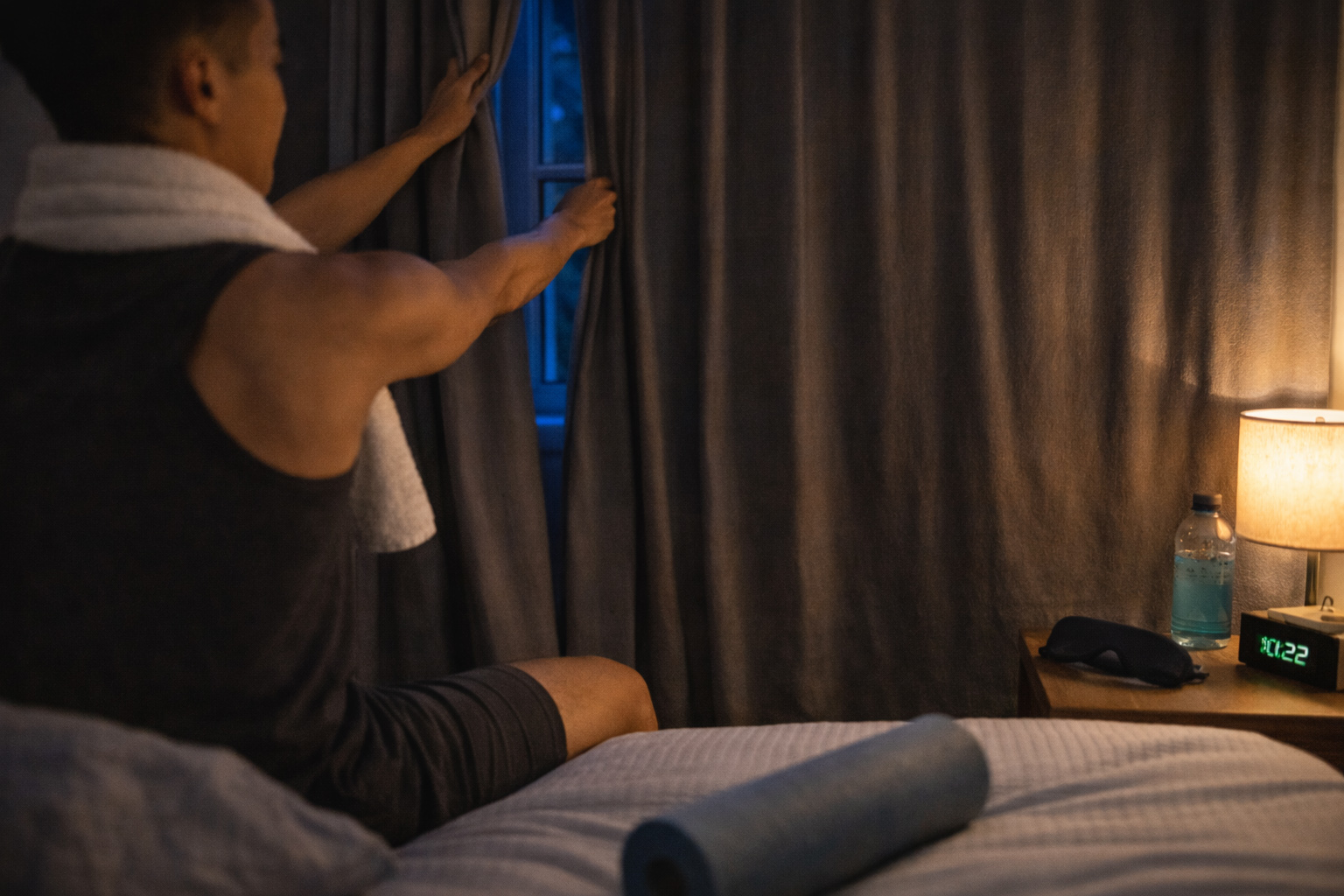
Recovery after exercise depends as much on the environment as on the workout itself. Making deliberate, small changes in your bedroom can improve sleep depth and speed physical repair. Practical adjustments focus on temperature, light, noise, and simple equipment choices. This article outlines manageable steps you can apply tonight to support better overnight recovery.
These strategies are low-cost and easy to implement. They work alongside good training and nutrition to enhance rest and resilience.
Optimize Bedroom Climate
Temperature and humidity influence sleep stages and comfort, both important for physical recovery. Aim for a cool, well-ventilated sleeping space that prevents overheating after an intense session. Avoid heavy blankets until your body has cooled naturally and consider breathable bedding to wick moisture. Simple fans or a programmable thermostat can maintain a steady environment throughout the night.
Consistent climate control reduces wakefulness and supports deeper sleep cycles. That deeper sleep is when much of the body’s repair and growth processes occur.
Control Light and Electronic Exposure
Even small amounts of light and screen use before bed can shift circadian timing and impair recovery sleep. Dim lights in the hour before sleep and limit exposure to blue light by using night modes or removing devices from the bedroom. Blackout curtains or an eye mask can block external light that fragments sleep. These steps help the brain produce melatonin at the right time, promoting restorative sleep.
- Switch off screens 30–60 minutes before bed.
- Use low-wattage warm lighting for evening tasks.
Reducing light exposure improves sleep continuity, which matters more for repair than total time spent in bed. It’s an easy habit with big returns for recovery.
Minimize Noise and Disruptions
Unpredictable noises trigger micro-awakenings that fragment sleep architecture and reduce recovery quality. Use white noise machines or fans to mask intermittent sounds, and consider earplugs if external disturbances are common. Positioning your bed away from doors and using rugs can also lower noise transmission. A quieter sleep environment helps preserve deep stages of sleep important for muscle and tissue repair.
Stability matters: consistent, uninterrupted sleep supports hormonal and metabolic processes linked to recovery. Invest in simple sound-masking solutions if needed.
Smart Gear and Layout Choices
Small adjustments to bedding, mattress support, and pre-sleep tools can reduce soreness and speed comfort. Choose a mattress and pillows that support your preferred sleeping position and consider cooling mattress toppers or moisture-wicking sheets after training. Keep recovery tools like foam rollers and a water bottle within reach to streamline your pre-bed routine. Proper layout reduces friction and helps you relax faster at night.
Thoughtful gear choices complement environmental changes and reduce barriers to falling and staying asleep. Together they create a more recovery-friendly bedroom.
Conclusion
Simple environmental tweaks—temperature, light, noise, and gear—make a measurable difference for overnight recovery. Implementing a few of these adjustments consistently supports deeper, less fragmented sleep, which aids physical repair. Start with one change tonight and build a routine that complements your training and lifestyle.