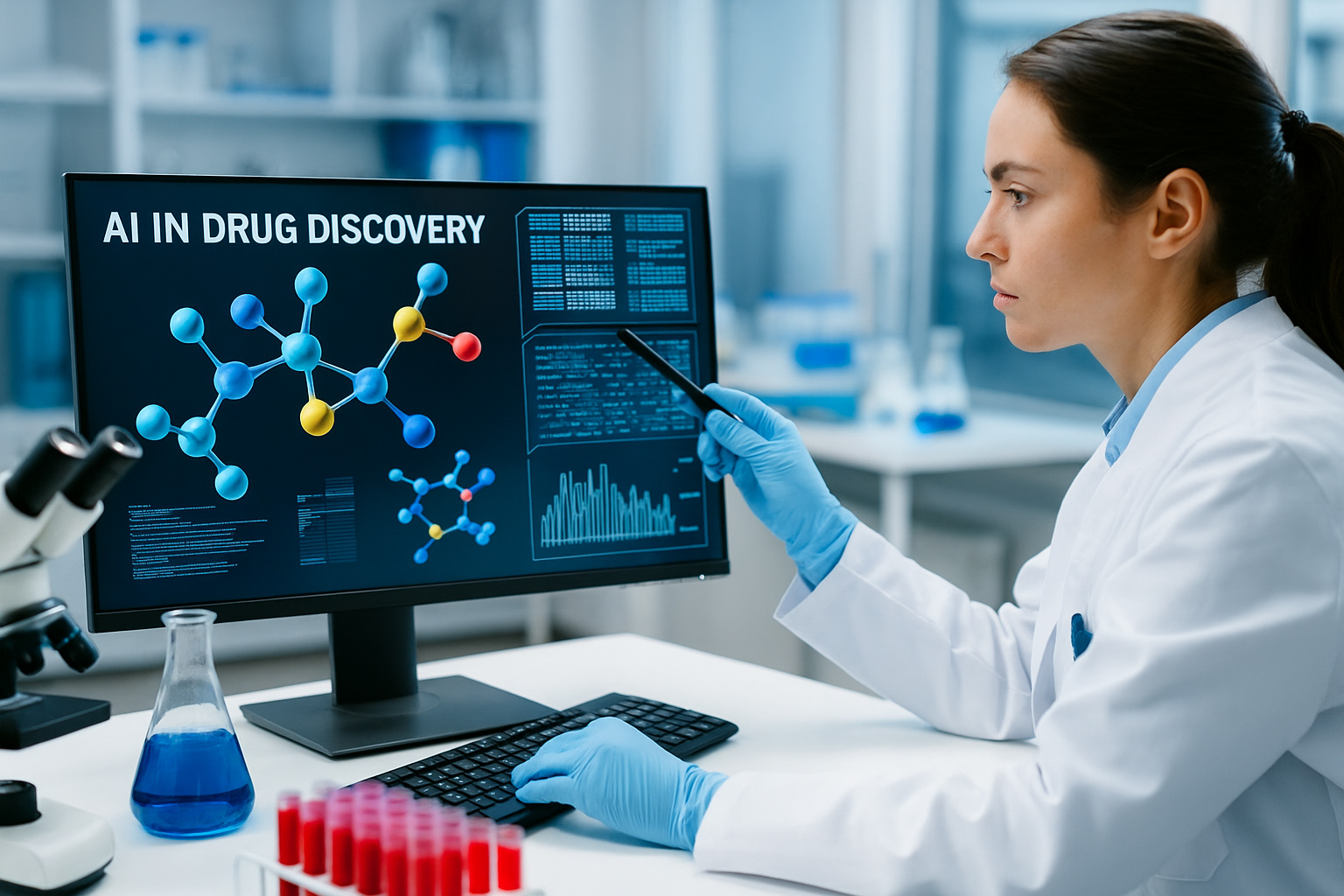
The race to find new drugs has always been long, costly, and uncertain. Traditional research methods can take years before potential treatment even reaches human trials. Today, artificial intelligence (AI) is transforming that process. By leveraging advanced algorithms, predictive modeling, and massive datasets, AI is helping scientists discover and develop life-saving drugs faster than ever before.
Transforming the Research and Discovery Stage
Drug discovery begins with identifying how a disease operates at the molecular level. In the past, this required painstaking lab work and trial-and-error testing. AI now streamlines this phase by analyzing millions of molecular structures and predicting which compounds are most likely to interact effectively with specific disease targets. Machine learning models can simulate how these molecules behave in the human body, cutting years off the discovery process and significantly reducing costs.
Enhancing Drug Design and Optimization
AI also supports medicinal chemists in designing more effective compounds. Using deep learning, systems can suggest molecular modifications to improve potency, reduce side effects, and increase stability. Generative AI tools are even capable of creating entirely new molecular structures that meet desired biological and chemical properties. This innovation allows researchers to move beyond traditional compound libraries and explore untapped chemical spaces that may hold the key to future cures.
Accelerating Clinical Trials and Repurposing Drugs
Once a promising compound is identified, clinical trials are the next major hurdle. AI enhances this phase by analyzing patient data to select optimal candidates, predict side effects, and monitor responses in real time. It can even identify existing approved drugs that might work against new diseases—a process known as drug repurposing. This was particularly evident during global health crises when AI-driven insights helped identify potential treatments from existing medications, accelerating emergency responses.
Challenges and Ethical Considerations
Despite the promise, integrating AI into drug discovery is not without challenges. Data quality and bias can impact the accuracy of predictions, and transparency in AI decision-making remains a concern for regulators. Moreover, researchers must ensure that AI complements—not replaces—human expertise. The goal is to create a collaboration where machines handle repetitive analysis while scientists focus on innovation and interpretation.
Conclusion
AI is reshaping the future of drug discovery, transforming it from a slow, expensive endeavor into a more efficient and data-driven process. By shortening development timelines and improving accuracy, AI holds the potential to deliver cures faster, save lives sooner, and reduce costs across the healthcare system. The fusion of human intelligence and machine learning could mark the dawn of a new era in medical innovation—one where technology accelerates healing for all.