Consistent meal rhythms can make at-home training feel easier and more productive. This article outlines practical food strategies that fit into busy routines and help with energy, performance, and recovery. The suggestions are adaptable to different schedules and equipment levels without requiring specialty ingredients. Read on for simple, sustainable approaches to meals and snacks that match your training needs.
These ideas prioritize balance, timing, and convenience so you can stay on track. They focus on whole foods and realistic habits rather than strict diets. Use them as a framework to adjust based on personal preference and training intensity.
Meal composition for steady energy
A balanced plate combines protein, fiber-rich carbohydrates, and healthy fats to sustain energy for home workouts. Include a source of lean protein at each meal to support muscle repair and satiety. Choose whole grains, starchy vegetables, or legumes for steady blood sugar and mental focus during exercise. Add vegetables or fruit for vitamins, minerals, and fiber that aid digestion and recovery.
Prioritizing a mix of macronutrients helps prevent energy crashes and supports consistent training performance. Small adjustments, like increasing protein slightly after sessions, can accelerate recovery.
Timing meals around workouts
Scheduling meals and snacks near training sessions can improve both energy and recovery. Aim for a light, easily digestible snack 30–90 minutes before moderate workouts, such as yogurt with fruit or a banana with nut butter. After a session, have a balanced meal within two hours that includes protein and carbohydrates to replenish glycogen and support repair. For morning workouts, a small pre-session snack followed by a full breakfast works well.
Experiment with timing to see what leaves you feeling strongest during workouts. Simple timing tweaks often yield noticeable improvements in performance.
Practical snacks and quick options
Quick, nourishing snacks keep energy stable between meals and prevent overeating at dinners. Aim for combinations of protein and carbs or protein and healthy fats to maintain fullness and steady blood sugar. Portable options make consistency easier when schedules tighten.
- Greek yogurt with berries and a sprinkle of oats
- Whole-grain toast with avocado and a boiled egg
- Cottage cheese with pineapple or sliced cucumber
Rotate a few favorites so snacks stay interesting and easy to prepare. Preparing portions in advance reduces decision fatigue and supports regular fueling.
Meal prep, pantry staples, and sustainability
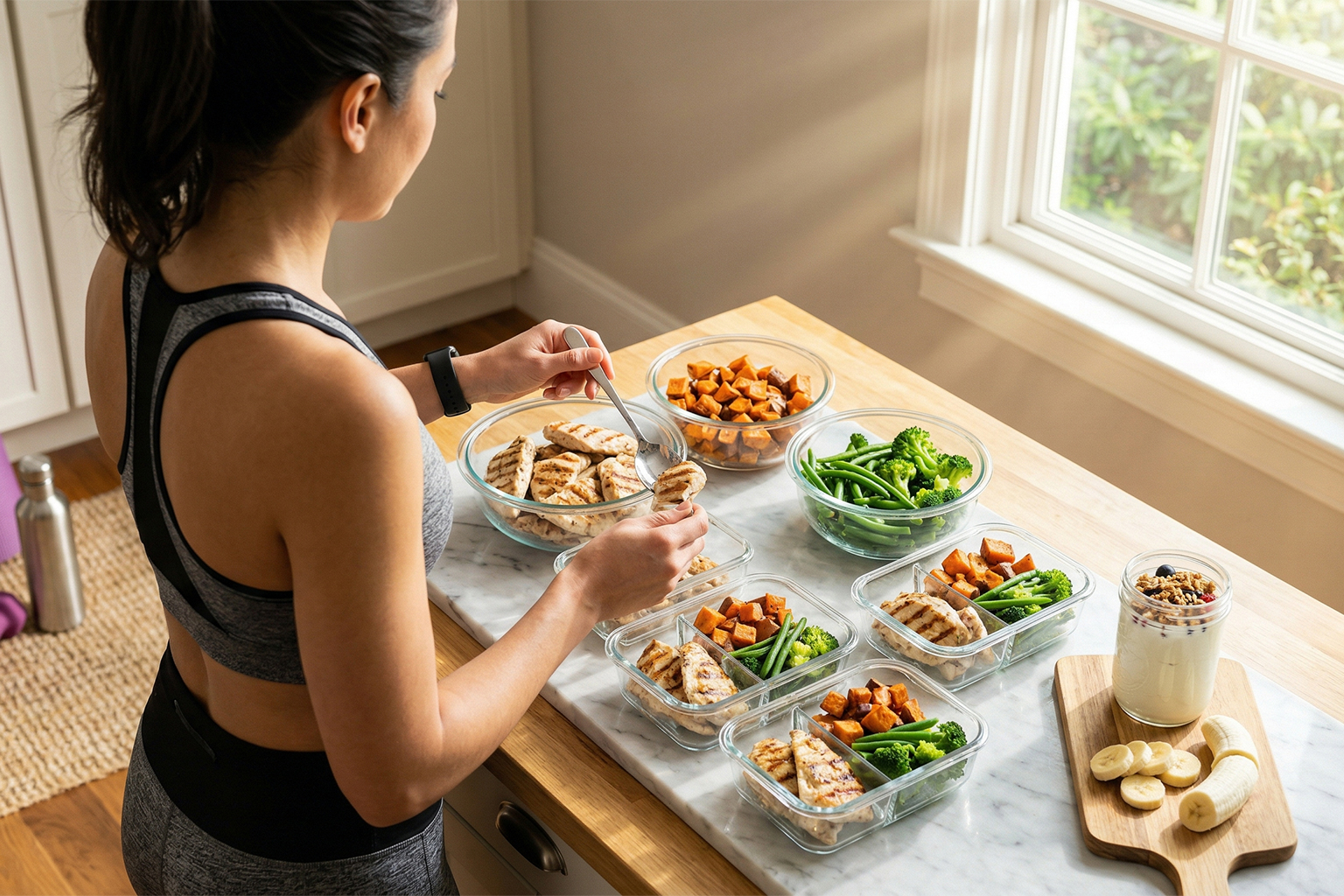
Having simple staples on hand reduces the barrier to eating well around workouts. Stock up on items like canned beans, frozen vegetables, whole grains, eggs, and lean proteins. Batch-cooking components—grains, roasted vegetables, and grilled proteins—lets you assemble balanced meals quickly. Keep herbs, spices, and condiments to vary flavors without extra work.
Small weekly prep sessions save time and support consistency. Sustainability comes from making changes you can maintain long term rather than one-off extremes.
Conclusion
Adopting steady meal rhythms boosts energy, performance, and recovery for home training. Focus on balanced plates, sensible timing, and a few reliable snacks to make healthy fueling automatic. These practical habits help you sustain progress and enjoy your workouts more consistently.