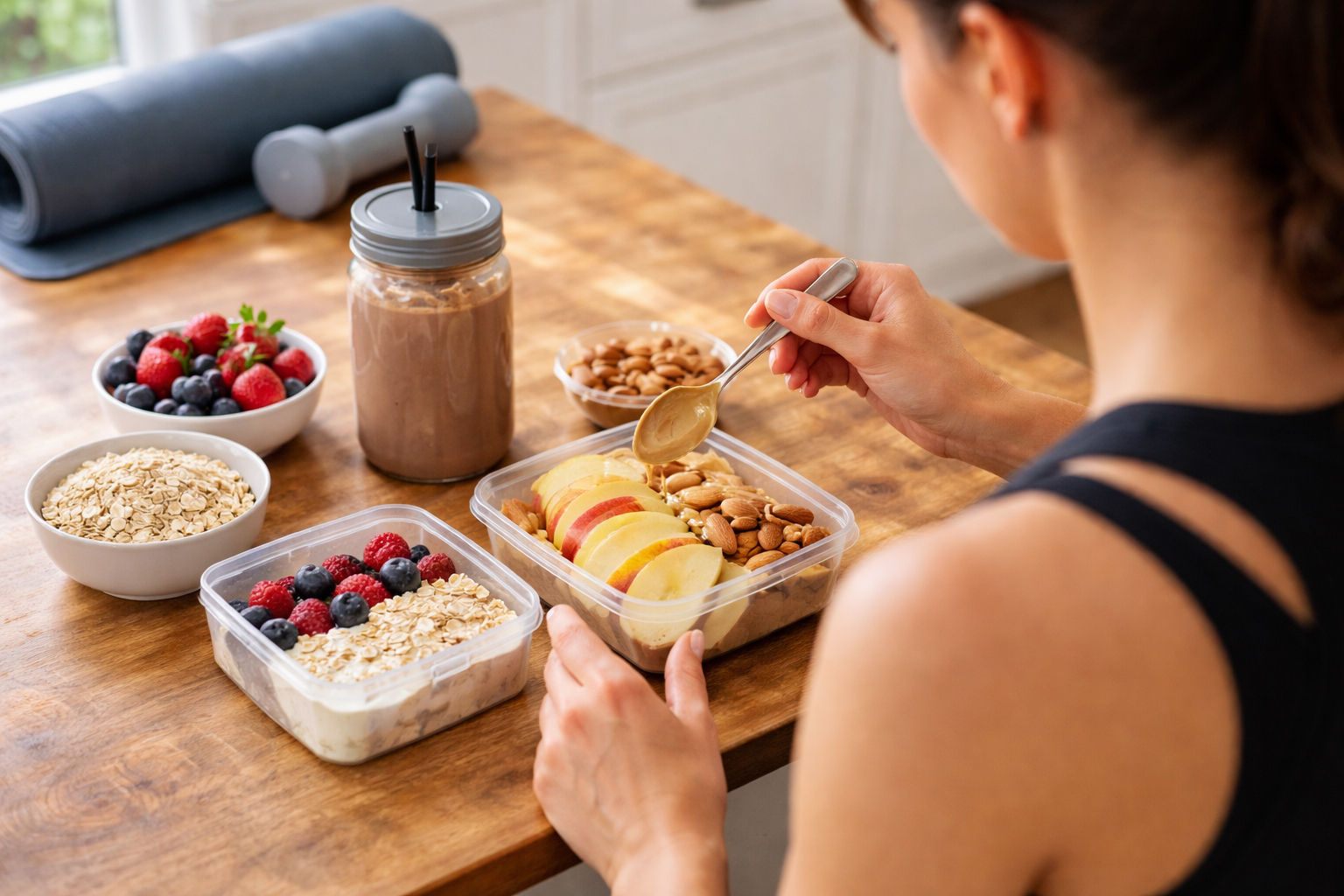
Small, consistent adjustments to what you eat can have a big impact on how you feel during at-home training sessions. Focusing on nutrient balance, timing, and portable options helps maintain steady energy without complicated meal plans. This article outlines practical food choices and simple strategies that support endurance, strength, and recovery for home workouts. Use these ideas as flexible guidelines that fit into busy routines.
Start with a Balanced Pre-Workout Bite
A purposeful pre-workout snack combines a moderate amount of carbohydrates with some protein and a little fat to slow digestion and sustain energy. Aim for something light if your workout is soon, such as a piece of fruit with nut butter or a small yogurt with oats. These choices help prevent blood sugar dips while supplying amino acids for muscle support. Avoid very heavy or high-fiber meals immediately before intense sessions to reduce discomfort.
Timing matters: consume this snack 30–90 minutes before activity depending on tolerance and workout intensity. Testing different combinations will reveal what works best for you.
Choose Snacks That Support Recovery and Focus
Post-workout nutrition should prioritize protein and carbohydrates to aid muscle repair and refill energy stores. Portable options like a smoothie with protein powder, a cottage cheese bowl with fruit, or a whole-grain wrap with lean protein deliver both macronutrients conveniently. Hydration and electrolytes are also important, especially after sweaty sessions; include a small salted snack or electrolyte drink when needed.
Consistent small meals or snacks throughout the day help stabilize energy levels and reduce the temptation to overeat later. Keep portions sensible and tailored to your overall activity level.
Simple Pantry Swaps and Meal Prep Tricks
Small swaps in the pantry make it easier to build balanced meals without extra effort. Replace refined grains with quick-cooking whole grains, keep canned beans for instant protein and fiber, and favor unsalted nuts and seeds as convenient calorie-dense options. Preparing a few staples once or twice weekly — roasted vegetables, cooked grains, and portioned proteins — reduces decision fatigue and supports consistent fueling.
- Cook grains and proteins in bulk to mix and match meals.
- Portion snacks in small containers to control portions.
- Keep versatile condiments for flavor without heavy sauces.
These habits simplify daily choices and make it realistic to sustain good nutrition alongside home training. They also free up time for more consistent workouts.
Conclusion
Small, repeatable food choices reliably enhance energy and recovery for at-home workouts. Focus on balanced snacks, mindful timing, and simple meal-prep habits to make fueling manageable. Over time these modest changes compound into improved performance and resilience.