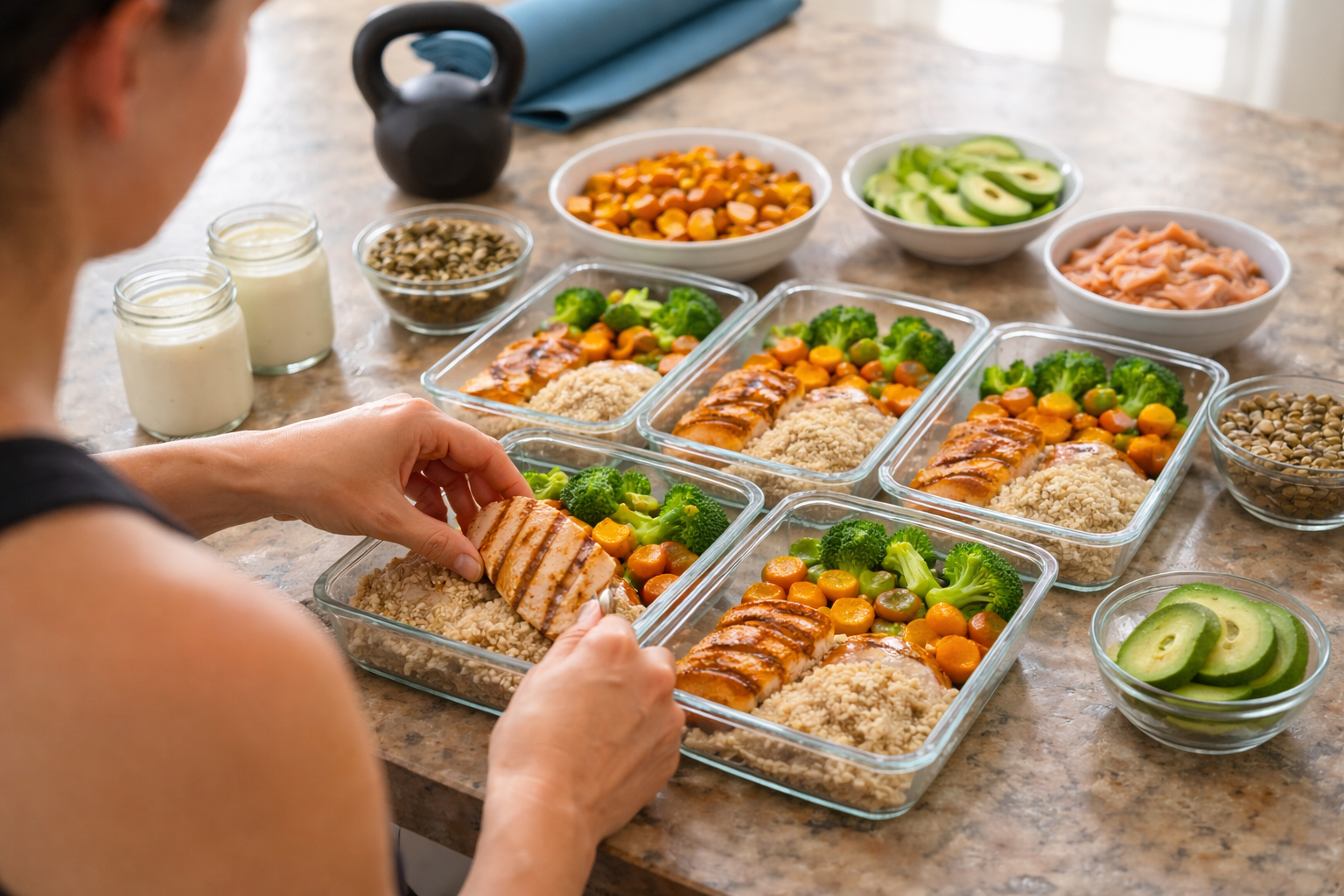
Finding quick, balanced meals that support strength and recovery makes a big difference for people training at home. With limited time and simple equipment, prioritizing protein, fiber, and healthy fats helps sustain energy and rebuild muscle. This article outlines practical, protein-focused meals and timing strategies you can use on busy days. The ideas are adaptable to different tastes and can be prepared with minimal fuss.
Key Meal Components
A protein-focused plate centers on a lean protein source, a colorful serving of vegetables, a whole-grain or starchy vegetable, and a modest portion of healthy fat. Choosing nutrient-dense carbohydrates like oats, sweet potato, or brown rice aids endurance and supports glycogen replenishment. Healthy fats from sources such as avocado, nuts, or olive oil help satiety and micronutrient absorption. Including fiber and micronutrients improves overall recovery and keeps meals satisfying between workouts.
Aim for 20–35 grams of protein per main meal depending on body size and activity level. Pair meals with whole foods rather than processed options to enhance nutrient quality.
Quick Protein-Packed Meal Ideas
When time is tight, focus on recipes that combine cooked protein with quick-to-assemble sides. Examples include egg-based dishes, canned fish bowls, or tofu stir-fries with frozen vegetables. Smoothies can deliver a balanced mix when made with milk or a dairy-free protein source, fruit, greens, and a spoonful of nut butter. These choices are portable, fast, and scale well if you prepare components in advance.
- Egg and vegetable scramble with whole-grain toast
- Canned salmon or tuna bowl with quinoa and salad greens
- Greek yogurt parfait with oats, berries, and seeds
- Tofu or chicken stir-fry with frozen mixed vegetables and brown rice
Rotate a handful of these meals to prevent menu fatigue while keeping preparation simple. Most recipes take 10–25 minutes from start to finish.
Simple Prep and Timing Tips
Batch-cooking key components like grains, roasted vegetables, and grilled proteins saves time during the week. Store portions in clear containers so you can assemble meals quickly and vary flavors with different dressings or spices. Plan snacks that support training sessions, such as a banana with nut butter or a small yogurt, about 30–90 minutes before exercise. Hydration also matters: aim to drink regularly and include electrolytes after long or intense sessions.
A short checklist—protein, produce, whole grain, healthy fat—keeps shopping and prep focused. Small adjustments to routine yield steady gains in energy and recovery.
Conclusion
Protein-focused meals need not be complicated to be effective. By combining simple components and smart timing, busy home exercisers can support performance and recovery. Consistency with these basic patterns delivers measurable benefits over time.