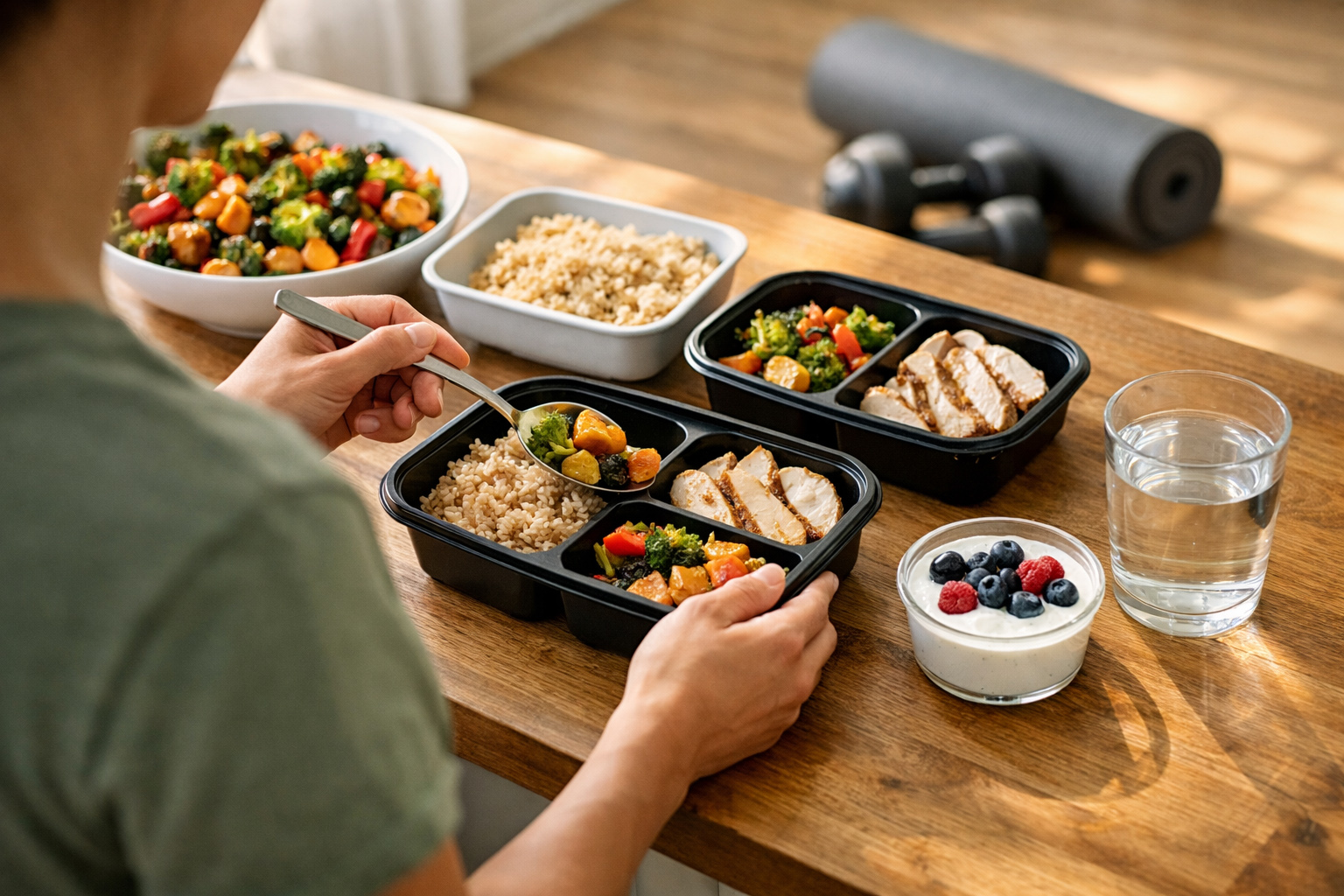
Optimizing what you eat around home workouts makes a noticeable difference in energy, performance, and recovery. You don’t need complicated diets; small, consistent meal patterns can support strength gains and stamina. This article lays out simple strategies for timing meals, choosing snacks, and prepping to make nutrition predictable. Implementing a few basic swaps and rhythms keeps food practical and aligned with training goals.
Plan Balanced Meals Around Workouts
Aim to balance carbohydrates, protein, and healthy fats across main meals to fuel sessions and rebuild muscle afterward. For morning workouts, prioritize a light carbohydrate source and a moderate protein portion to top up glycogen and support synthesis. For midday or evening sessions, a solid meal two to three hours before training with carbs and lean protein works well. Post-workout, a combination of protein and easily digestible carbs within an hour helps recovery and reduces next-day soreness.
Portion sizes should match the workout intensity and your personal appetite. Experiment for what feels best and adjust carbs up or down on heavier or lighter training days.
Snack Timing and Smart Choices
Smart snacks bridge long gaps and prevent energy dips before a session. Choose options that combine protein and carbs, such as yogurt with fruit, a small sandwich, or a smoothie with protein powder. Time snacks about 60 to 90 minutes before harder workouts, or keep them light within 30 minutes for shorter, less intense activity.
Hydration matters too; pair snacks with water and avoid large sugary drinks that cause crashes. Consistency in snack timing makes energy more predictable across the week.
Efficient Meal Prep and Pantry Staples
Batch-prep components like roasted vegetables, cooked grains, and cooked lean proteins to assemble balanced plates quickly. Stock versatile staples—canned beans, whole grains, frozen fruit, and eggs—for flexible meals that suit training demands. A few simple seasonings and sauces keep meals varied without extra effort, which helps adherence.
Prioritize nutrient density over perfection; aim to include vegetables, quality protein, and a carbohydrate source most meals. Small, repeatable routines remove decision fatigue and make it easier to stay on track with training.
Adjust for Goals and Schedule
Tailor meal patterns to match whether your focus is fat loss, strength, or endurance training. For higher-volume days, increase carbohydrate portions and include recovery snacks after long sessions. When the goal is fat loss, maintain protein to preserve muscle and reduce overall calories gradually. Use simple trackers or a food diary for two weeks to observe trends and remove guesswork.
Small, consistent tweaks aligned with the training schedule yield better adherence and results. Review and revise every few weeks to keep nutrition supporting the next training phase.
Conclusion
Start with one change this week, such as a consistent pre-workout snack or a simple post-workout protein source. Track how you feel and adjust portion sizes and timing as your training evolves. Over time, these modest habits add up to more reliable energy, better recovery, and steady progress.