Living with sciatica can make simple tasks feel difficult. This piece lays out straightforward, home-centered ways to reduce nerve-related discomfort. The focus is on movement choices, self-care techniques, and small environment tweaks that many find helpful. If pain worsens, spreads, or is accompanied by weakness or loss of control, seek professional care right away.
Understand your symptoms
Sciatica often causes sharp, radiating pain down one leg, sometimes with numbness or pins-and-needles sensations; knowing the pattern helps tailor sensible home responses.
Pay attention to when pain started, activities that trigger it, and any neurological signs such as weakness or bowel or bladder changes, which need urgent assessment.
Keeping a simple log of movements and symptom intensity for a few days can make later conversations with a clinician more productive.
Move smartly and progressively
Staying active in a measured way usually beats prolonged bed rest for most sciatica flares; gentle walking and frequent short movement breaks reduce stiffness and improve circulation.
Introduce low-impact core and glute activation exercises gradually, focusing on form rather than intensity, and avoid heavy lifting or twisting until pain settles.
If an exercise sharpens nerve pain, stop and try a different movement or consult a therapist for guided modifications.
Home treatments that can help
Basic self-care like alternating ice and heat can be useful—ice tends to calm acute inflammation while heat soothes tight muscles a day or two later.
Over-the-counter pain relievers may offer short-term relief when used as directed, and topical analgesics can be tried cautiously; long-term or high-dose use should be discussed with a provider.
Some people find temporary benefit from traction cushions or supportive belts, though results vary and these are not substitutes for professional evaluation when needed.
Sleeping and workspace adjustments
Your mattress, pillows, and chair setup influence spinal posture and nerve pressure overnight and during the workday, so small tweaks often make a noticeable difference.
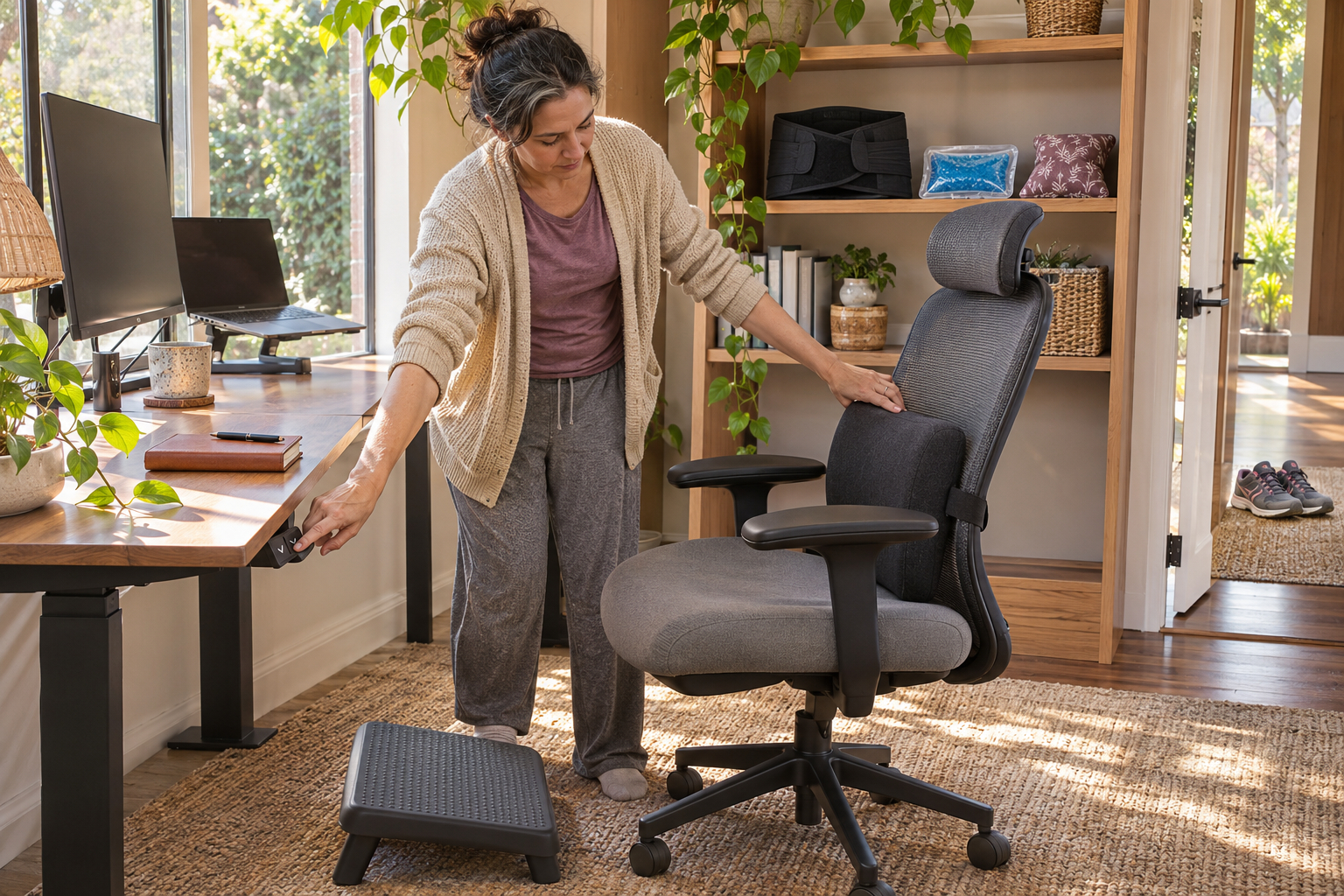
Try a pillow between the knees if you sleep on your side or a small support under the knees if you sleep on your back, and position your desk so hips and knees are level while taking microbreaks to stand and stretch.
Ergonomic changes combined with regular movement tend to reduce flare frequency and improve daytime comfort.
Conclusion
Pain that limits daily life or follows a significant injury requires prompt professional attention. Many people see gradual gains with sensible home care, paced activity, and modest environmental adjustments. Use these approaches as a starting point and consult a clinician for persistent, severe, or worsening symptoms.