Eating well at home doesn’t mean long recipes or expensive ingredients. With a few reliable components and simple habits you can assemble satisfying plates that support energy and recovery. This piece focuses on practical choices you can repeat throughout the week without losing variety. You’ll find approaches for building meals, a short shopping list of staples, and quick assembly strategies to save time and stress.
Focus on three plate anchors
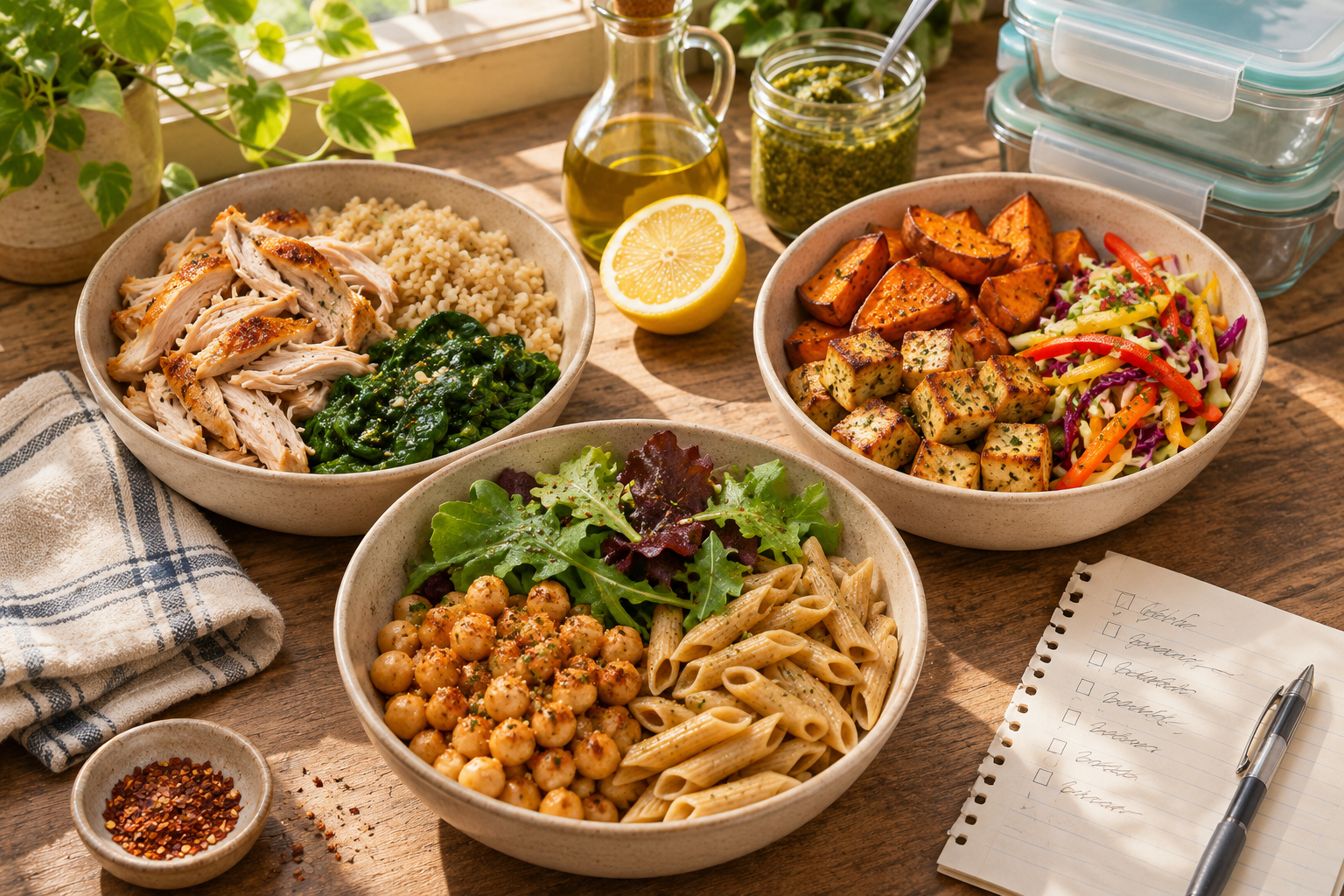
Start every meal with three anchors: a protein, a fiber-rich carbohydrate, and a vegetable or salad for micronutrients. Proteins stabilize blood sugar and support muscle repair when paired with carbs and vegetables. Fiber-rich carbohydrates like sweet potatoes, brown rice, or whole-grain pasta keep you fuller longer and feed healthy digestion. Vegetables add color, crunch, and vitamins with very few calories.
When you mix and match these anchors you create endless variations that still feel cohesive. Keep portion sizes sensible and adjust to your activity level so meals match your day.
Staples to keep in your kitchen
Stocking a handful of reliable items makes quick meals possible without a second trip to the store. Aim for long-shelf staples and a few fresh or frozen items that can be swapped as needed. These choices lend themselves to bowls, sheet-pan dinners, and simple sautés that come together in under 30 minutes.
- Proteins: canned beans, eggs, tofu, rotisserie chicken or quick-cook fish fillets
- Carbs: quick oats, brown rice, whole-grain wraps, sweet potatoes
- Veggies: frozen mixed vegetables, spinach, bell peppers, carrots
- Flavor: olive oil, lemon, soy sauce, a jarred salsa or pesto
Rotate a couple of fresh produce items each week and rely on frozen vegetables to avoid waste. Simple seasonings make the same ingredients feel new.
10-minute assembly techniques
Several tricks shave time: batch-cook grains once, roast a tray of vegetables, and portion proteins into ready-to-heat containers. Keep salad greens washed and stored so you can toss a side in seconds. Use high-heat finishes like a quick broil or skillet sear to add texture and flavor at the last minute.
If mornings are rushed, prepare overnight oats or assemble jar salads the night before. Evening meal prep can focus on components rather than full recipes to preserve freshness and flexibility.
Conclusion
Practical meals rely on a stable foundation of protein, fiber, and vegetables combined in different ways. Keep a short list of staples and use quick assembly techniques to reduce cooking time and decision fatigue. Small, consistent habits yield balanced eating that supports an active home routine.