What you eat after an evening workout matters more than many people realize. A modest, balanced dinner can quicken repair and help you sleep better. Focus on real food—protein, a modest starch, and vegetables—and ignore overly complicated rules. Small, consistent choices add up across the week.
Why the night meal matters
The body shifts into repair mode overnight, so the dinner before bed influences muscle rebuilding and glycogen restoration. Protein supplies the amino acids needed for synthesis, while carbohydrates refill energy stores spent during training. Including some fat and fiber slows digestion, which can stabilize blood sugar and aid sleep. A sensible dinner reduces late-night cravings and makes the next workout feel easier.
Think of dinner as the bridge between training and recovery rather than an all-or-nothing moment. Small adjustments—like adding an extra palm-sized portion of protein—have clearer benefits than drastic dieting shifts.
What to put on the plate
Start with a serving of protein: poultry, fish, tofu, legumes, or a dairy option all work. Add a modest portion of carbohydrate such as rice, potatoes, whole-grain pasta, or starchy squash to restore energy. Fill the rest of the plate with vegetables for vitamins, minerals, and fiber that support digestion and steady blood sugar. A bit of olive oil, avocado, or a sprinkle of nuts provides healthy fat and makes meals more satisfying.
Portion sizes depend on your training intensity and goals, but most evening dinners do well with a balance that favors protein slightly more than starch. Keep hydration in mind, too—water with the meal and a light electrolyte choice if you sweated heavily.
Three quick plate templates
Templates remove decision fatigue and make good dinners repeatable. Each template below is practical for a home kitchen and can be prepped in 20–30 minutes or assembled from leftovers. Rotate them through the week so you get variety without extra thinking. These plates work for most evening sessions, from shorter conditioning workouts to longer strength routines.
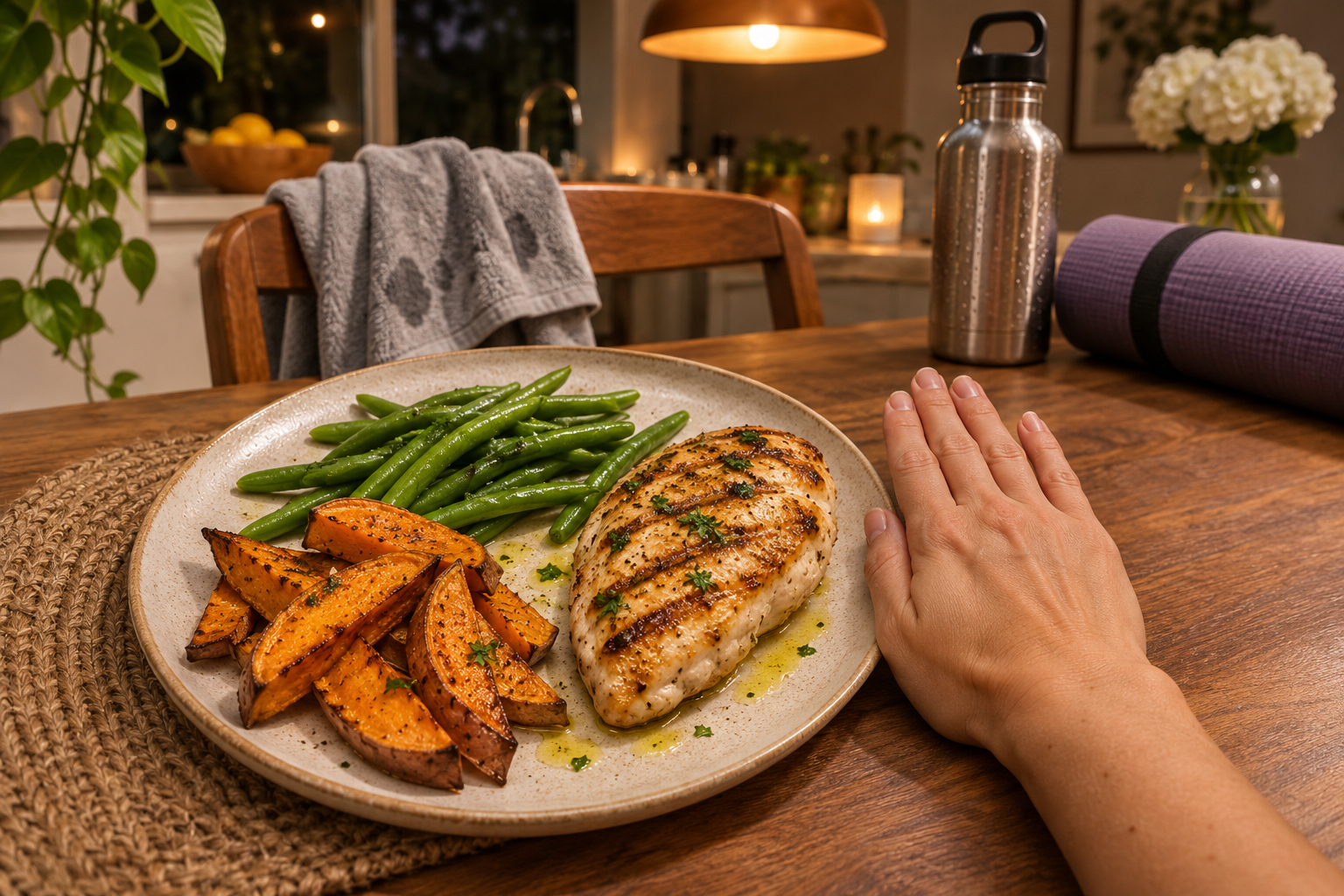
- Grilled chicken, roasted sweet potato, steamed green beans, and a drizzle of olive oil.
- Baked salmon, quinoa, sautéed spinach with garlic, and lemon.
- Tofu stir-fry with mixed vegetables and brown rice, finished with a splash of soy and sesame.
Each option pairs protein with a carbohydrate and vegetables, keeping meals both restorative and satisfying. Adjust portions subtly based on how long or intense your workout was.
Conclusion
Choose simple, balanced dinners that pair protein with a modest starch and vegetables. Keep portions sensible and repeat templates you enjoy so consistency is easy. Over time these small habits support better recovery and steadier training progress.