Good nutrition for home workouts doesn’t need complicated recipes or expensive supplements.
A few dependable plate patterns and reliable pantry items will cover most training needs.
This piece breaks down practical, repeatable meals you can assemble in minutes.
Keep groceries simple and your cooking routine will support consistent energy and recovery.
Build your plate from three blocks
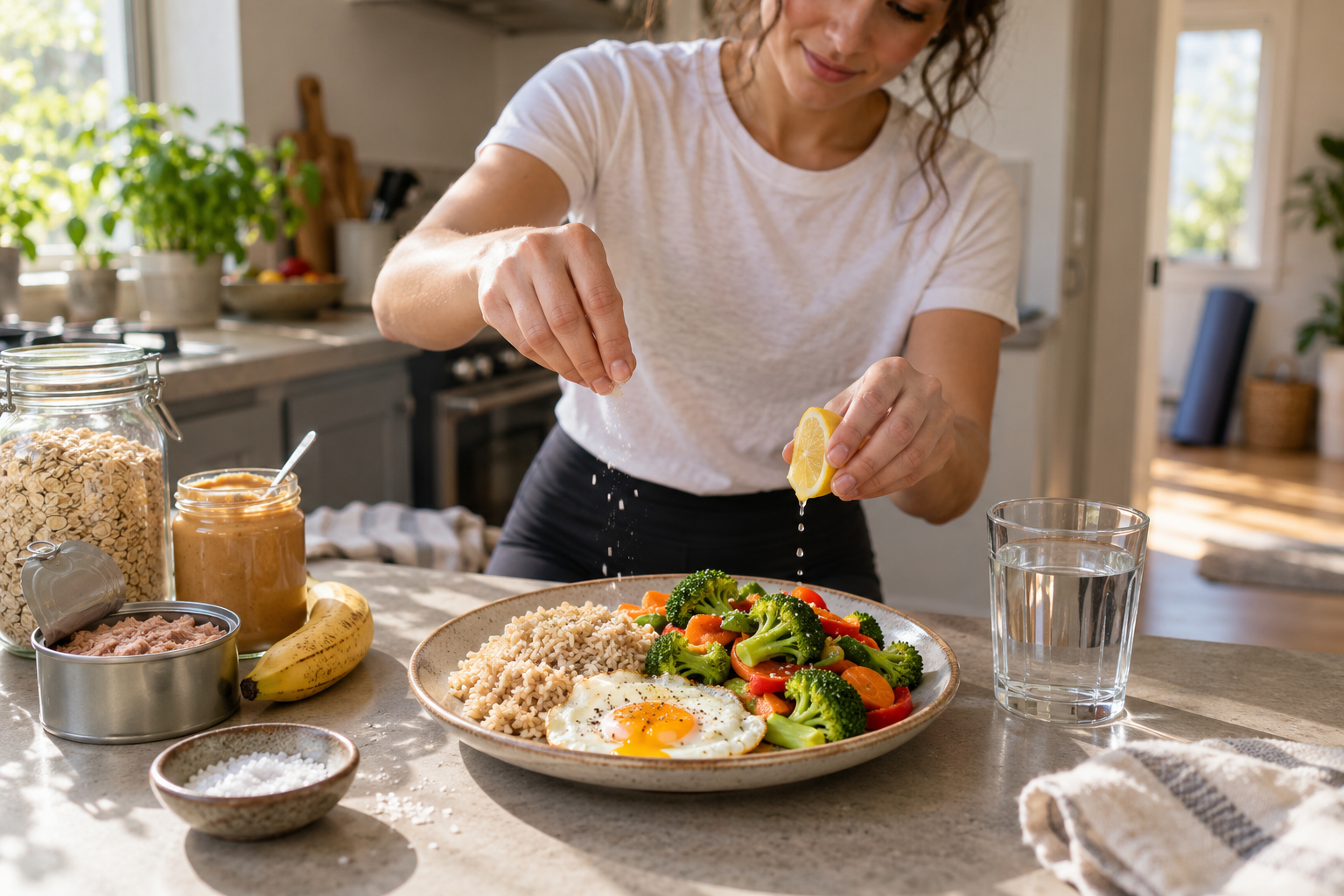
Think of each meal as a combination of three blocks: protein, carbohydrate, and a vegetable or healthy fat. Choose one item from each block to create balanced, satisfying plates without overthinking portions. Lean proteins like eggs, canned fish, or poultry pair well with whole grains and a salad or steamed vegetable. This approach makes it easy to mix and match flavors while keeping nutrient balance consistent.
Swap items depending on what’s on sale or what’s fresh in your fridge. The goal is variety across the week, not perfection at every meal.
Timing and portion tweaks that matter
A void long fasts before short, intense home sessions; eat a small, carb-forward snack 30–90 minutes beforehand if you need a quick lift. After training, prioritize protein and carbs together to aid muscle repair and restore glycogen. Portion size should align with your day: larger meals on heavy training days, lighter ones when movement is minimal. Hydration fits here too—water and a pinch of salt with meals help recovery and concentration.
Adjust portions gradually and notice how energy and recovery change over several workouts rather than after a single meal.
Quick pantry-friendly combos
Stock staples that pair quickly and taste good together: canned beans and tuna, brown rice or rolled oats, frozen vegetables, nut butter, and eggs. From these items you can build breakfasts, lunches, and post-workout plates without extra shopping. Use simple seasonings—olive oil, lemon, and one spice—to keep meals interesting without extra effort. These combos keep cost low and prep time short while delivering the macros your body needs.
- Overnight oats with nut butter and banana for morning fuel.
- Rice bowl with canned beans, roasted veg, and a fried egg for recovery.
- Whole-grain toast topped with canned fish and a side salad for a quick dinner.
Rotate combinations so meals stay familiar but never boring; that’s how sustainable habits form.
Sample day that stays simple
Start with oatmeal, fruit, and a spoon of nut butter for morning energy and slow-release carbs. Midday, try a grain bowl with leftover roasted vegetables and a protein source like beans or chicken. Have a small carb-rich snack before a short evening session if needed, then follow with a hearty plate of protein, veggies, and a starch. Finish with a light, balanced snack if you’re hungry before bed to support overnight repair.
Small, consistent changes add up. Use the same building blocks across different meals to save time and mental energy.
Conclusion
Keep meals simple by combining three reliable blocks: protein, carbohydrate, and vegetables or healthy fats.
Choose pantry staples that mix easily and scale portions to match your training intensity.
Small, repeatable plate patterns will sustain energy and speed recovery for home workouts.