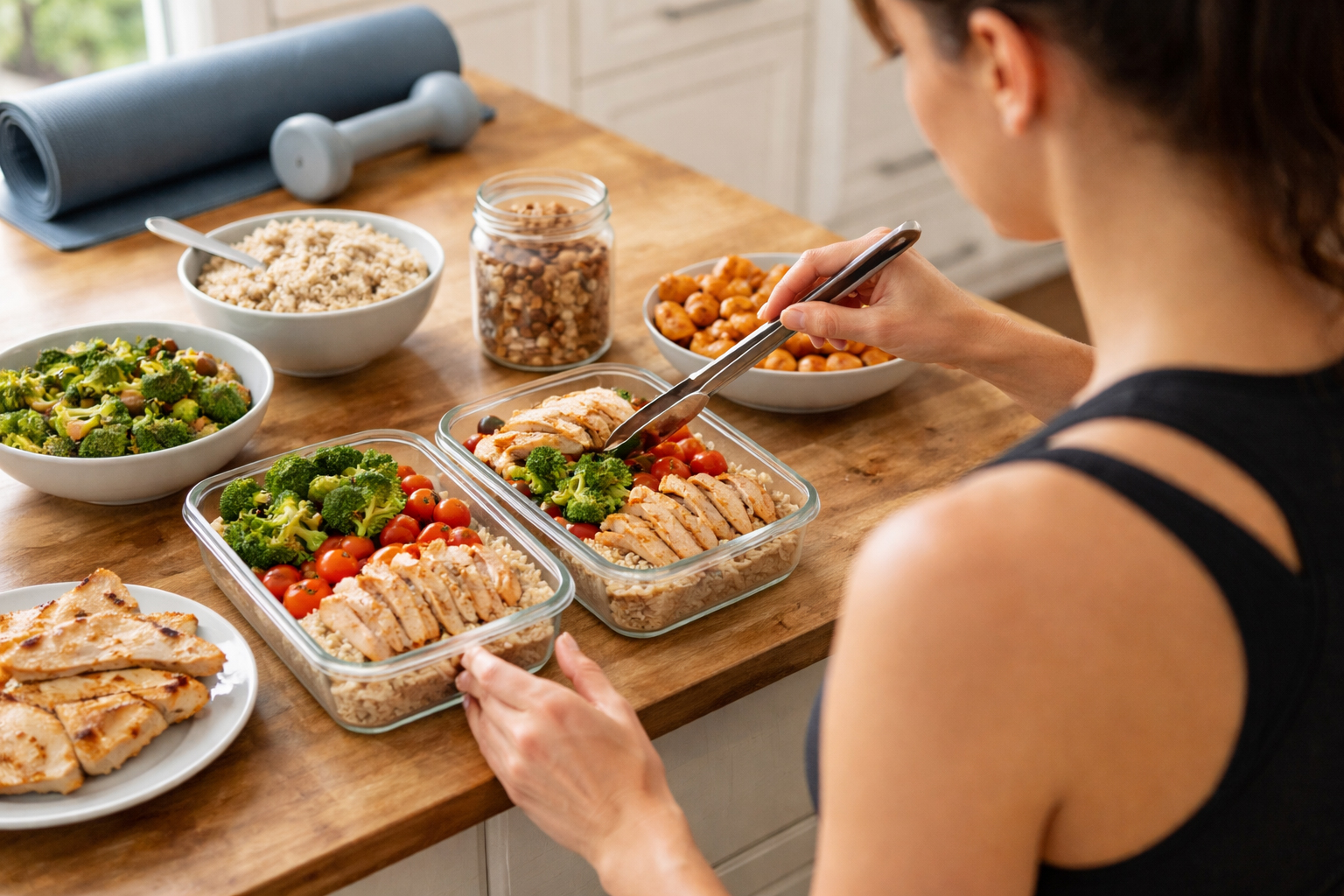
Sensible food patterns make a measurable difference to energy, recovery, and consistency when training at home. Small, repeatable meal routines reduce decision fatigue and help you hit daily protein and carbohydrate targets. This article outlines a practical approach to structuring meals, timing snacks, and stocking a pantry for steady performance. Apply these ideas to create a flexible eating plan that supports regular workouts without complicating your day.
Why meal structure matters
Establishing a simple meal structure clarifies where calories and nutrients come from across the day. Consistency is less about strict rules and more about ensuring each meal balances protein, carbs, and healthy fats. Protein supports muscle repair, carbohydrates replenish energy stores, and fats help satiety and nutrient absorption. When you plan a basic template for breakfast, lunch, dinner, and snacks, it becomes easier to meet goals without extra effort.
Start by choosing one reliable option for each eating occasion and rotate variations weekly. This reduces waste and keeps preparation realistic for busy schedules.
Practical meal ideas and timing
Timing meals around workouts influences energy and recovery but doesn’t require rigid schedules. Aim for a modest carbohydrate and protein source within two hours before exercise and a protein-rich meal or snack soon after. Meals that combine lean protein, whole grains or starchy vegetables, and vegetables work well for most training sessions. Simple examples include an omelet with whole-grain toast, a grain bowl with beans and roasted vegetables, or yogurt with fruit and nuts.
Keep portions aligned with your session intensity—longer or higher-intensity workouts need more carbohydrates. Adjust frequency and size of meals based on how you feel during workouts and recovery.
Stocking a fitness-friendly pantry
A well-stocked pantry supports quick meal assembly and reduces reliance on processed convenience food. Prioritize shelf-stable proteins like canned beans or tuna, whole grains such as oats and brown rice, and healthy fats like olive oil and nuts. Frozen fruits and vegetables preserve nutrients and make it easy to add produce to meals without spoilage concerns. A few versatile seasonings, a jar of nut butter, and Greek yogurt can bridge gaps in flavor and protein.
- Canned beans, lentils, and canned fish
- Oats, brown rice, whole-grain pasta
- Frozen vegetables and berries
- Olive oil, nuts, nut butter
Organize items so frequently used ingredients are visible and accessible to speed meal prep. Rotate stock and use leftovers creatively to maintain variety.
Conclusion
Small, consistent food choices support steady progress with home exercise without adding complexity. Focus on balancing macronutrients, timing around workouts, and keeping a functional pantry to make healthy eating sustainable. These practical steps help you maintain energy, recover effectively, and enjoy a realistic routine.